If you're heading to North Cyprus for its historic sites, here's the easy part: within a hundred-kilometre radius, the Byzantine, Lusignan, Venetian and Ottoman eras sit layered on top of one another, sometimes inside the same building. The hard part is working out which stone belongs to whom. When people talk about historic sites in Cyprus, castles are the first thing that comes to mind — but the list of places to visit in North Cyprus also includes a monastery that found its way into an English writer's book, and a shipwreck famous for the wrong reason.
The Three Mountain Castles: St. Hilarion, Buffavento, Kantara
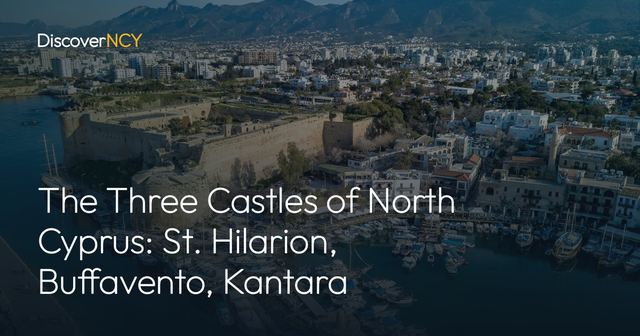
Three castles line the Five Finger (Beşparmak) ridge, each within sight of the next. The chain was built by the Byzantines, designed so that the moment Arab raiders appeared at sea, word could be flashed back along the line. Westernmost is St. Hilarion at 732 metres, explored via a stepped climb from the car park. The Lusignans later converted it into a palace-castle. In the middle sits Buffavento, the highest of the three but the smallest, at roughly 950 metres. Why is it a surprise? There's no ticket booth — it's the only one of the three castles you can enter for free. A paved road climbs to a parking area on the mountainside; from there it's a thirty-minute walk up paths and steps, and the trail is rough in places. Don't attempt it without proper trainers, and think twice before bringing children. Easternmost is Kantara, over on the Iskele side; it first enters the history books in 1191 with Richard the Lionheart's campaign. Sources disagree about its exact altitude — the peak is steep, and that's all you really need to know.

Kyrenia Castle and the Shipwreck
When it comes to historic sites in North Cyprus, the first name that comes up is Kyrenia Castle. Standing right at the harbour entrance, it was probably first built in the 7th century by the Byzantines against Arab sea raids; the Lusignans strengthened it, and the thick walls you see today are largely Venetian work from after 1489. The real reason to go inside is the Shipwreck Museum in the courtyard. The vessel is a merchant ship from the Hellenistic period that sank around 300 BC; sponge diver Andreas Cariolou discovered it in 1965, and a University of Pennsylvania team raised it between 1967 and 1969. The fifteen-metre pine hull held amphorae, almonds and traces of grain, and spear marks in the timbers hint at a possible pirate attack. One correction is in order here: this is not the world's oldest shipwreck. That title belongs to Uluburun, dated to the 14th century BC — a thousand years older than the Kyrenia ship. Its fame rests on something else: the hull was recovered without breaking apart, which is why it can be displayed whole today.
Bellapais Abbey
Head 5-6 kilometres uphill from Kyrenia to the village of Beylerbeyi. The abbey stands right at the heart of the village. The name comes from the French: Abbaye de la Paix, the Abbey of Peace. Its story begins in 1187: when Saladin took Jerusalem, fleeing Augustinian monks took refuge on the island and founded the abbey here towards the end of the century. The Gothic church still standing and the refectory overlooking the view were not the monks' work; those were commissioned by the Lusignan kings in the following century. The building has a literary side, too. The English writer Lawrence Durrell lived in this village from 1953 to 1956 and described the abbey and village life in Bitter Lemons; the book remains a fixture in every introduction to the island. The signs carry two names at once: officially "Beylerbeyi", but to travellers it's "Bellapais".
Salamis and St. Barnabas
Just north of Famagusta, on the east coast, lies the ancient city of Salamis. Of all the historic sites in Cyprus, this is the one with the thickest layers of history. According to legend, it was founded after the Trojan War, in the 11th century BC. The city's most impressive ruin is the Gymnasium; destroyed in the earthquake of 76 AD, it was rebuilt with its colonnaded courtyard and bath complex under the Roman emperors Trajan and Hadrian. The theatre a little further on dates to the reign of Augustus and once held fifteen thousand people; after it collapsed in the 4th-century earthquakes, its stones were reused in other buildings and baths. Concerts are still held here today — it's not a dead ruin but a working venue. Right next to Salamis stands St. Barnabas Monastery, now an icon and archaeology museum; some of the finds from the Salamis excavations were moved here. There is next to no shade at the site — buy your water at the entrance, because you won't find any inside.
The Walled City of Famagusta
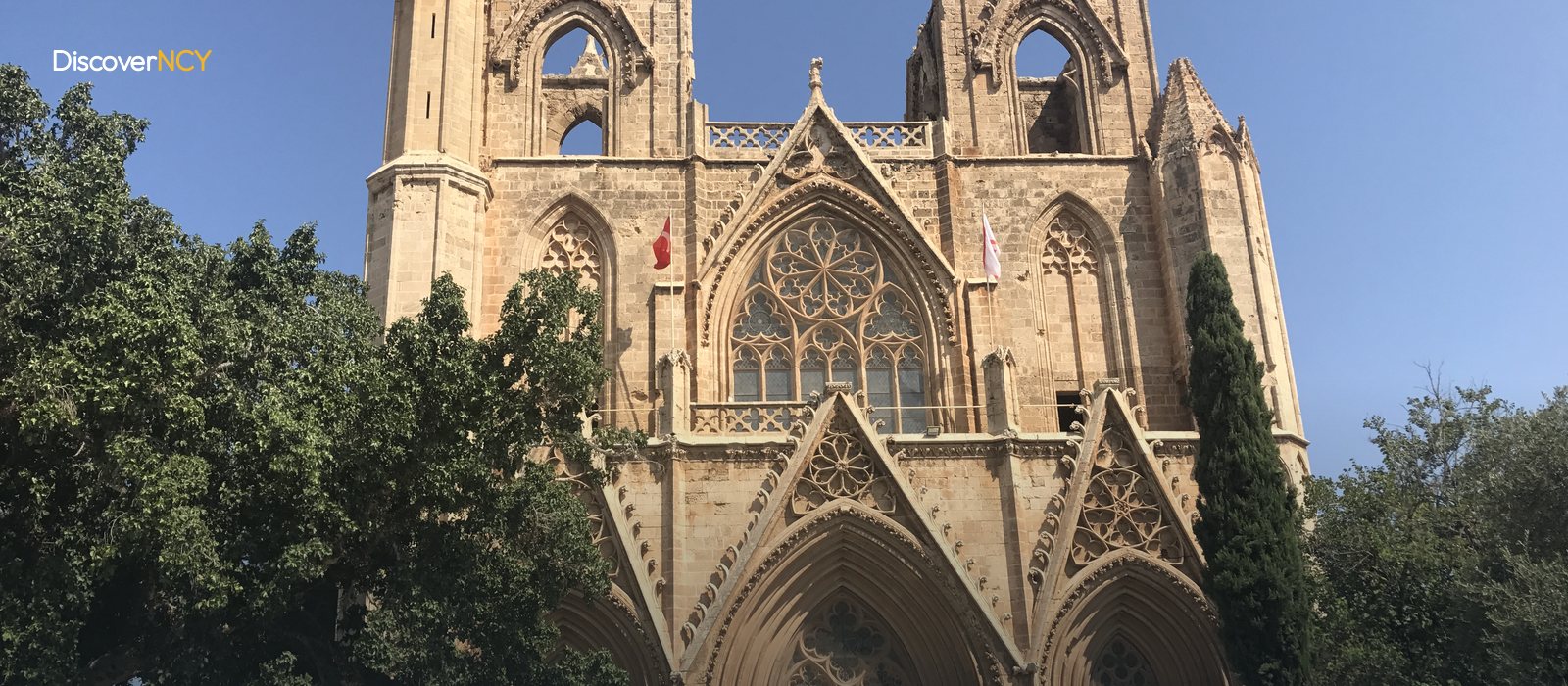
The walled city — the Famagusta old town — is the heart of the city. Othello Castle was built by the Lusignans in the 14th century; the name stuck later, courtesy of Shakespeare. Is the harbour town in the play really this one? There's no proof, only the claim. A few steps away stands the Lala Mustafa Pasha Mosque, in fact a Gothic building constructed between 1298 and 1312 as St. Nicholas Cathedral; this is where the Lusignan kings were crowned with the title of King of Jerusalem. When the Ottomans conquered the city in 1571, it became a mosque. Don't mix these up: the Selimiye in Nicosia was converted in 1570 and this one in 1571 — a single year apart, but two separate conquests. The walls encircling the old town are largely Venetian work, yet the city fell in the siege of 1571 despite them. In the Namık Kemal Dungeon right beside the mosque, the writer was exiled and imprisoned in 1873; the dungeon only opened as a museum in 1993 — a full one hundred and twenty years later.
The Walled City of Nicosia
On the northern side of Nicosia, the walled city fits into a single afternoon. You step out of the Selimiye Mosque into the courtyard of Büyük Han, then walk on into the Arasta bazaar; no taxi in between, and none needed. Selimiye's original name was St. Sophia. Its foundations were laid in 1209, but the building wasn't finished until 1326; the Lusignan kings received the crown of Cyprus beneath this roof. The Gothic facade, influenced by Notre-Dame, still stands. It became a mosque after the Ottoman conquest of 1570, with the minarets added later. Büyük Han came two years after the conquest. Galleries and craft workshops now occupy the courtyard of the two-storey caravanserai. To the south begins the Arasta bazaar, full of souvenir shops and jewellers, and the street ends at Lokmacı. Lokmacı is a pedestrian crossing on the Green Line that divides the island, and the busiest exit from the old town. If you entered with a Turkish ID card, Lokmacı is where you stop. You walk up to the gate, take a look, and turn back.
Varosha, and What to Know Before You Go
The gates of Varosha cracked open in October 2020, for the first time since the evacuation of 1974: part of the beachfront strip was opened to visitors as a pilot scheme. What's open is not the whole town but a single marked, asphalted route. Entering the derelict buildings is strictly forbidden — they are taped off and hung with collapse warnings; vehicles aren't allowed in either, so you either walk or rent a bicycle at the entrance. Photography is fine, but drones are banned. Visiting hours have changed several times since the opening, and even the official announcements are inconsistent; we won't quote times here — check the latest notice before you go. One last practical point as you tour the historic sites of North Cyprus: every museum and archaeological site sells its own ticket, and there is no shared pass system. Claims circulate online that Turkey's Müzekart is accepted here, but the card doesn't appear on the official TRNC (North Cyprus) list; don't count on the Müzekart — plan to buy a separate ticket at each gate. The whole of this list fits into a week in North Cyprus, but don't plan your days by kilometres on the map; the hairpins of the Five Finger range will wreck that arithmetic.