Famagusta Travel Guide: The Walled City and the Coast
When you first set foot in Famagusta, it's hard to tell what kind of city it is. The port runs at a heavy, slow rhythm while the campus boulevard is packed by late afternoon; in between stands a line of walls that has survived for centuries. When people talk about places to see in Famagusta, the walled city comes to mind first, but what really defines the city is the way these three worlds live side by side in the same streets. The connection is made by a single axis running north from the city gate — everything else sits more or less along that line. Let's explore the details with the Famagusta Travel Guide we've prepared for you.
The Walled City: A District Walked Square to Square
The densest corner of the list of places to see in Famagusta is inside the walls: the circuit runs about three kilometres, but the interior is small — once you're in, you no longer need a car. At the centre is Namık Kemal Square, a spot where the mosque, the dungeon and a handful of cafes gather around the same courtyard. Most sources say Othello Castle, right beside the square, was built by the Venetians; in fact the castle was founded in the 14th century by the Lusignans to protect the harbour, and the Venetians converted it into an artillery bastion a century later. The Venetian mark is at the door: the winged lion of St. Mark still stands on the plaque at the entrance. Climb the ramparts and you'll catch the city and the port in a single frame. You'll find the details of the castle's story — and the cathedral past of the Lala Mustafa Pasha Mosque right next to it — in our North Cyprus historic sites guide; the giant fig tree in front of the mosque is said to be 700 years old, its shade a fixture of the square. There's no shortage of places to sit, and over time the historic buildings around the square have turned into cafes, a library, a patisserie. "Petek Pastanesi" has been the walled city's classic pit stop for years, and the small cafes facing the square are never missing. The walking route is short: castle to mosque, mosque to square, square to the city gate — fifteen or twenty minutes is enough. The dungeon is a few steps away. Namık Kemal spent his years of exile here, and the building is now a small museum.
The Salamis Road: A Line from Hotel to Campus
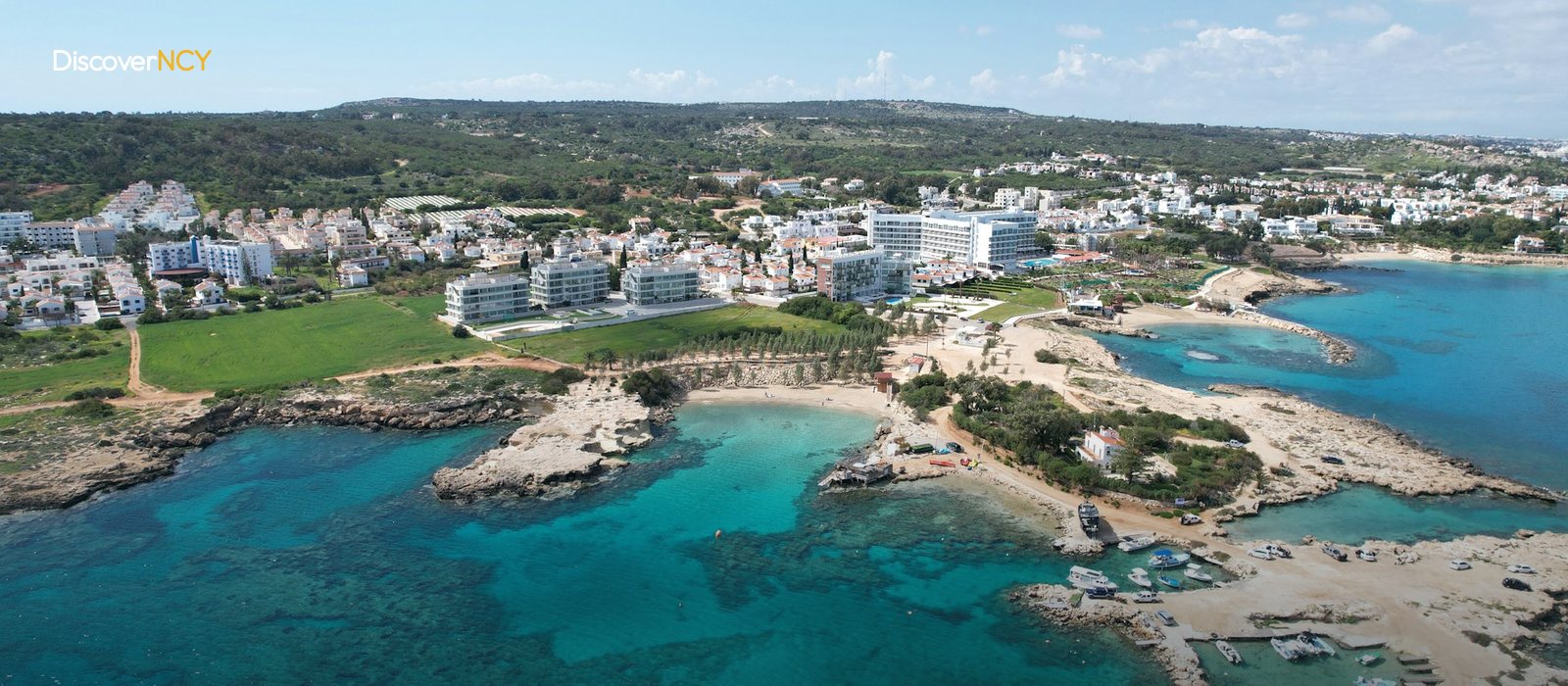
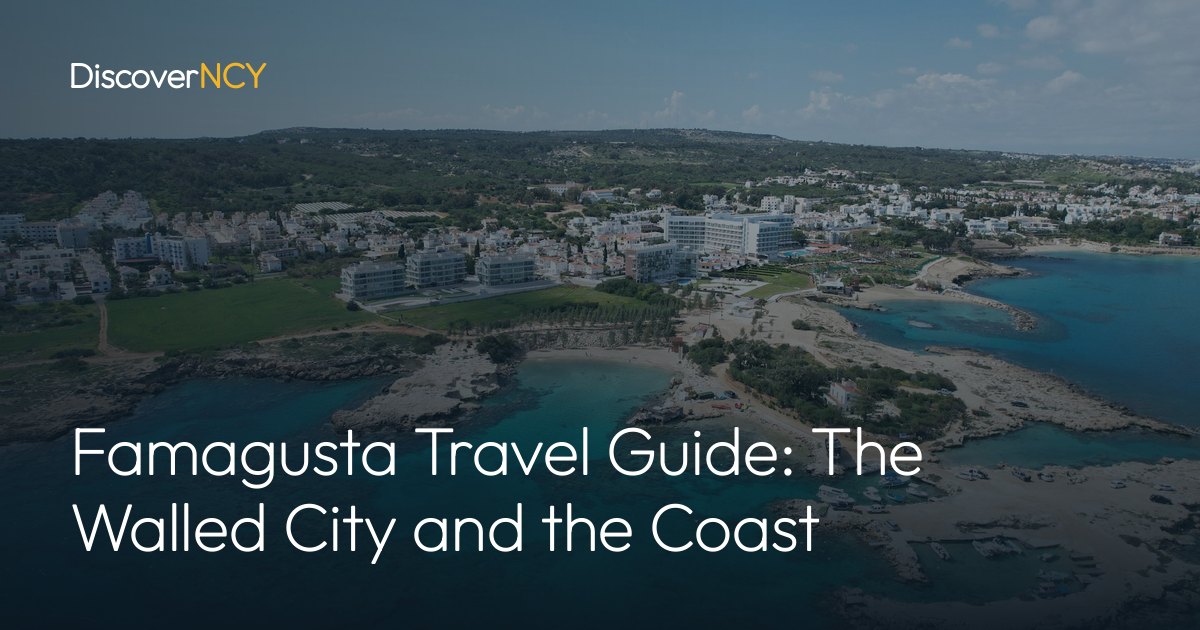
The main axis opening to the city's north is the Salamis Road; the hotels, the beaches and the campus all line up along it. Properties like the Salamis Bay Conti and Crown Salamis sit right against the shoreline, with La Terrazza on the same stretch; the ancient city is a short drive away. On the same axis lies the campus of Eastern Mediterranean University, only three kilometres from the centre. The school opened its first term in 1979 with 105 students and is the TRNC (North Cyprus)'s only state university; today it hosts tens of thousands of students from over a hundred countries. Don't limit your Famagusta list to the walls and the beach — the campus boulevard is part of the city too. Does it go quiet here in winter as well? The hotel side slows a little, but the campus boulevard stays busy on weekdays; the university doesn't empty out in winter.
A Day on the Coast: From Glapsides to the Ancient City
Glapsides, about eight kilometres from the centre, is the families' beach. The sea is so shallow that even twenty or thirty metres out, your feet still touch the bottom. The nice part is that there's a lifeguard and cafe service too. The municipality overhauled the beach in 2026, and entry remains free. You'll find the beach's detailed map and the area's other shores in our North Cyprus beaches guide. After Glapsides the road bends north. The ancient city of Salamis, St. Barnabas beside it, and the Enkomi site a little behind — all close enough to fit into half a day. The colonnaded courtyard of the Gymnasium is completely exposed, with not a single patch of shade over it. St. Barnabas is now a museum; some of the finds from the Salamis excavations are displayed there. Enkomi is older than both — this is the Bronze Age city that was the region's centre before Salamis was even founded. Most visitors skip Enkomi; those with the time won't regret it.
A District Bordering Varosha
The city has one more boundary: Varosha. Part of the area, sealed off since 1974, was opened to visitors in 2020; in the first four years nearly two million people went in — no small number given the town's size. Entry is free; inside, you can rent a bicycle or a golf cart, and there's an hourly minibus service. Two beach spots have even been set up within the zone. The hours and route rules change with the season — those details are a subject for another article. The gate adjoins the beach locals call Palm Beach. If you're following the Salamis road you pass right by it anyway — no need to search. At Palm Beach you don't pay either; the beach was recently tidied up by the municipality.
Arriving from Ercan, Getting Around the City
Getting from Ercan is the most practical way to reach Famagusta; the drive takes about forty-five minutes, and while the exact figure varies from source to source, that estimate is a safe one. Those coming from Nicosia face a journey of fifty minutes to an hour; from Kyrenia it takes a bit longer. Within the city, a separate minibus route runs along the Salamis road and thus as far as Glapsides; the walled city, meanwhile, is walkable anyway — no vehicle needed.
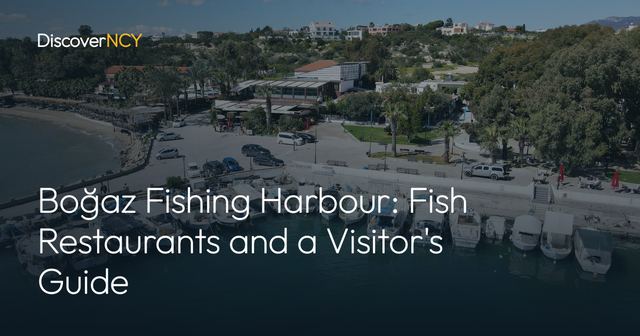
Heading north, seven kilometres northeast of Iskele you reach Boğaz: a small, sheltered harbour with colourful fishing boats, its waterfront fish restaurants filling up at lunchtime. Don't think of it as a neighbourhood of Famagusta; administratively it falls within Iskele, and geographically it's merely the city's natural continuation. Can you get here by ferry? To Kyrenia, yes — to Famagusta, no; the Taşucu sailings dock at Kyrenia's port, while the port here is devoted mainly to freight, sending a night ferry to Mersin three days a week. The classic of the Nicosia route, the İtimat buses, depart hourly all day long, with the terminal across from the Monument Roundabout; even if you don't rent a car, reaching the city isn't hard.
If you have a single day, choose the walled city and Salamis, and leave the coast for the next day. My advice: don't rush it. Enkomi is a job for whoever has a second day; the places to see in Famagusta are all within walking or short driving distance of one another anyway, so a plan comes together easily. If you're continuing to the Karpaz Peninsula, you pass through Boğaz — the road carries you there on its own.