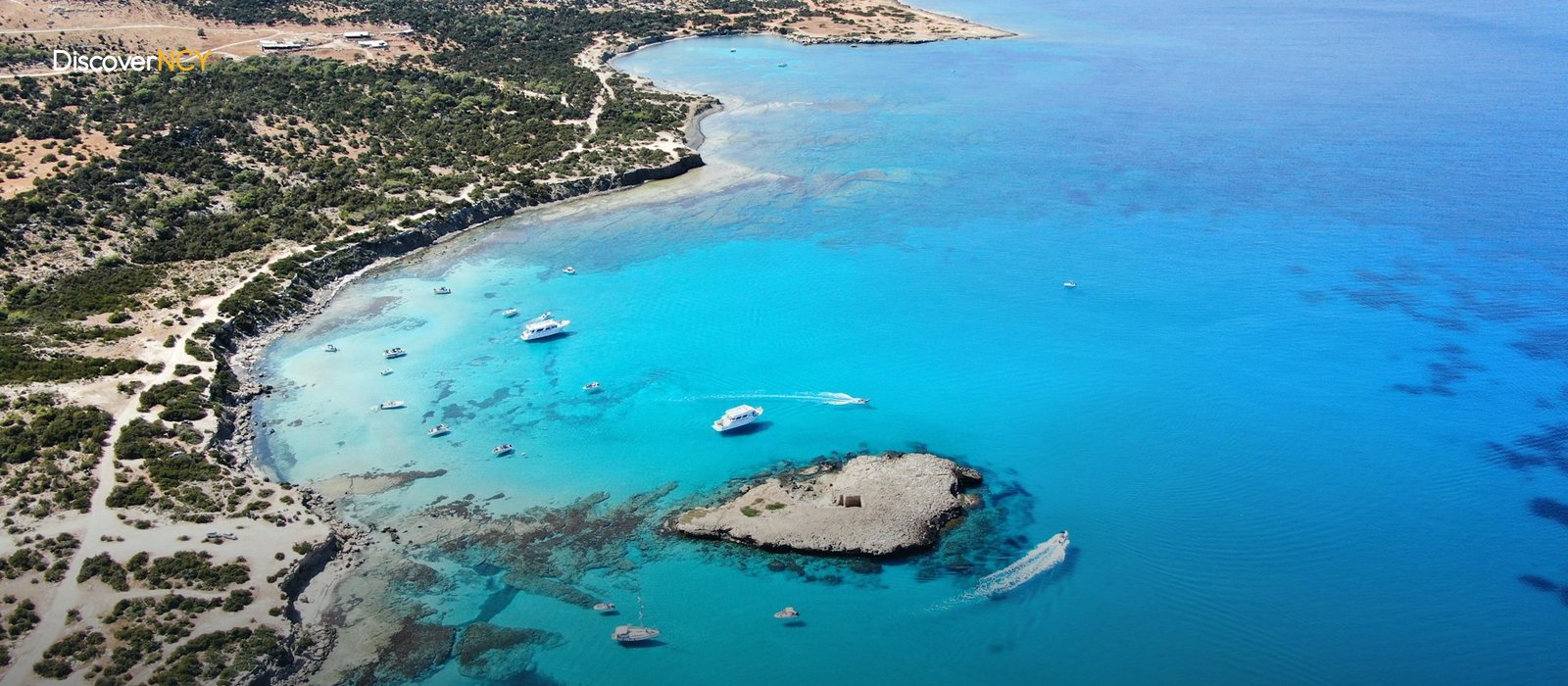
When people mention North Cyprus beaches, Kyrenia's hotel-front sands come to mind first — but the picture is far wider. There are calm coves in the west, turtle nesting sites in the east, kilometres of public beach in the southeast, and on the Karpaz Peninsula an almost deserted stretch of coastline. Which one is right for you? The answer largely depends on your wheels. With your own car, the whole island is open to you; without one, your options narrow to the area around Kyrenia. Let's go region by region, from Kyrenia to Karpaz.
West of Kyrenia: The Alsancak Strip
West of Kyrenia (Girne), the first stop is the Alsancak–Karaoğlanoğlu strip. Yavuz Çıkarma Beach is here, nine kilometres from the centre. For years it operated as a paid private beach under the name "Escape Beach"; in 2024 the operating licence was revoked, the beach was leased to the Security Forces Command and is being turned into a memorial site — so don't expect the old club-and-sunbed setup. The first landing of the 1974 Cyprus Peace Operation took place here on 20 July, and Alsancak Municipality has placed a flame monument at the junction. A little further along is Camelot Beach, where the bay's shape keeps the sea almost still. Denizkızı is a hotel beach; outside visitors pay at the gate, while it's included for hotel guests. Alsancak's public beach costs nothing at all; it's fifteen minutes from the centre and has its own restaurant.
Kayalar and Sardunya: The Western Tip
After Alsancak, keep following the coast road west; past Karşıyaka you reach the village of Kayalar. "Horseshoe Beach" here takes its name from the horseshoe shape of its cove. On it sits a simple family restaurant of the same name, focused on fish and grills; the cove is really known for that restaurant, and the beach setup runs around it. You'll also come across small coves like Sardunya Bay along the road. The area is far from the big resorts — this is the sunset side of Kyrenia's western coast. Public transport doesn't come out here; you'll need your own car.
East of Kyrenia: Acapulco, Lara and Alagadi
Head east and Çatalköy begins. Acapulco beach lies nine kilometres east of Kyrenia, and with its kilometre-long sands it suits families with children. The entry is generally shallow and the seabed deepens slowly. Hotel guests enter free; outside visitors pay. Right nearby, if you like, is Lara — a completely natural, unmanaged cove: no sunbeds, no restaurant, no lifeguard, and be warned that reaching it by car along the dirt track is difficult. Also, don't let the name mislead you: most "Lara" search results online refer to the famous Lara Bay in South Cyprus. This isn't that — it's a simple TRNC (North Cyprus) cove. A little further east is Alagadi, known as a turtle nesting beach. Chelonia mydas and Caretta caretta lay their eggs here. The beach is closed from eight in the evening until eight in the morning. Night observation is only possible with SPOT volunteers, by registration; we've covered the visiting rules in detail in our guide to places to visit in North Cyprus as well. Nesting runs from May to August; hatchlings make their way to the sea from August to October.
Iskele-Long Beach and Bafra
The Iskele Long Beach strip has grown rapidly in recent years — but what's growing isn't hotels; it's mostly residences and construction projects. The shore stretches for kilometres, the sand soft and golden. Along Iskele Municipality's public beach band, which includes the Haravdi shore, there's a walking and cycling path, a children's playground and accessibility facilities, used by tourists and locals alike. Bafra, I'd say, is another story. The government declared it a tourism zone in 2003; thirteen hotel plots were planned, but to date only four have been filled. Is Bafra far to reach? It's 65–70 kilometres from Ercan, but on package tours the transfer can already be included in the price. Each of those four hotels has its own beach, wide and well kept. Anyone who'd rather not walk through a hotel gate heads for the Bafra Public Beach right next door, run by Mehmetçik Municipality.
Famagusta Beaches
In Famagusta (Gazimağusa) things work differently: here the North Cyprus beaches are largely municipal, and entry is free. The city treats free access to the sea as a right. Free entry doesn't mean everything is free; the till comes into play for services like sunbeds. Glapsides is the best known of them, with parking for three hundred cars and shower cabins. Palm Beach sits right beside the fenced-off ghost town of Varosha; it's municipally managed and accessible for visitors with disabilities. At the northern end, Silver Beach was recently opened to the public by the municipality. All three get crowded in summer, but the common thread is the same: you can swim without a penny in your pocket.
Karpaz Altınkum
At the tip of the Karpaz Peninsula lies Altınkum, officially known as Golden Beach, within the boundaries of the Dipkarpaz National Park. The sand is fine and golden, the sea turquoise; you won't see a single rooftop on the horizon. The last kilometres of the road are dirt and gravel. Can you get there by public transport? Almost never. Going without a car is hard, and I'd advise bringing water and food with you. Wild donkeys are a frequent sight along the road and around the beach; they're considered a symbol of the island. Altınkum is also a turtle nesting beach, one of nine on the Karpaz Peninsula. Both "Chelonia mydas" and "Caretta caretta" nest here; the nests are marked with cages. The few simple guesthouses and the snack kiosk nearby open only in summer; in winter the shutters are down.
What to Know Before You Go
The swimming season is long: the water starts warming in May and stays comfortable through the end of October. Can you swim in November? If you're hardy, yes — the average drops, but the sea never turns "icy". In winter, hotel and private beaches close or scale back services like sunbeds, kiosks and lifeguards. Public beaches stay physically open but unserviced. There's no gate fee at a public beach; you only reach for your wallet if you want a sunbed or food. Don't head to Karpaz Altınkum, Lara or the Kayalar–Horseshoe strip without a car; public transport there is close to nonexistent. You can check the current sea temperature in Cyprus on the TRNC (North Cyprus) Meteorology Department's website — the readings are updated daily. North Cyprus beaches genuinely differ from region to region, so let your car and your budget decide which shore you head for.