Getting to North Cyprus is very easy. There are direct flights to Ercan from Turkey — Turkish citizens can even enter Cyprus with an ID instead of a passport — a chipped card will do. But what will you see once you're there? The island is small, yet the list is longer than you'd expect. Castles, ancient cities, a national park and a capital split in two — don't let that surprise you. Kyrenia, Famagusta, Nicosia and the Karpaz Peninsula: four distinct regions, four distinct moods. The one thing to watch is your route. Distances look short on the map, but the mountain roads eat up time. In this guide we'll walk through the places to visit in North Cyprus region by region, in the most practical way.
Kyrenia: Harbour, Castle and Mountain Monasteries
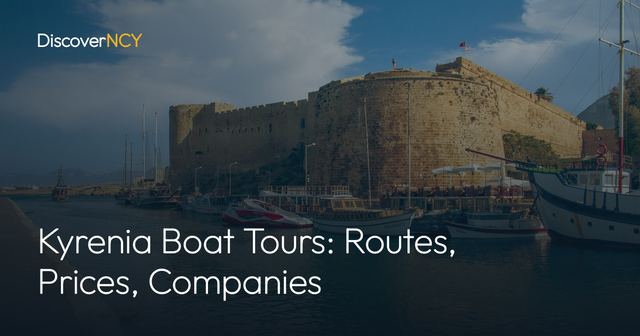
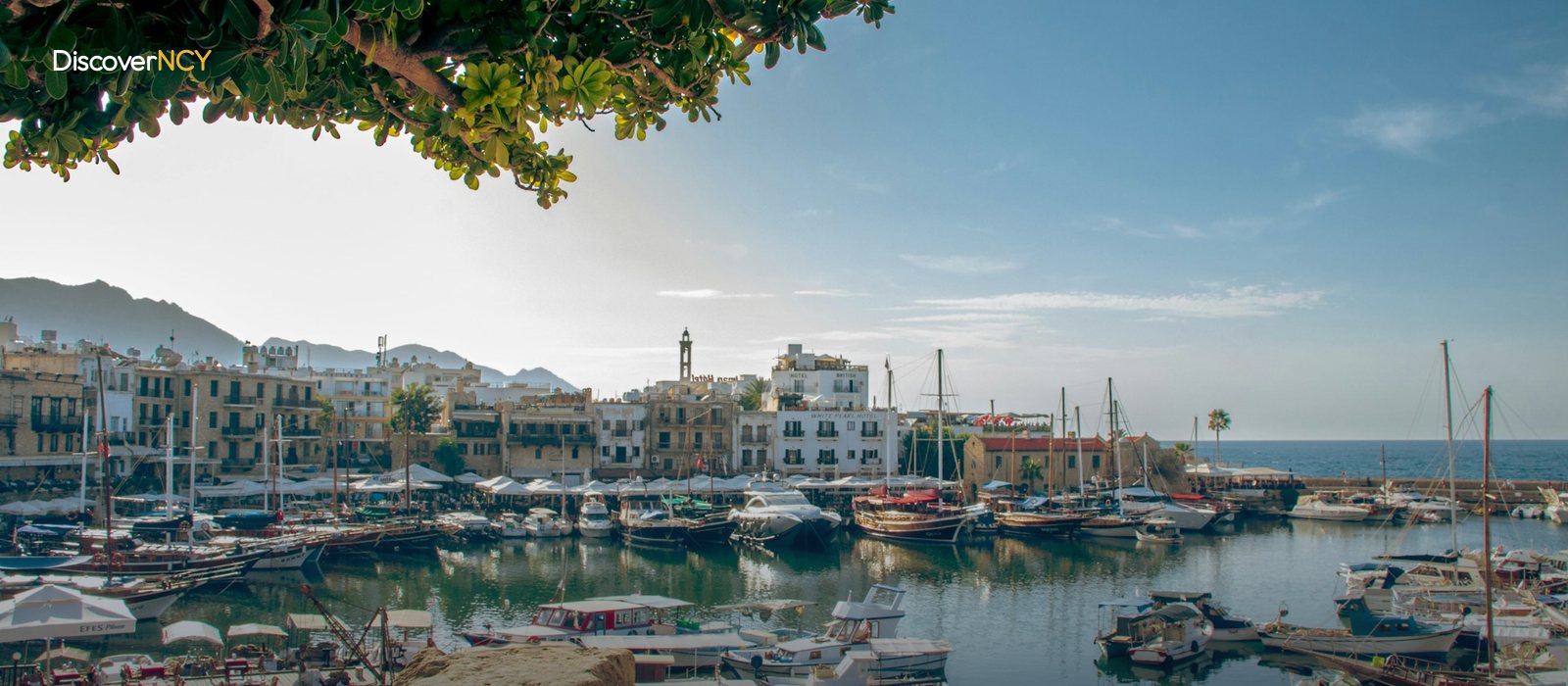
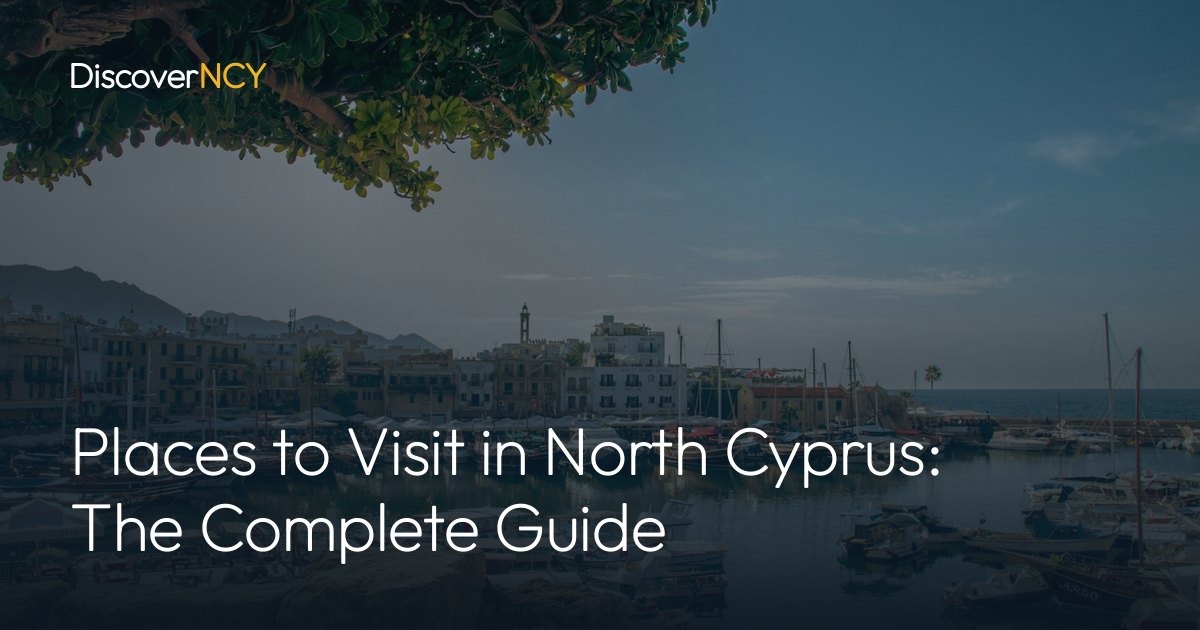
Among the places to visit in Kyrenia (Girne), the first stop is always the same: everyone heads to the harbour first. The horseshoe-shaped old harbour and Kyrenia Castle sit side by side, and you can see both in a single tour. If you like, end the day at the tables along the waterfront — the evening hours are this spot at its best. Whatever you do, don't skip the Shipwreck Museum inside the castle. The vessel here is a 2,300-year-old Ancient Greek merchant ship. A diver named Andreas Cariolou found it in 1965, and after years of work it was raised from the water together with its amphorae. In many places you'll read that it's "the world's oldest shipwreck". That's not true. The Uluburun wreck is older. This ship is the oldest Greek merchant vessel to survive to our day in one piece — that's where its fame comes from.
Once you leave the city, there are two more stops. “Bellapais Abbey” sits inside a village on the mountainside, 5-6 kilometers from the center. It was founded at the end of the 12th century by monks fleeing Jerusalem, while the Gothic structure you see today was added by the “Lusignan kings”. Its church is still standing. The village's official name is now Beylerbeyi, but everyone keeps calling it “Bellapais”. There's higher ground too: St. Hilarion Castle, at 732 meters. There are three mountain castles along the Five Finger (Beşparmak) ridge — St. Hilarion, Buffavento and Kantara. This is the westernmost and the easiest to reach. The stairs are steep, the visit takes a good two hours, and comfortable shoes are a must.
Famagusta: The Walled City and Salamis
The heart of Famagusta (Gazimağusa) is inside the walls. Othello Castle is here. The name comes from Shakespeare's play; it's said to have inspired it, though no one has ever proven that. The castle has been open to visitors again since 2015. A little further on you'll see the Lala Mustafa Pasha Mosque. From the outside it may surprise you, because this building is actually a cathedral. Construction began in 1298 as St. Nicholas Cathedral; its facade is often compared to Reims Cathedral in France. The Lusignan kings were crowned here with the title "King of Jerusalem". It was converted into a mosque in 1571 and has carried its current name since 1954. The walled city is small — you can walk everywhere.
The truly big excursion lies 8-9 kilometers north of the city: Salamis, one of the largest ancient cities in Cyprus. The columns of the Gymnasium are the city's most photographed corner, and the Roman theatre begun in the era of Augustus is also worth seeing. Persian, Hellenistic, Roman and Byzantine layers sit stacked on top of one another here. One warning: there is next to no shade at Salamis. Go in the morning and bring your water.
Visiting Varosha
The story of Varosha (Kapalı Maraş) is like nowhere else. It was evacuated in 1974 and for 46 years no one could enter. In 2020, 1.5 kilometers of the beachfront strip was opened to visitors. Can you go? Yes. Can you wander wherever you like? No. Leaving the designated route is forbidden, entering the buildings is forbidden, driving in with your own vehicle is forbidden. Inside, you either walk or rent a bicycle or golf cart. Beyond the opened strip is still a military zone, and the signs must be obeyed. The entrance is on the Dr. Fazıl Küçük Stadium side. In summer it's generally open 08.00-19.30, but the hours change every year — check before you go.
The Two Sides of Nicosia
Nicosia (Lefkoşa) is the world's last divided capital. On the north side, three stops are within walking distance of each other: the Selimiye Mosque, the Büyük Han and the Arasta bazaar. Selimiye, too, was actually born as a cathedral; its foundations date back to 1209, the minarets were added in 1572, and entry is free. The Büyük Han was built in 1572 by Muzaffer Pasha, the island's first Ottoman governor. It's a two-story caravanserai with a courtyard; today the courtyard is filled with cafes and craft shops, and entry there is free as well. The Green Line dividing the city runs roughly 180 kilometers across the island. So can you cross this line to the other side, into the south? If you entered with a Turkish ID card, no. There is no crossing — your trip stays in the north. Plan accordingly.
Karpaz: Wild Donkeys and Golden Beach
The island's most untouched corner is the Karpaz Peninsula. A national park, wild donkeys, endless empty beaches. There's almost no construction at Golden Beach; it's also a nesting ground for sea turtles. Caretta caretta and Chelonia mydas lay their eggs between May and August, and the hatchlings make their way to the sea from August to October. At the tip of the peninsula stands the Apostolos Andreas Monastery, an important pilgrimage site for Orthodox Christians. If you want to see turtles, there's one more address: Alagadi Beach, 16 kilometers east of Kyrenia. But you can't go on your own at night; the beach is closed between 20.00 and 08.00, and observation happens only in the company of SPOT volunteers. On the way back, stop by Kantara Castle as well. It's the easternmost link in the mountain trio; it sits in the Iskele district, and from its summit you can see both the Karpaz coastline and Famagusta Bay at the same time.
What to Know Before You Go
Go in knowing a few things, so your first day isn't spent in a queue. The old-style Turkish ID booklet is not accepted; a chipped ID card or passport is required, even for babies. Flights land at Ercan's new terminal, opened in 2023, and direct services depart only from Turkey. The currency is the Turkish Lira, so there's no exchange-rate hassle, but cards may not be accepted in small places — keep some cash on you. If you're renting a car in North Cyprus, the most important detail is this: traffic drives on the left. Your license is valid; just take extra care for the first few days until your eyes adjust. The archaeological sites charge admission: Kyrenia Castle, St. Hilarion, Bellapais, Salamis, Kantara. Selimiye and the Büyük Han are free. Entry to Varosha is also free; the bicycles inside are for rent. Tickets are bought at the gate. If you'd rather come by sea, there's a ferry from Taşucu to Kyrenia — check the sailing times before you set out.