Kyrenia Travel Guide: The Harbour, the Castle and Beyond
Kyrenia (Girne) is a narrow city. The Mediterranean on one side, the ridges of the Kyrenia Mountains on the other, and the town squeezed in between. More than half the island's hotel beds — some 15,000 of them — sit on this thin strip, which means everyone who comes to the TRNC (North Cyprus) passes through here sooner or later. The harbour and the castle are naturally the first two stops on any list of places to visit in Kyrenia. What really defines the city, though, is its surroundings: the coastal towns stretching west, the villa districts to the east, the restored villages on the mountain slopes and the bazaar at its own centre. Which direction you head out of the centre changes the whole texture of your holiday.
The Harbour and the Castle: Reading the Heart of the City
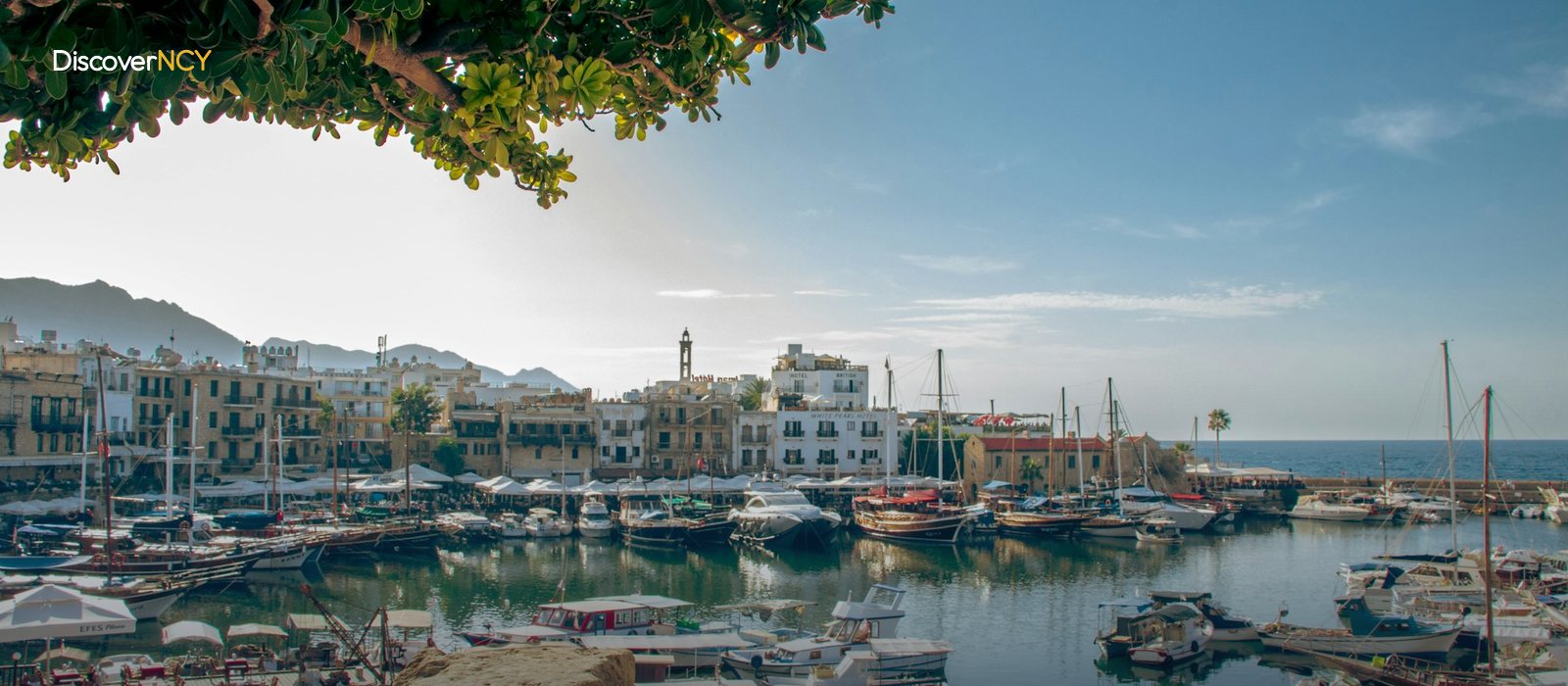
Ask about places to visit in Kyrenia and every list puts the castle and the harbour first. The real question is which harbour, because Kyrenia has two. There are two separate harbours in the city centre and mixing them up is easy. That horseshoe view on the postcards belongs to the Old Harbour, ringed with restaurants and cafés. The castle holds the harbour's eastern end, and the two fit into a single walking tour. For the castle's history and the shipwreck inside it, see our guide to historic sites. Do ferry and cargo passengers land here too? No — they dock at Kyrenia Tourism Harbour, opened in 1987; it sits just outside the centre, a separate facility built for ferry and freight traffic. People still confuse the two. Leaving the castle, Ziya Rızkı Street begins behind you; by day it carries the air of a bazaar and market, and in summer the municipality's street festivals are set up along this street and the square. The street has a night-time face as well — we've left that to our guide to nightlife in Kyrenia.

Heading West: Karaoğlanoğlu, Alsancak, Lapta
Leaving the centre along Kyrenia's western coast, the first stop is Karaoğlanoğlu, about eight kilometres out; four kilometres further the road opens onto the Alsancak strip. The campus of Girne American University is here, and with tens of thousands of students it pulls the average age of the streets right down. Some property websites mistakenly describe Karaoğlanoğlu as "east of Kyrenia" — it's the exact opposite: it lies west of the centre, and the beach commemorating the 1974 landing is here too. Alsancak is where housing estates and large resort complexes concentrate, almost a self-contained settlement with its own supermarkets and schools. At the far end is Lapta, a quiet town known for its lemon groves, with a long seafront walking path. Only a few kilometres separate them, yet their moods don't match: in Karaoğlanoğlu the street stays open late; in Lapta the evening ends early.
Heading East: Çatalköy and Esentepe
There are no students in the east. Çatalköy is a quarter of an hour away; the streets are full of gated compounds and English signage, and the English-language school here is one of the things drawing foreign residents. At the 26th kilometre the road reaches Esentepe. That is retiree and summer-home territory, and the golf courses have gathered there in recent years as well. Alagadi, the turtle-nesting beach, is on this line too, sixteen kilometres east of the centre. Minibuses do run along the main Kyrenia–Esentepe road, but don't count on their timetable; most people heading east drive themselves.
Mountain Villages: Bellapais and Karmi
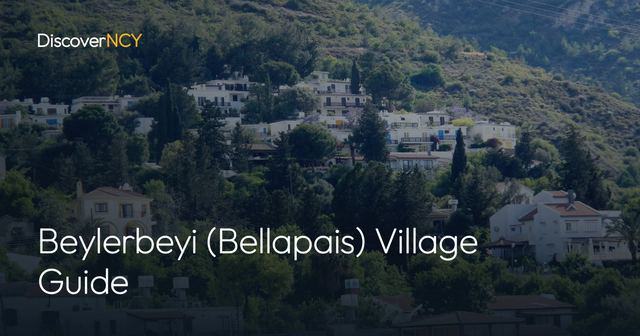
South of the city, two villages climb the lower slopes of the Kyrenia range. Bellapais, which also appears on maps as Beylerbeyi, is a five-to-six-kilometre, quarter-hour climb from the centre. Its fame comes from the British writer Lawrence Durrell, who lived here in the mid-1950s — we owe the book Bitter Lemons to those years. The café at the village entrance still carries the name Tree of Idleness. Karmi lies west-southwest of the centre, eight kilometres away, and also appears on maps as Karaman. Largely restored after 1974, the village holds around 155 households today. Home mostly to British and Scottish residents, it is known for its narrow stone lanes. These two villages are the mountain leg of any Kyrenia sightseeing list, and half a day covers them. The usual local programme: finish the castle-and-harbour tour in town in the morning, head up the slopes in the afternoon.
Getting Around: From Ercan to the City and Within It
A Kyrenia sightseeing list can fill a week, but without a transport plan it's easy to lose time. It's around forty kilometres from Ercan to Kyrenia; depending on traffic the drive takes 35–50 minutes, so don't trust a single figure. KIBHAS runs the airport bus on this route, departing in town from outside the Colony Hotel in the centre, with a few intermediate stops before it sets off. A shared minibus to Nicosia takes about thirty minutes; at busy times there's a departure every twenty to thirty minutes, with the first runs leaving around six or seven in the morning. Evenings are a different picture: public transport stops between seven and nine, and after that the only option is a taxi. Taxis can be found at night, but not by flagging one down — you call one by phone or use a neighbourhood rank. Can you tour the villages on the west and east lines without renting a car? The minibus timetables barely allow it. A rental car is close to essential. The car you rent will have the steering wheel on the right and traffic flows on the left; junctions and turning lanes cause the most confusion, so plan your first morning around it.
Which Season to Go
Kyrenia doesn't show the same face twelve months a year; the season decides most of it. The most comfortable windows, and for many the best time to visit North Cyprus, are spring and autumn: balanced temperatures, thinner crowds. Summer grows heavy with heat touching forty degrees, though in return the swimming season stretches long, from May to November. When winter comes the city doesn't stop, it just slows down. Hotels and casinos stay open all year. Intercity buses thin out, though; the line that leaves every twenty minutes in summer drops to once an hour in winter. Coffee by the harbour is a four-season pleasure. But walk Karmi's stone lanes in January and you won't meet a soul — and the wind never lets up. Before you close the book on Kyrenia, factor in the season; the plan takes its shape from it.