Büyükkonuk Eco Village: An Agrotourism Guide
📍 Büyükkonuk, Iskele
Büyükkonuk Eco Village… In December 2006 the surroundings of this village were mapped inch by inch, and then its square was redrawn. Eighteen months later the name Büyükkonuk began to be mentioned alongside the eco village label; after all these years, how much of that label still stands on the ground? The project that opened the village to ecotourism was funded by the EDGE programme of USAID and Bearing Point, and its academic partner was Eastern Mediterranean University. In its own documents the project describes the village as a "pilot", so what we have here is not a proclaimed first but a tested method. In the sources we examined, today's equivalent of that method shows up in the handicrafts, in the festival held twice a year and in the restored stone buildings; the rest is for the visitor's eye to weigh.
What Does the Eco Village Label Cover?
The project's official name is long, but what it did splits into two parts. In the first phase the village surroundings were surveyed through fieldwork, GPS and geographic information system mapping, and the output of this phase was a promotional brochure. In the second phase it was the turn of the village centre, for which design and improvement plans were drawn up. Architects, urban planners, landscape architects, survey engineers and international ecotourism experts took part together, and the heading of the shared vision was written as "Ecologically Sustainable Living".
The same documents define the village as a "pilot project for developing ecotourism in the Karpaz region", so when comparing it with neighbouring villages the real issue is the method. The same text also mentions the village's goal of joining the Global Eco-Village Network, but there is no record showing that membership was completed. What the label amounts to on the ground is narrower than this, limited to the arrangements in the village centre and to linking the handicrafts to tourism. It is precisely this distinction that sets your expectations as you walk in.
The Festival Calendar Fills Twice a Year
Eco Day is set up in the village square and appears on the calendar twice, once in spring and once in October. The spring leg of 2025 was held on Sunday 11 May and counted as the twenty-sixth; in 2026 the twenty-eighth edition fell on Sunday 3 May. The fact that the number rises every half year confirms on its own that the festival is held twice a year. The organisation belongs to Mehmetçik Büyükkonuk Municipality, and the programme set up in the square packs a lot into a single day. Folk dances by the Karpaz Kızları group, a thirty-piece traditional costume show, live music from Grup Traffic and Grup Otantik, a local table and children's activities follow one another on the same day. At the village eco market, local products such as carob, olives and olive oil are sold.
No fixed date is announced for the October leg, so anyone planning an autumn trip would do well to confirm the date with the municipality in advance. On festival day the square hosts thousands of people; anyone who wants to gauge the village's usual quiet should pick a different weekend.
Workshop Production Is an Extension of Daily Work
The list of workshop activities in the village is short, yet every line is tied to work that is actually being done. Baskets are woven from cotton, woodwork comes out of pruned olive branches, bread and cheese are made, and olive oil can be processed at the village mill. According to the sources we researched, the mill, now turned into a culture house, also offers training in Karpaz weaving, Lefkara embroidery, silk cocoon craft and wood carving. Most of the production here is a continuation of daily work; it does not carry the air of a stage set up for visitors.
On the olive side there is a cooperative structure: members are taught tree care, and in March 2024 a grafting and pruning course started in the village. The village women's course, run jointly with Kilitkaya and Kumyalı, also opened an exhibition in 2022. The mill is a link in this chain: the olives arrive here and the oil leaves from here.
The Mill Dates from 1870
The village mill is dated 1870 and turned for many years producing olive oil. After restoration it opened on 18 May 2008 under the name HASDER Değirmen Culture House, which means its doors opened in the very month the pilot project ended. There is no document linking the two, yet the overlap of dates is still striking. Nor is the mill the only old building in the village.
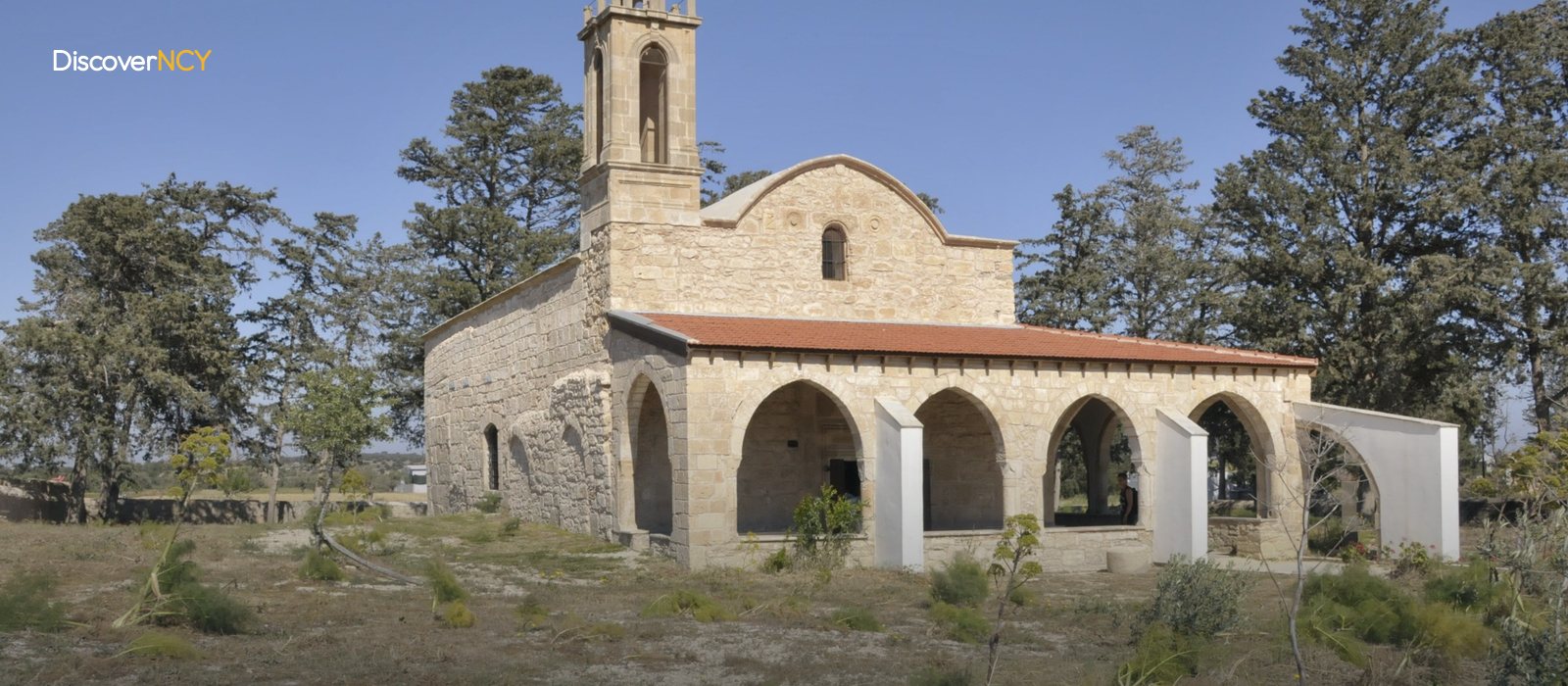
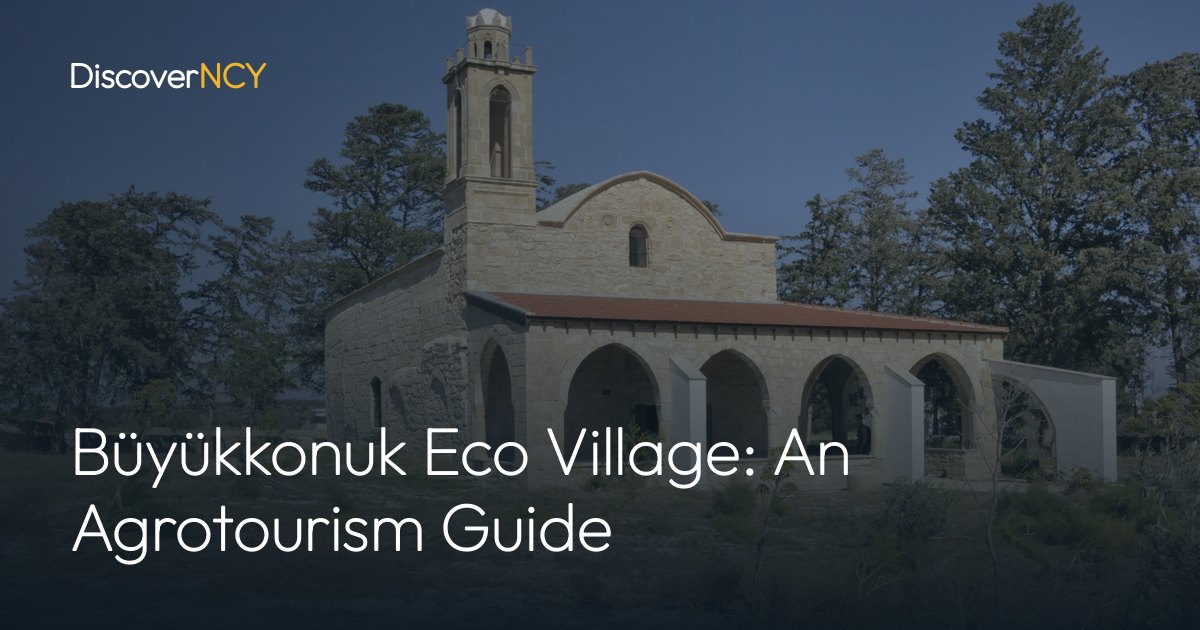
The mosque's original construction date is given as 1873; the present building was rebuilt in 1952-1953 and the minaret was added in 1997-1998. At the eastern entrance of the village stands the Church of Ayios Auxentios. According to legend the village's old name also comes from this saint: while people were debating where his remains should be buried, the saint called out "Gomi", meaning "here". Other churches, some of them in ruins, are counted in the surroundings, among them Saint George, Panagia Kira, Saint Loukas and Saint Vasilios. All are traces of the mixed population of the pre-1974 years. The civil side of the same fabric is also standing: the houses sit on rocky ground, and their typology is arched, with the traditional "sündürme" verandah.
Accommodation Is Small in Scale
There is no large facility here. In a 2017 travel note, the bungalow units run by the municipality ranged between one and three bedrooms. Some of the traditional stone houses have also been restored using their own techniques and converted into guesthouses. In May 2025 the municipality announced three projects, one of which was opening the historic building called "Kemerli Konak" to cultural and tourist use. Don't let the name mislead you: this mansion is not the same thing as the arched house typology of the village.
With the scale like this, deciding where to stay is more like choosing a house than choosing a hotel. If you have a workshop, the culture house or a guesthouse in mind, passing your exact dates to the municipality in advance will make things easier.
The Road Comes from the Famagusta Side
The road out of Famagusta reaches the village after thirty-three kilometres. The village sits at a point close to the western entrance of the Karpaz Peninsula, on the southern slope of a wooded hill, at ninety metres above sea level. Some summaries describe this hill as if it were a mountain in Kyrenia, whereas the name there belongs to the mountain range itself, and the village faces the Famagusta side. The records also show a dual situation: in the Republic of Cyprus register the village appears in Famagusta district, while under the TRNC system it belongs to Iskele district. In 2022 the Mehmetçik and Büyükkonuk municipalities merged, and the combined body serves two neighbourhoods and eight villages at once.
On the map you may see two names at once. The old official name is Komi Kebir, while in local usage it is called Gomi. The name Büyükkonuk was added in 1958-1959 and remained the sole official name in 1999. Kilometres of unspoilt walking country stretch around the village.
| Field | Value |
|---|---|
| Village name | Büyükkonuk, former official name Komi Kebir, known locally as Gomi |
| Administrative status | Iskele district under the TRNC system, Famagusta in the Republic of Cyprus register |
| Municipality | Mehmetçik Büyükkonuk Municipality, 2022 merger, two neighbourhoods and eight villages |
| Location | Western gateway to the Karpaz Peninsula, on the southern slope of a wooded hill |
| Elevation | About 90 metres above sea level |
| Distance to Famagusta | About 33 kilometres |
| Population | Village figures range from 812 to 1,132 depending on the source; municipality total is a separate figure (5,481, 2011) |
| Eco-village project | Funded by USAID and Bearing Point (EDGE), in partnership with EMU, December 2006 - May 2008, pilot project |
| Project vision | "Ecologically Sustainable Living" |
| Eco Day | Twice a year, spring and October. 26th edition 11 May 2025, 28th edition 3 May 2026 |
| October edition date | No fixed date announced |
| Mill | Built 1870, opened as the HASDER Mill Culture House on 18 May 2008 |
| Mosque | First built 1873, rebuilt 1952-1953, minaret 1997-1998 |
| Church | Ay. Auxentios (İksendi), at the eastern entrance to the village; other partly ruined churches nearby |
| Workshops and crafts | Cotton and basket weaving, olive-wood carving, bread and cheese, olive oil, Lefkara lace, silk cocoons, woodcarving |
| Accommodation | Municipal bungalows (2017 source), restored stone guesthouses, Kemerli Konak plan (May 2025) |
For the neighbouring vine village in the same merged municipality see our Mehmetcik wine festival page; for the wider peninsula there is the Karpaz Peninsula guide, and for the village at the end of the road the Dipkarpaz village guide.