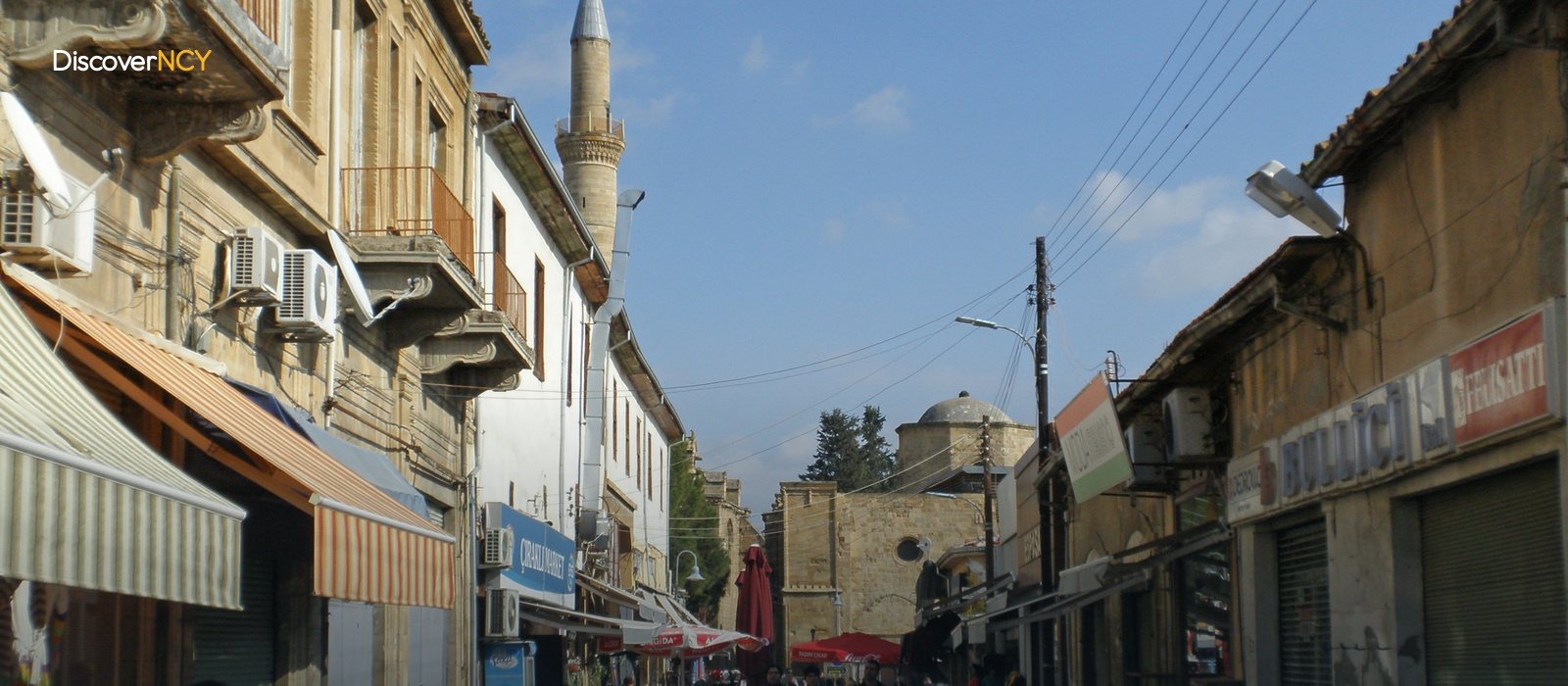
Arasta Bazaar and the Lokmacı Gate
📍 Walled city, between Asmaaltı and Selimiye, Nicosia
In the walled city of Nicosia (Suriçi), a street's name tells you outright what was done on it. Arasta Bazaar is a car-free market street lined with shops on both sides, squeezed between the Asmaaltı, Sarayönü and Selimiye quarters, and at its southern end sits the pedestrian crossing point on the line that divides the island in two: the Lokmacı (Ledra Street) crossing. It is arguably the busiest pedestrian route in the city. It packs a spice seller, a jeweller and a border crossing into the same short walk. The complicated part begins right at that crossing, because not everyone can pass through Lokmacı.
A single line from Büyük Han to the crossing
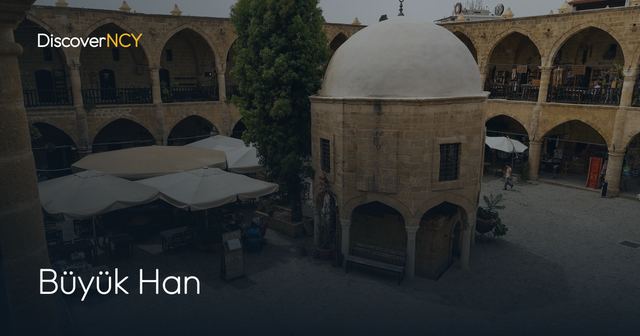
Getting lost in the walled city is genuinely impossible here, because the market street runs along a single line and, if you don't turn off, delivers you straight to the crossing in the south. Büyük Han stays behind you to the north, ahead are the rows of shops with a few sweet shops squeezed in between, and walking from the han to the crossing takes only a few minutes if you don't stop at the windows. The ground is flat from end to end. Would someone with sore knees, or a visitor with an elderly relative, struggle on this route? Absolutely not: there is not a single step to climb along the whole walk (a real advantage), and the route suits every age group. The street is also closed to traffic, as our research confirms. With no need to squeeze onto a pavement, the walk stays comfortable even at busy hours. The northern anchor of the route is Büyük Han, dated to 1572, so for anyone wanting to combine the two stops in one outing, that is the most logical place to start.
What "arasta" means, and what is sold here
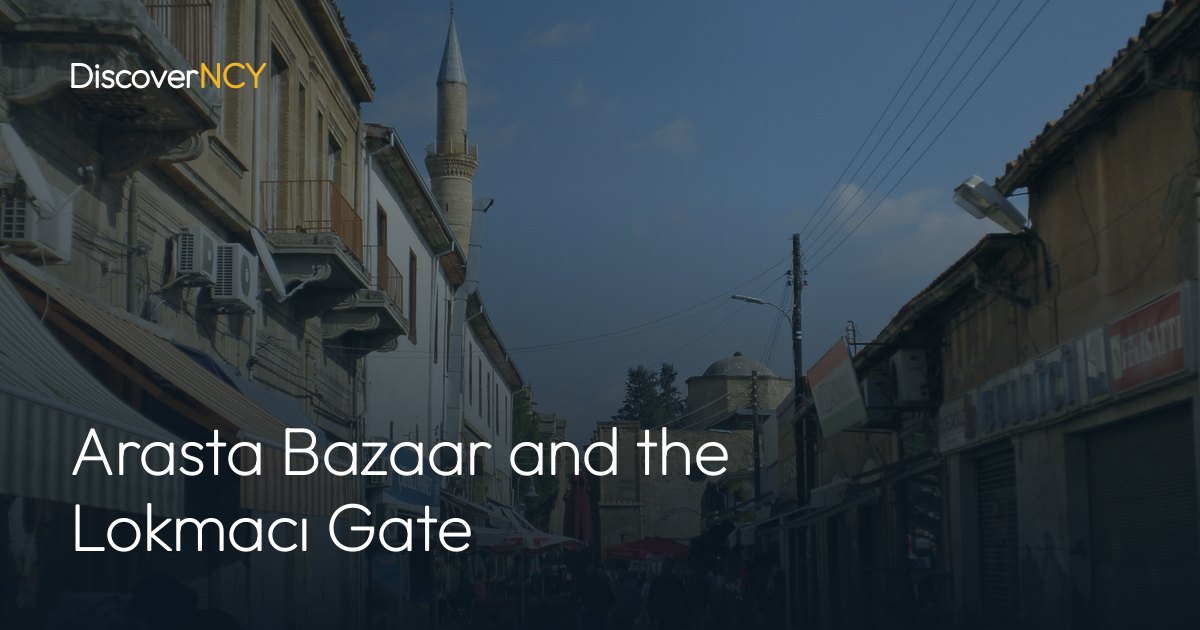
An arasta is a market where tradesmen and craftsmen doing the same work line up side by side, and this street was one of old Nicosia's most important shopping centres. It still does the same job today. In other words, it is not a historic stage set but a working commercial strip. The windows display souvenirs, jewellery, spices, leather goods, ceramics, glass and woven textiles, with shops selling local wine and traditional sweet makers in between. The street stays lively from early morning until night, but the real action happens in the daytime hours when the shopkeepers have their shutters up. Note that there is no announced common opening time for the shops, so a visitor arriving late in the evening may find some of the windows closed. The street itself is a public space and can be walked at night too. Once the shutters come down, though, there is no bazaar left to browse. Those who come in the morning find all the shopkeepers at Arasta Bazaar open, and get more room for photographs in the narrow street as well.
The crossing was closed from 1963 to 2008
The Lokmacı crossing closed in 1963. It stayed shut to passage for forty-five years, and its reopening did not come until 3 April 2008. Before the opening, work to remove the barricade had begun in late 2005, an overpass was built to separate military movement from civilian traffic, and half the cost of that overpass, announced as roughly 1 million TL, was covered by the Turkish Embassy in Nicosia. Today the crossing is one of nine crossing points on the Green Line. It is open to pedestrians only. Being the busiest crossing between the two Nicosias, it stays active all day long. Brief suspensions caused by demonstrations or protests happen from time to time, but they are rare and short enough to make the news, so they generally don't upset a day's plans. Even so, it is a safer plan not to make walking to the crossing the sole purpose of the day, and to factor in the walled city's other stops as well.
Please note: you cannot cross to the South with a Turkish ID card!
This is exactly where visitors get most confused. A TRNC citizen can exit through the crossing with an ID card or passport, walk about a hundred metres along the Green Line itself and enter at the checkpoint on the other side. The same convenience does not apply to citizens of the Republic of Turkey, because you cannot cross to the South with a Turkish ID card. The passport requirement kicks in. That is why a traveller from Turkey goes to Lokmacı not to cross over but to see the border. The crossing itself, the checkpoint architecture and the view onto the UN buffer zone can all be seen up close. At the far end, Ledra Street begins. You take a few photographs, then head back along the same street. If you plan with this in mind, you won't be disappointed at the crossing: staying on the northern side and seeing the hundred-metre gap between the two sides and the control booths is already enough to understand what the border looks like.
What to expect when shopping
In the bazaar the price of the same item can vary from one window to the next, so if you decide on the first figure you see, you may come across a different offer a few shops later. On the souvenir side, jewellery, ceramics and textiles stand out, while on the food side there is plenty of choice for anyone after spices and local wine. But is that ceramic or textile in the window a historic piece? Since most of the production comes out of today's workshops, what you buy is a souvenir product; the street's age does not transfer to the goods. Alongside this liveliness, the street has an honest shortcoming too. Don't be surprised if some building facades look neglected. Our research found that this is occasionally a genuine subject of criticism in the local press, and we can say that the shopkeepers themselves actually want the historic buildings to be looked after. No specific official restoration programme has been announced for 2026. The facades will be seen as they are. The neglect doesn't lower the bazaar's vitality and shows itself only in photographs, because most of the shopkeepers have been opening and closing the same windows for years, so the street's commercial rhythm runs independently of the facades.
Continuing the walk through the walled city
Arasta and Lokmacı together won't fill even a half-day outing, so it makes sense to combine them with neighbouring stops. Selimiye Mosque, whose restoration is complete and which has been open for worship since May 2025 (we have written a separate article on it), sits within the same walk. Close to the crossing stands the Bandabuliya, the Municipal Market, a covered local food market whose origins go back to the 1870s and which took its present form with the major repair of 1932. Its name describes its job too: bandabuliya means a place "where selling never stops". Those who want to spend the evening outside the walled city usually head to Dereboyu Street, where the cafes and nightlife are. For anyone wanting a practical measure of time, 30-60 minutes is enough just to see it, and one to two hours if you go shopping. No ticket money is added to that calculation. Both are public spaces, and there is no such thing as an entrance fee for Arasta Bazaar; the only thing you pay is the price of the piece you like in the window.
| Field | Value |
|---|---|
| Name | Arasta Bazaar and the Lokmacı crossing |
| Location | Walled city of Nicosia, between Asmaaltı, Sarayönü and Selimiye |
| Type | Historic market street and pedestrian border crossing |
| Distance from Ercan | About 20-25 minutes |
| Distance from Kyrenia | About half an hour |
| Distance from Famagusta | About an hour |
| Entrance fee | Free, public space |
| Opening hours | Arasta: daytime shop hours; Lokmacı: operational 24/7 |
| Visit duration | 30-60 minutes, 1-2 hours with shopping |
| Physical difficulty | None, flat pedestrian street with no steps |
| History | Lokmacı closed in 1963, reopened on 3 April 2008 |
| Note for Turkish citizens | No crossing, only a point to see the border |
| Nearby stops | Büyük Han, Selimiye Mosque, Bandabuliya, Dereboyu |
| Status in 2026 | Some building facades neglected, official restoration unconfirmed |
For the other stops on the same walk, read our Buyuk Han Nicosia and Selimiye Mosque Nicosia pages, and for planning the city as a whole see our Nicosia travel guide.