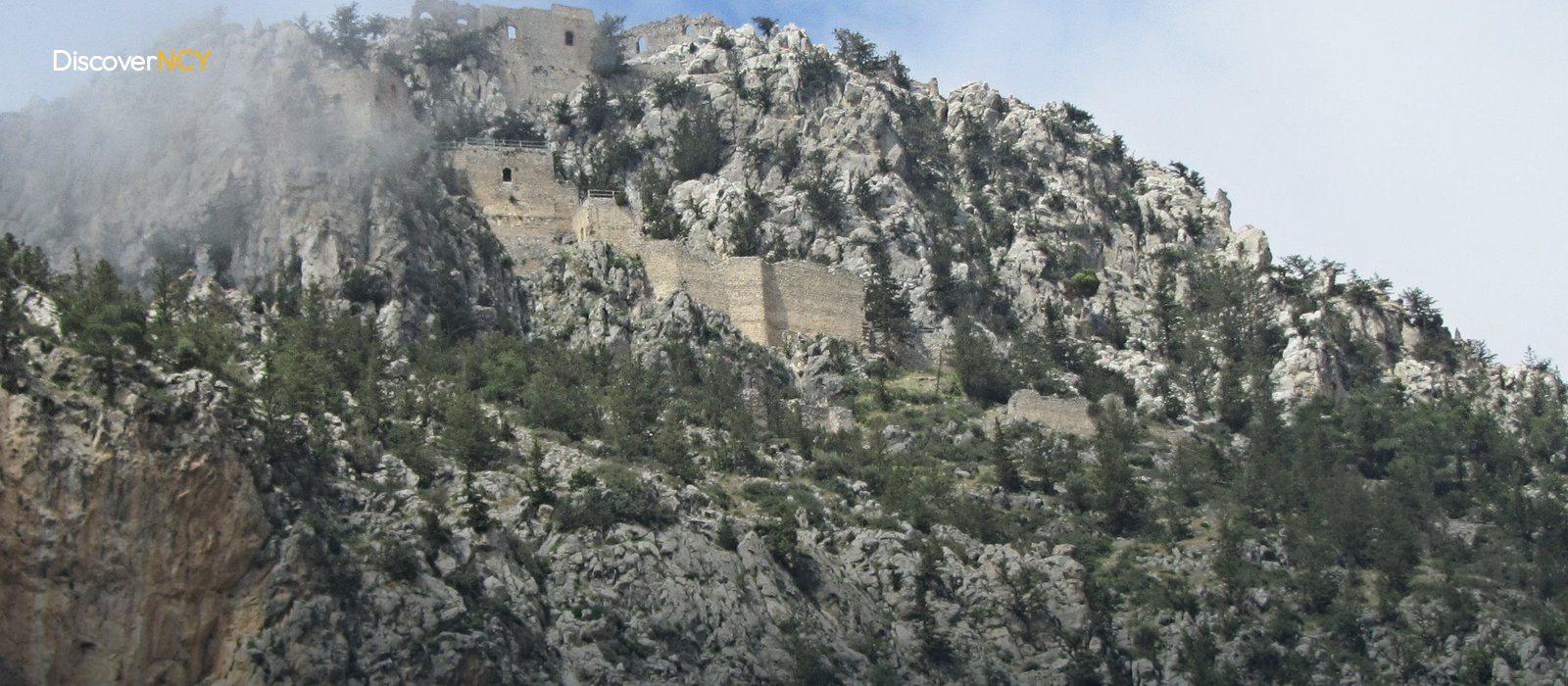
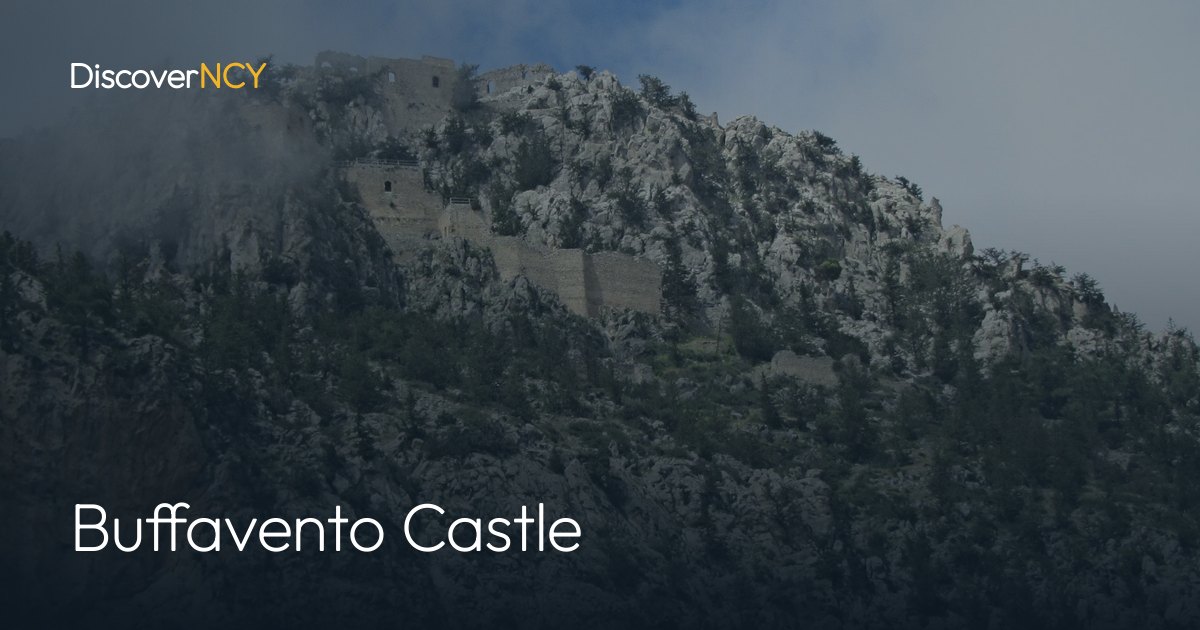
Buffavento Castle
📍 Kyrenia Mountains, off the Degirmenlik road, Kyrenia
Reaching a summit of roughly 950 metres costs "zero lira" here, because this castle on the Kyrenia range has neither a ticket booth nor a warden (according to online sources). Buffavento Castle stands on a peak rising east of Kyrenia, on the Arapköy side, and is both the highest and the smallest of the three mountain castles. Free entry sounds good, but the price of this site is paid not at the gate but on the road. Once you're in, first a narrow mountain road and then a steep footpath await you. In our research we looked one by one at the road, the climb, and who built the castle and who abandoned it.
6.5 Kilometres Off the Degirmenlik Road
The road up to the castle branches off the Kyrenia-Catalkoy-Degirmenlik route and turns inland toward the mountain after Degirmenlik (Kythrea)… For about six and a half kilometres this mountain road stays mostly a single car wide, so when a vehicle comes the other way, one of you pulls over or reverses to make room. It's still not a route to fear, because it's paved and, apart from a few potholes, a normal passenger car makes it up. Those coming from the Besparmak Pass side follow the signs and reach the same car park in a fifteen-minute drive; the asphalt ends there and the car stays there. The second route via Dikmen-Taskent is not currently in use, so we recommend planning your route via the Degirmenlik road. A driver on the narrow road for the first time gets used to the bends within a few minutes; what really demands attention is oncoming traffic, and this is a road for the patient, not the hurried.
Where the Asphalt Ends and the Path Begins
From the car park, the path and steps take between twenty and thirty minutes to the summit (the time varies with pace and heat). There's no official figure for the number of steps, so we think it's healthier to picture the route not as a number but as long and steep… Because maintenance isn't regular, there are stretches where stones have shifted, and that calls for closed shoes with a firm sole; sandals aren't made for this path. Nobody sells water at the top, so it's worth bringing it up from below, since there's almost no shade either. What if you have a small child with you, or a relative whose knees tire quickly? Then the schedule needs loosening, because the climb is the toughest of the three castles, and if necessary this stop is left for another day. The hour sets the pace too: at midday in summer the sun sits directly over the peak, so whoever sets out early in the morning finds both the road and the climb easier. Going up strains the lungs, coming down the knees, so this path rewards not the one who speeds up but the one who knows their pace.
What Remains Standing: A Gate and a Tower
The castle consists of two levels, lower and upper, connected by stairs. Its builders leaned on the terrain more than they built walls, because the sheer rock is a line of defence in itself. That's why little has survived: an entrance gate, a tower and a few foundation walls. There are almost no railings or safety barriers, and every step you take among the ruins is your own responsibility. Of the three mountain castles this is clearly the most ruined, so a visitor expecting an intact room or palace remains won't find what they're looking for up top. You climb here for the view: from the summit you see Nicosia and the Mesaoria plain, and turning north, the coastline. That same line of sight also explains the castle's history, because it was positioned to be in view of St. Hilarion to the west and Kantara to the east. In other words, it was founded not as a building but as a lookout point, and that's still where its value lies today.
Where the Name Comes From, Who Left It
Buffavento is an Italian word meaning defying the wind, unafraid of the wind. The form Lioutes also appears in Italian sources, but the castle never had a single name throughout its history. The Byzantines called it Leonton, meaning Lion Castle, French sources give Bufevent, and among locals the name Yüzbir Evler (One Hundred and One Houses) circulates. The last to abandon Buffavento Castle were the Venetians, because the administration that took the island in 1489 decided it couldn't keep an adequate garrison here. In the preceding Lusignan period the castle took its final form, and it's reported that it was also used as a prison from time to time in that era. Going further back we come to 1191, when Richard the Lionheart's Cyprus campaign brought the castle under English control. At the very beginning there was Byzantium: the first structure was raised in that period as a watchtower and signal tower, the aim being to form a chain with St. Hilarion and Kantara and spot Arab naval raids before they reached the coast. Signals were passed from castle to castle by fire and smoke. In short, a structure born as a watchtower was abandoned for lack of soldiers.
The Memorial at the Car Park and the 1988 Crash
Near the car park stands a small prism-shaped memorial in white marble, and its story is independent of the castle. On 27 February 1988 a Boeing 727 passenger aircraft belonging to Talia Airways, on approach to Ercan after taking off from Istanbul, struck the Kyrenia Mountains (Pentadaktylos), and the 15 people on board lost their lives. We should stress that the company involved was not Turkish Airlines; Talia Airways was a British-Turkish joint venture operating at the time. Because the crash happened close to the castle, the memorial was erected here, in the car park area. You'll also see the memorial's current condition for yourself, since it catches your eye at the edge of the car park anyway. Two minutes before climbing to the castle or after coming down is enough, and for most visitors those two minutes are the quietest stop of the day.
Dress for the Wind, No Visiting Hours
There are no announced opening or closing hours for the castle, and since there's no ticket booth you can go up freely during daylight hours. The Department of Antiquities and Museums page lists neither a fee nor hours for this castle, so it's worth bearing in mind that today's free status could change in future. There's no toilet, fountain or café either; whatever you bring is what you have. So what goes in the bag? In summer a thin long-sleeved top and a hat, in winter and spring a windproof layer, because the summit is open ground and the castle's name wasn't given for nothing. On the same Kyrenia range, at Alevkayasi, there's a Herbarium displaying plants endemic to Cyprus, and the hiking trails also cross in that area, so the two stops fit comfortably into the same day. Someone leaving Kyrenia in the morning completes the road, the climb and the descent by noon, leaving the afternoon for the Herbarium. The order matters too: Buffavento Castle first, because the climb wants the morning cool, while the plant collection doesn't care what time it is.
| Field | Value |
|---|---|
| Name | Buffavento (Bufavento; Leonton/Lion Castle, Yüzbir Evler) |
| Location | Kyrenia Mountains (Pentadaktylos), Arapköy/Kyrenia area |
| Altitude | About 950 m, highest of the three mountain castles |
| Access | Kyrenia-Catalkoy-Degirmenlik, ~6.5 km narrow mountain road, car park at the end |
| Alternative route | Dikmen-Taskent, not currently in use |
| Car park to summit | Path + steps, 20-30 min |
| Entry | Free, no ticket booth or warden |
| Visiting hours | No announced hours, daylight |
| Origin of name | Italian, "defying the wind" |
| Founded | Byzantine, watchtower and signal tower |
| 1191 | Richard the Lionheart's campaign |
| 1489 | Venetian abandonment, insufficient garrison |
| Structure | Two levels linked by stairs; gate + tower + foundations |
| 1988 memorial | Talia Airways Boeing 727, 15 dead, marble memorial |
For the other links in the same chain, see our St. Hilarion Castle and Kantara Castle articles, and to compare all three on a single route, the North Cyprus castles guide.