St. Hilarion Castle (Kyrenia)
📍 Kyrenia Mountains, Bogaz turn-off, Kyrenia
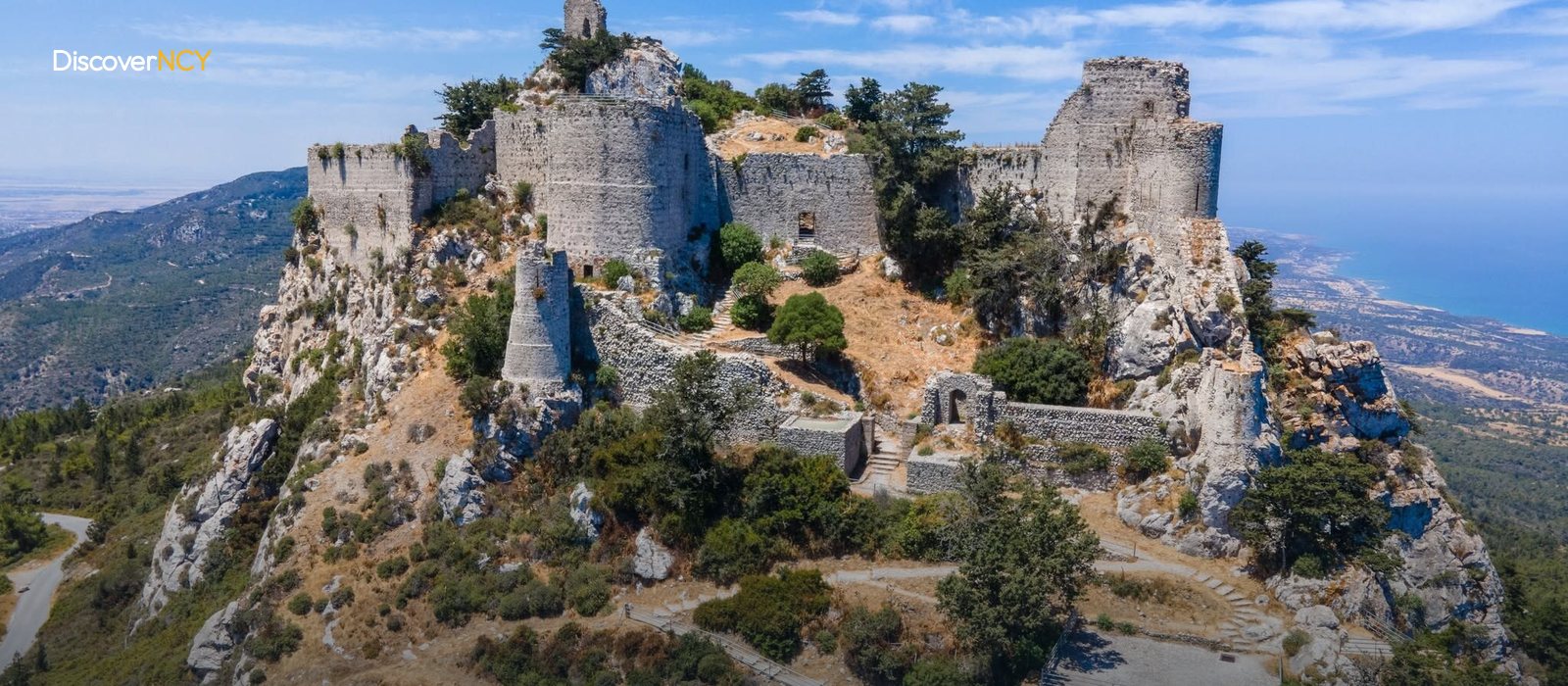
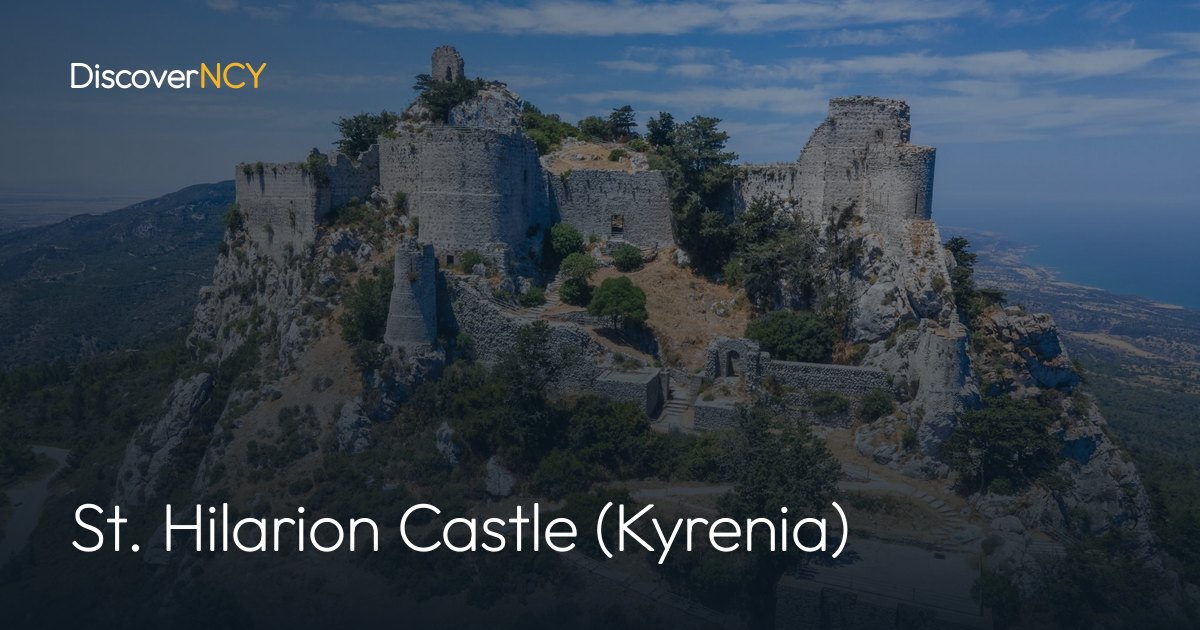
Everyone driving from Kyrenia to Nicosia passes through that narrow mountain pass, and St. Hilarion Castle sits on two peaks looking down on it from 732 metres. The Byzantines built it here for exactly that reason, and the Lusignan kings later placed a summer palace inside the same walls. In our research we looked at how to reach the castle, roughly 10 kilometres southwest of Kyrenia, what there is to see on its three levels and which closing time is waiting for you at the gate. The lower ward holds the soldiers' quarters, the middle one the palace kitchen and chapel, and the top the royal apartments, so the three levels you walk through are really two functions stacked on top of each other. Of the three mountain castles on the Kyrenia (Besparmak) range, this is the westernmost and the closest by car from Kyrenia, though part of the road runs through a military zone. Last entry is at 16:30, so the plan is built around the morning.
From the Bogaz Turn-off to the Car Park
On the Kyrenia-Nicosia main road, you turn onto the mountain road at the Bogaz junction. Coming from Nicosia you turn left, coming from Kyrenia you turn right. Roughly four kilometres of this link road pass through a military zone, so the rule is clear - no stopping of any kind on this stretch, and we are told no photos or video either. There is no public transport, which unfortunately leaves no option other than a hire car, a taxi or a day tour. From Kyrenia town centre the road to the castle is about 10 kilometres, but the bends come thick and fast on the mountain section, so speeds drop and the drive can take longer than the distance suggests. The car park is at the castle entrance. That is where the real work begins, because you climb to the castle up a stepped path, and since the number of steps varies from source to source, giving a single figure would be misleading. So what do you need for the climb? Shoes with grip and some water are enough. Most of the steps are without shade at midday, so leaving the climb for the morning is the least tiring option.
From the Lower Ward to the Queen's Window
You enter through the lower ward, and everyone entering the castle first passes through the outer defensive work known as the "Barbican". This forward structure was built to shield the gate from direct attack. Behind it lie the quarters for soldiers and horses, storerooms and cisterns. The cisterns were for storing water during long sieges, so whoever built the castle this high up had already factored in the risk of running dry. On the same level stand a monastery church from the Byzantine period and the remains of a bath. One level up, the middle ward is the living area: the royal palace, kitchen, chapel and a barracks dated to the 14th century are found here. Once you climb to the upper ward, the royal apartments and the summer palace section begin, and at the very top there is a tower. What can you see from the spot known as the Queen's Window? Kyrenia harbour, the Mediterranean out to sea, the Nicosia plain to the south and the Kyrenia range on either side. Touring the three levels is no flat stroll; you need to stop and catch your breath now and then. On the other hand, less than half a day is enough for all three.
1228: The Castle Under Siege
The harshest period in the history of St. Hilarion Castle falls between 1228 and 1233. The castle was besieged during the civil war between the Cypriot barons and forces loyal to the "Holy Roman Emperor", a conflict known as the War of the Lombards. Outside those five years, the castle's story runs more quietly. Its origins go back to between the 10th and 11th centuries, to the line of watch posts the Byzantines set up along the mountain ridge against Arab sea raids. Buffavento and Kantara form the other two links in the same chain. The first written record of the castle came much later, in 1191, when Richard the Lionheart seized the island. The "Lusignan rule" that followed, over the period from 1192 to 1489, turned the castle into the royal family's summer palace. Housing a defensive structure and a royal residence within the same walls is what clearly sets it apart from most Crusader castles of the era. As for the name, "Saint Hilarion" was an early Christian monk who withdrew from the world and settled on this peak, and the castle takes its name from him.
Prince John's Tower
The tower in the upper ward is known as Prince John's Tower, and it takes the name from a story dating to the end of the 14th century. While living at St. Hilarion with his family to stay safe from Genoese raids, John, Prince of Antioch, came to believe a plot was being hatched against him and had his loyal guards thrown from the tower. Today's tower is accepted as the place where this happened. Some sources date the event to 1369, but the year is not certain. Locals have also given the same tower the name "Sleeping Princess Tower". This second name is mentioned together with the undocumented rumour that the castle inspired a Disney fairy tale. In other words, the two names are two separate records; presenting one as the explanation of the other is plainly wrong. Whatever its story, the tower is the last stop of the climb, because it is also the highest point of the castle. Visitors who make it up here get a bird's-eye view of the lower and middle wards; this is the best spot from which to read how the three levels are stepped.
Empty Rooms After Venice
Among the historical turning points, the island passed to Venetian rule in 1489, and with it the view of the mountain castles changed too. Venice wanted to cut the cost of garrisons, so the number of soldiers at St. Hilarion Castle was reduced in this context and its role as a palace came to an end. The castle never again became a royal residence or a regular garrison, and it did not return to its old role in the Ottoman period either. The empty stone rooms visitors wander through today are the trace of that withdrawal. The castle came to the fore once more in recent history: it is reported to have been used for military purposes for a time in the 1960s. The layers you see on a visit, however, belong to the Byzantine and Lusignan periods, because the centuries that followed added no new structures to the walls.
Hours, Tickets and the Best Time
The hours we mention here belong to the 2026 summer schedule: the castle is open from 09:00 to 18:30, and last entry is cut off at 16:30. That time rules out any sunset plan from the start, because by the time the sun sets on a summer evening the castle has long since closed. In winter it closes earlier. It is worth checking the current hours before you go, either at eemd.gov.ct.tr or at the ticket office. The castle is a paid heritage site; tickets are bought at the office, and since the fee changes often, you find out the current price at the same office. Unfortunately the Müzekart is not valid here, because in the TRNC every heritage site is ticketed separately. Which is the most comfortable time? Opening time, because the air is cool, the steps are empty and the light falls softer for photos. Finding shade at the castle at midday in summer is hard, so keep water and a hat with you. Those coming with children should allow for the climb being long and steep; going up in one go without a break does nothing but wear you out. A visitor setting out from Kyrenia town centre in the morning can finish the castle by noon and be back in town. That is why St. Hilarion Castle can be put on the same day as Buffavento, as both are on the Kyrenia side; Kantara is a separate geography and will not fit into the same day.
| Field | Value |
|---|---|
| Location | ~10 km southwest of Kyrenia, on the mountain road turning off at Bogaz |
| Altitude | 732 m, on two peaks |
| Getting there | By car; no public transport |
| Military zone | ~4 km of the link road; no stopping or photography |
| Parking | At the castle entrance |
| Layout | Three levels: lower (soldiers, stores, cisterns, Barbican), middle (palace, kitchen, chapel), upper (royal apartments, tower) |
| Upper tower | Prince John's Tower; popularly called the Sleeping Princess Tower |
| Founded | Byzantine, 10th-11th century, watchtower castle |
| First written record | 1191, Richard the Lionheart |
| Lusignan period | 1192-1489, royal summer palace |
| Siege | 1228-1233, War of the Lombards |
| After Venice | Garrison reduced, palace role ended |
| Visiting (summer) | 09:00-18:30, last entry 16:30 |
| Visiting (winter) | Earlier closing, check before going |
| Fee | Paid, at the ticket office; Müzekart not valid |
| Suggested time | Less than half a day |
To compare it with Buffavento and Kantara, see our piece on North Cyprus castles; for the Gothic monastery you can visit on the same day, see our Bellapais Abbey page, and for the other stops in town, our Kyrenia travel guide.