Kyrenia Old Harbour: Historic Harbour Visitor Guide
📍 Old Harbour, Kyrenia
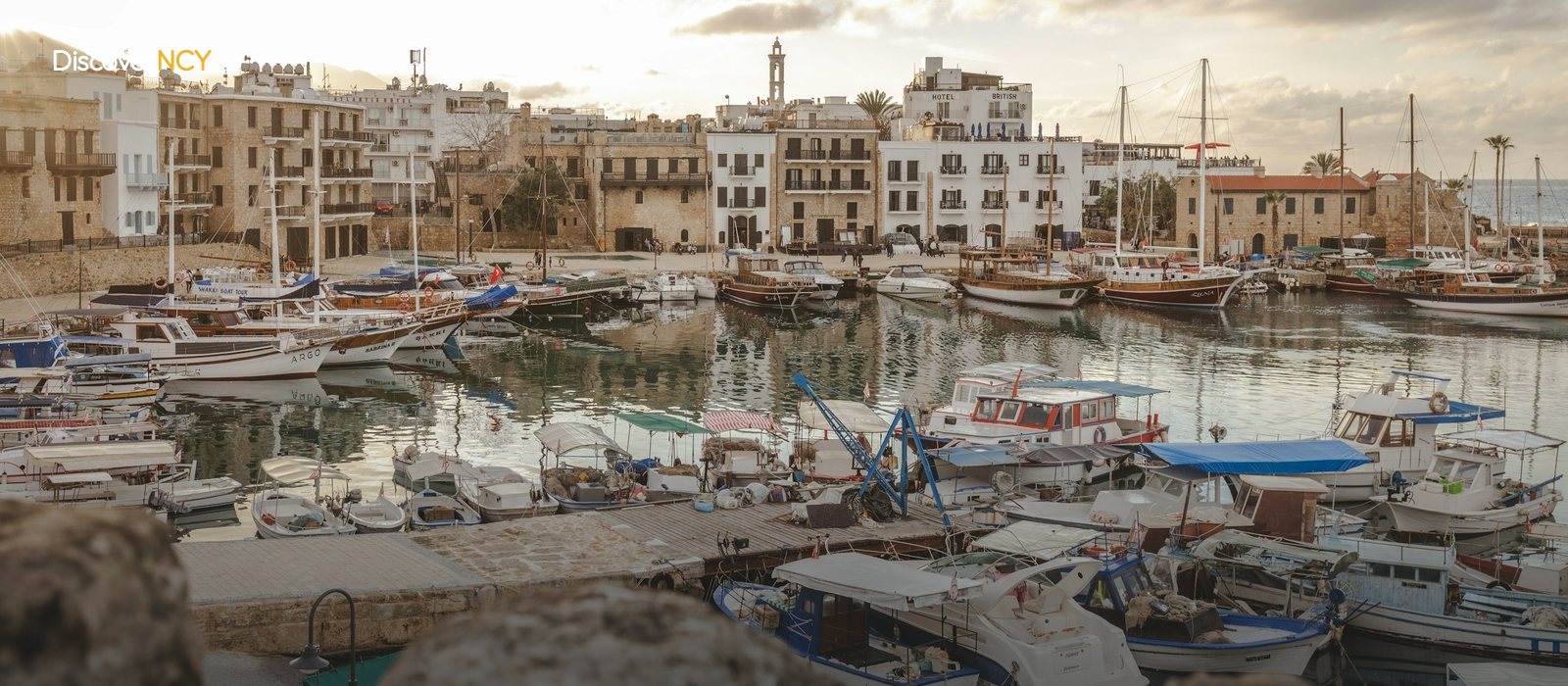
Kyrenia Harbour... In 1914 Britain unilaterally annexed Cyprus and closed the Anatolian ports to the island's ships, and with that decision Kyrenia's centuries-old trading traffic effectively came to an end in this sense. Today tables are set out along the shore of Kyrenia Harbour, and yachts and fishing boats sit side by side on the water. The bay is the same bay. What has changed is the work loaded onto that bay: this was first a defensive point, then a carob jetty, it turned into a fishing shelter when it lost its trade, and finally it was left to tourism. For the visitor who knows which structure on the shore survives from which period, this walk stops being an ordinary row of cafes. Let's look at the details.
A Bay Closed by a Chain
In the Middle Ages the mouth of the harbour could be closed when necessary. A heavy chain stretched between two towers was drawn up across the water, and no pirate or enemy ship could enter the bay. It is the same logic as the arrangement that closed the Golden Horn in Istanbul. One end of the chain was fixed to the old customs house, the other to the tower in the middle of the harbour, and the whole system was raised and lowered with a windlass.
The piece of this arrangement that survives today is the cylindrical structure standing at the end of the harbour; its base is roughly 8.15 metres in diameter and it carries a column 1.5 metres across. It is usually taken for a lighthouse. Yet that stone was raised not to give light but to block the way; its name is the Chain Tower, and the castle stands just east of the harbour.
How Venice Drew the Horseshoe
This was already a defended place. The Byzantines had fortified the town earlier, and William of Oldenburg, a traveller who visited the island in 1211, described Kyrenia as a small, walled, well-fortified town. In the 13th century, during the War of the Lombards, the men of Frederick II strengthened the defences once more.
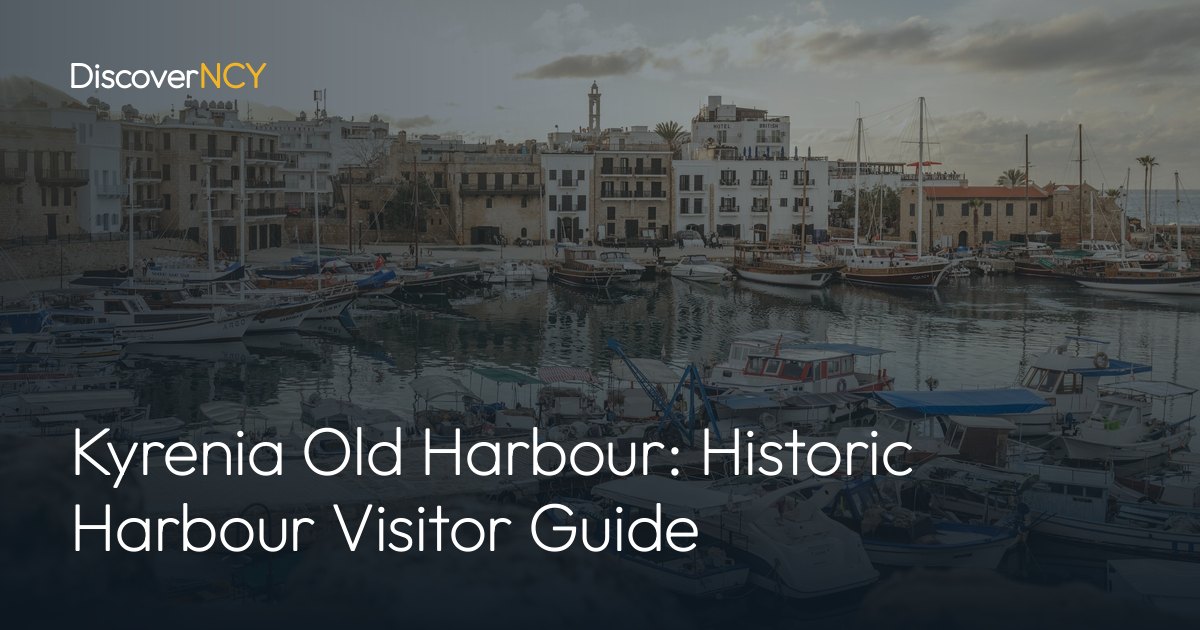
Today's horseshoe outline, however, is Venetian work. The Venetians, who took the island in 1489, overhauled most of the harbour, and it was largely they who gave the bay its present crescent shape. In the same century they made additions to the castle's west and south walls and added three new bastions. Did all this work enlarge the bay? The Venetians did not expand the harbour's area; they only gave it its form, and that gentle curve on the shore is the result of a design decision. The castle holding the eastern end of the bay goes back further: beneath it lies a fortification thought to have been founded by the Byzantines in the 7th century, and in its courtyard stands a merchant ship dated to around 300 BC.
From Carob Warehouses to Cafes
When the island passed to Ottoman rule in 1570 the harbour lost its importance and long remained a small fishing shelter. Two testimonies describe its scale. Carsten Niebuhr, who travelled through the area in 1767, wrote that all the carob gathered around Kyrenia was shipped from here to Alexandria. Giovanni Mariti, who came two years later, described the harbour as a place that could take only two or three small boats and noted that large merchant ships anchored offshore. In that period the cargo of Kyrenia Harbour was olives, carob, wheat, goats and donkeys, and the livelihood of the people on the shore depended on this trade.
Then a new building type arrived on the shore. After the rights granted to non-Muslims by the Imperial Reform Edict of 1856, Kyrenia's Greek Cypriots settled by the harbour and built their own warehouses for the expanding carob trade. The architecture of these warehouses was distinctive: the back leaned against the slope, the front stood two or three storeys high, and goods were loaded through rear doors and windows. Most of the cafes you sit in on the shore today are those very warehouses. So in which year did the conversion happen? There is no single year; as the harbour lost its commercial function the warehouses changed hands over decades, and today some operate as shops and some as restaurants.
The Breakwater and the Customs House
The harbour's present physical frame is the work of the British period. After 1880 a breakwater and a single-storey customs house were built on the bay, and when a second floor was added in 1914 the building took on its present external appearance. The two trees standing beside the building are also worth a look: known locally as the love trees and recorded under the name "Bella Solarius", these two trees of African origin are around 175-200 years old, have grown intertwined, and one is considered male and the other female.
Shortly after the breakwater was completed the harbour's work was taken away from it, because with the 1914 annexation and the closure of the Anatolian ports regional trade shifted to Famagusta and Kyrenia turned mostly into a fishing shelter. There was no cargo left for the new breakwater to carry. The measure of the change can be seen in the 1930s, when Demosthenis Severis, a businessman prominent in carob exports, was by then shipping his goods via Famagusta. The customs house, however, stayed standing; after a 2022-2023 restoration it was converted into an exhibition hall and a centre of urban memory, so the building that once collected duty on the goods now tells the harbour's own history.
Who Runs the Harbour Today?
The Old Harbour entered a four-phase renovation programme on 1 December 2022; the first three phases proceeded on land, overhauling the customs house, landscaping and infrastructure, while the fourth covered the works at sea. The opening was planned for May 2023, was postponed, and the harbour reopened to the public within the same year.
On the operating side the counterpart is clear. The unit that signs contracts on behalf of the Ministry of Tourism and Environment is the Old Harbour Administrative Office. A limited number of boats are berthed in the harbour and they are provided with electricity, water, toilets and laundry facilities, but an ombudsman's report noted that this infrastructure is not sufficient for all the boats, so the picture that looks orderly from the shore is more cramped when seen from the sea.
Following a maritime accident, on 2 September 2026 an announcement by the TRNC Marine Tourism Operators Association halted departures from the marinas in the area, including the Old Harbour. Beyond our own research, the grounds for the decision were not made public. In the same days the preparation of a regulation restricting vessels from leaving harbour in bad weather was announced; the weather forecast and the vessel's technical specifications will be assessed together. If you are thinking of going out to sea, you can ask directly about that day's departure status.
How Not to End Up at the Wrong Harbour
Telling a taxi driver "to the harbour" is not enough. Two separate harbours operate in the town, and they are not the same place. The horseshoe-shaped bay ringed with tables is the Old Harbour, where yachts and fishing boats tie up. Ferries and cargo ships, on the other hand, dock at Kyrenia Tourism Port, opened in 1987; that is a separate facility outside the centre, reserved for commercial and passenger traffic. A guest who confuses the two names can find themselves at the cargo pier. The difference became even more visible in 2026: the Tourism Port cannot cope with the growing commercial traffic, and the lorry queues that form around midday spill into Kyrenia's traffic.
For sightseeing the address is clear. The historic shore of Kyrenia Harbour lies within the centre, and the castle at its eastern end is on the same walking line. The calculation changes for a guest arriving by sea, because that passenger lands outside the centre and has to make a separate trip to the bay where the chain was once stretched.
| Period | What changed in the harbour |
|---|---|
| Middle Ages | The mouth of the bay was closed with a chain stretched between two towers |
| After 1489 | The Venetians overhauled the harbour and its horseshoe shape took form |
| 1570-1878 | A small trading and fishing shelter under Ottoman rule, carob warehouses after 1856 |
| After 1880 | The breakwater and the single-storey customs house were built |
| 1914 | After annexation, trade shifted to Famagusta |
| 1987 | Kyrenia Tourist Harbour, a separate facility, opened |
| 2022-2023 | Four-phase renovation; the customs house became an exhibition hall |
Our articles on Kyrenia Castle at the eastern end of the bay and the Kyrenia old town lanes behind the harbour, and the Kyrenia boat tours guide for anyone thinking of heading out to sea, pick up where this walk leaves off.