Kyrenia Castle and Shipwreck Museum
📍 East end of the Old Harbour, Kyrenia
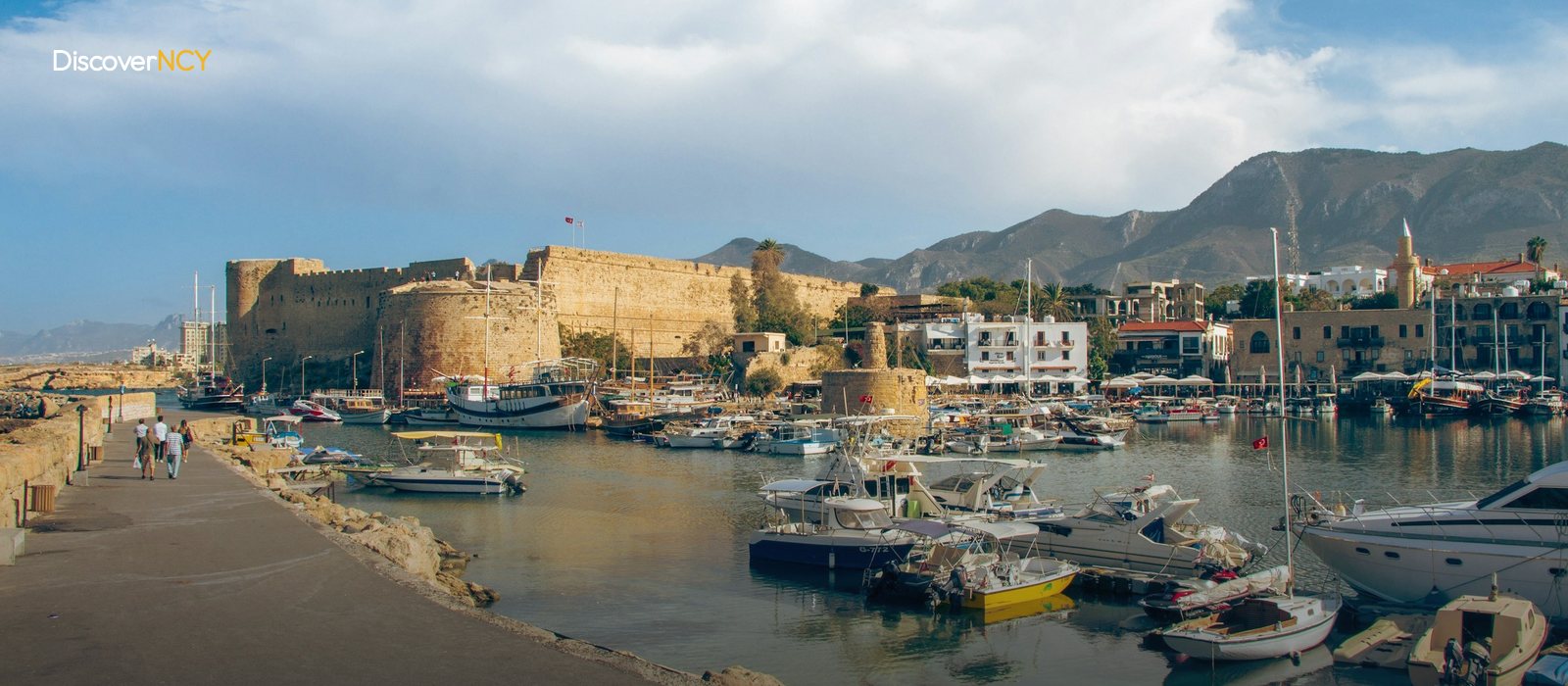
Turkey's Müzekart (Turkey's museum pass) won't work at this gate and you'll need to buy a separate ticket at the booth… but that single ticket opens every section until you leave. Kyrenia Castle stands at the east end of the Old Harbour, a stone structure that grew layer by layer over seven centuries, and today it houses two tower exhibits, dungeons, two archaeology halls and, in the courtyard, an ancient ship. At the bottom lies a fortification believed to have been founded by the Byzantines in the 7th century; on top sits the thick rectangular body the Venetians built after 1489, so the visitor isn't touring one castle but several castles stacked on top of each other. In our research we looked at three things one by one: the castle's layers, the exhibition halls around the courtyard, and the merchant ship that sank around 300 BC. The third takes the most time, and it largely dictates how long the visit lasts.
Which Harbour, Which End
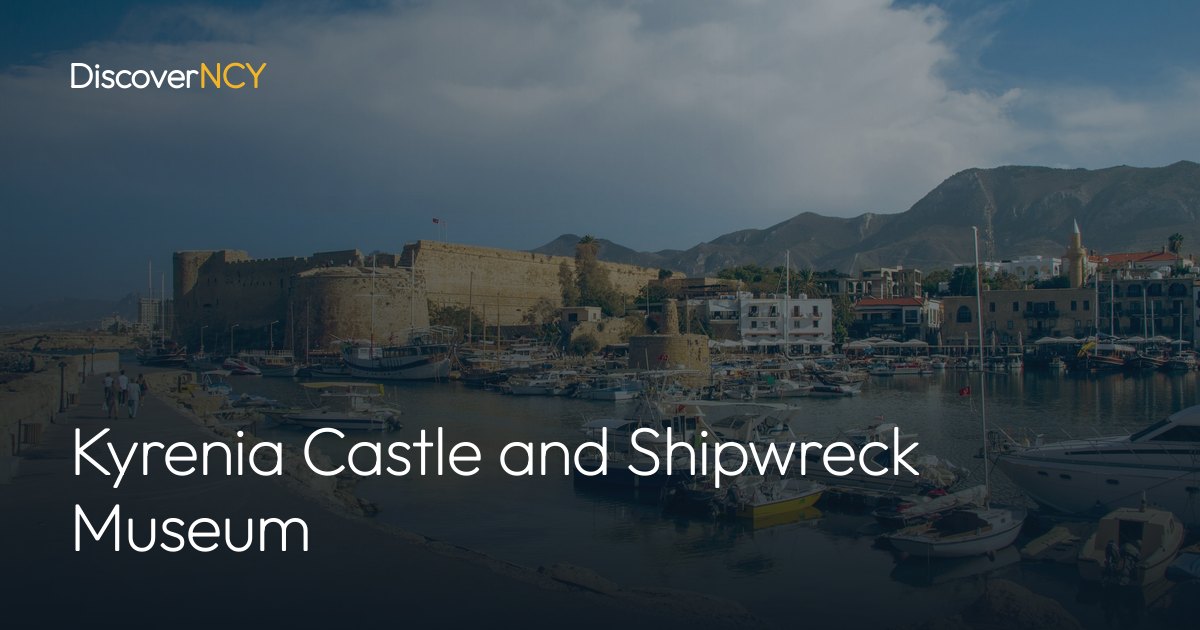
The castle sits where the horseshoe-shaped bay of the Old Harbour ends, at its eastern tip. Restaurants line the waterfront, and the walk to the castle starts between those tables. Readers arriving on the island by ferry may have a different harbour in mind, because Kyrenia has a second facility, the Kyrenia Tourist Harbour, opened in 1987 and built for passenger and cargo traffic. It has nothing to do with the castle, so a guest stepping off the ferry has to make a separate trip to the Old Harbour. Is that extra journey wasted? No, because the walls rise directly above the harbour, so the castle's silhouette appears while you're still walking along the shore, and we recommend a lap around the outside before entering the gate to look at the seaward bastions. The gate opens onto the courtyard, and the tour branches out from there. From a distance the structure looks like a single piece; once inside, you realise it isn't one castle but a pile of them.
Four Changes of Hands in Seven Centuries
The castle's first form is thought to have been built by the Byzantines in the 7th century against Arab naval raids; there is no firm date. The oldest surviving piece is the Chapel of St. George in the courtyard, which dates from the 12th century. The next enlargement, between 1208 and 1211, was the work of Jean d'Ibelin in the Lusignan period; the section now called the Lusignan Tower was set on top of the early Byzantine fortification in those years.
The real transformation came with the Venetians, who took the island in 1489, because in the age of artillery the mountain castles along the Kyrenia range had lost their defensive value. While the Venetians abandoned those mountain castles, they rebuilt this one with thick walls able to withstand cannon fire, and the work was completed around 1540. The great test of that wall never came. When the Ottoman army landed on the island in 1570 the castle surrendered without a fight, whereas that same year Nicosia fell at the end of a siege and Famagusta held out for another year. So the siege of Nicosia and the surrender of Kyrenia are definitely not the same event. The British administration used the building as a prison and a police school, and it didn't become a museum until 1974. The walls stand so solid today not because of good maintenance, but because they never saw a siege.
One Route from Chapel to Dungeon
The interior of Kyrenia Castle is made up of sections arranged one after another around the courtyard; you leave one door and enter the next. After the chapel come the dungeons, where torture methods attributed to the Lusignan period, the years of King Peter I, are re-enacted with sculpted figures. The same re-enactment logic continues in the two towers: in the Lusignan Tower stand soldier figures and flags stretching from Byzantium to the Ottomans, while in the Venetian Tower, dating from the early 16th century, you'll see a Venetian soldier preparing to fire a cannon. Everything up to this point is the castle's own defensive history. The two halls go much further back: the Vrysi Neolithic Settlement exhibit tells the story of the island's early domestic life with reconstructed scenes, while the Kirni exhibit uses objects from Bronze Age tombs to make burial customs tangible. These two halls have no direct connection to the castle; here the castle serves as a roof for the region's archaeological collection. The order is up to you, but most visitors leave the ship hall for last, and that's the right call.
The Ship in the Courtyard
The vessel displayed in the Shipwreck Museum dates to around 300 BC and is one of the oldest merchant ships ever raised and displayed in its entirety. Since the Uluburun wreck is dated to the 14th century BC, the title of oldest shipwreck can't belong to this ship; the gap is about a thousand years. Nor was it found by an archaeologist. On 20 November 1965, on a stormy day off the harbour, the Greek Cypriot diving instructor Andreas Cariolou followed the cloud of mud kicked up as his boat's anchor dragged along the seabed and reached the wreck. He then lost the position, and finding it again took him two years and more than two hundred dives. Once he found it, he kept the location secret for fear of looting and told only the Department of Antiquities. Following that report the excavation was carried out between 1967 and 1969 under Michael Katzev of the University of Pennsylvania.
The vessel is about fifteen metres long, was built for a crew of four, and its hull is Aleppo pine. Its cargo yielded close to four hundred Rhodian-type wine amphorae along with remains of almonds and grain. Spear marks on the hull raise the possibility of a pirate attack; what's more, the ship wasn't new when it sank but an old vessel that had served for decades. The original hull is now preserved in a specially climate-controlled hall, and the photographs of the recovery process hang in the adjoining room. The replica, Kyrenia II, built in 1985, stands in the Thalassa Museum in South Cyprus; the ship in Kyrenia is without doubt the original. There are so many panels to read in this hall that half an hour passes easily, so we suggest treating the ship not as a display case you pass on the way through, but as a visit in its own right.
Tickets, Hours and Shoes
According to our research, admission is charged and the tariff is tiered by age. The current amount comes from the ticket booth or the official source, because the figure changes often. Turkey's Müzekart unfortunately isn't accepted here; since the card isn't on the free or discounted admission list in the TRNC's official regulations, cardholders buy a separate ticket too. Visiting hours differ between summer and winter: closing is brought forward in winter and last entry stops a while before closing, so it's worth checking the exact time before you go. Visitors with children should factor in the ground, as the stone paving is uneven in places, so comfortable shoes help, and because the courtyard is open to the sky there's little shade at midday in summer. Setting aside an hour and a half to see Kyrenia Castle together with the ship hall is a realistic estimate. The reward comes on the ramparts: climb up and you'll see the harbour on one side and the Kyrenia Mountains (Pentadaktylos) on the other. That upper level is the final stop for those who finish the castle; after that come the tables along the harbour front.
| Field | Value |
|---|---|
| Location | East end of Kyrenia's Old Harbour |
| First structure | 7th century, Byzantine (presumed) |
| Chapel | St. George, 12th century |
| Enlargement | 1208-1211, Lusignan (Jean d'Ibelin) |
| Present appearance | Post-1489 Venetian period |
| Passage to the Ottomans | 1570, surrendered without a fight |
| British period | Prison and police school |
| Museum since | 1974 |
| Interior sections | Chapel, dungeon, Lusignan and Venetian towers, Vrysi and Kirni exhibits, Shipwreck Museum |
| Ticket | All sections on one ticket, paid |
| Müzekart | Not accepted |
| Shipwreck | c. 300 BC, Hellenistic merchant ship, ~15 m |
| Discovery | 20 November 1965, Andreas Cariolou; rediscovered 1967 |
| Excavation | 1967-1969, Michael Katzev / University of Pennsylvania |
| Cargo | ~400 amphorae, almonds, grain |
| Replica | Kyrenia II (1985), in South Cyprus |
| Hours | Summer/winter differ, confirm before going |
If the mountain castles along the Kyrenia range have caught your interest, see our Buffavento Castle article; for the rest of the town there's the Kyrenia travel guide, and for the island's other castles and ancient cities our list of historic sites of North Cyprus.