A Historic Hamam Experience in Nicosia (Büyük Hamam)
📍 İplik Pazarı, Walled City, Nicosia
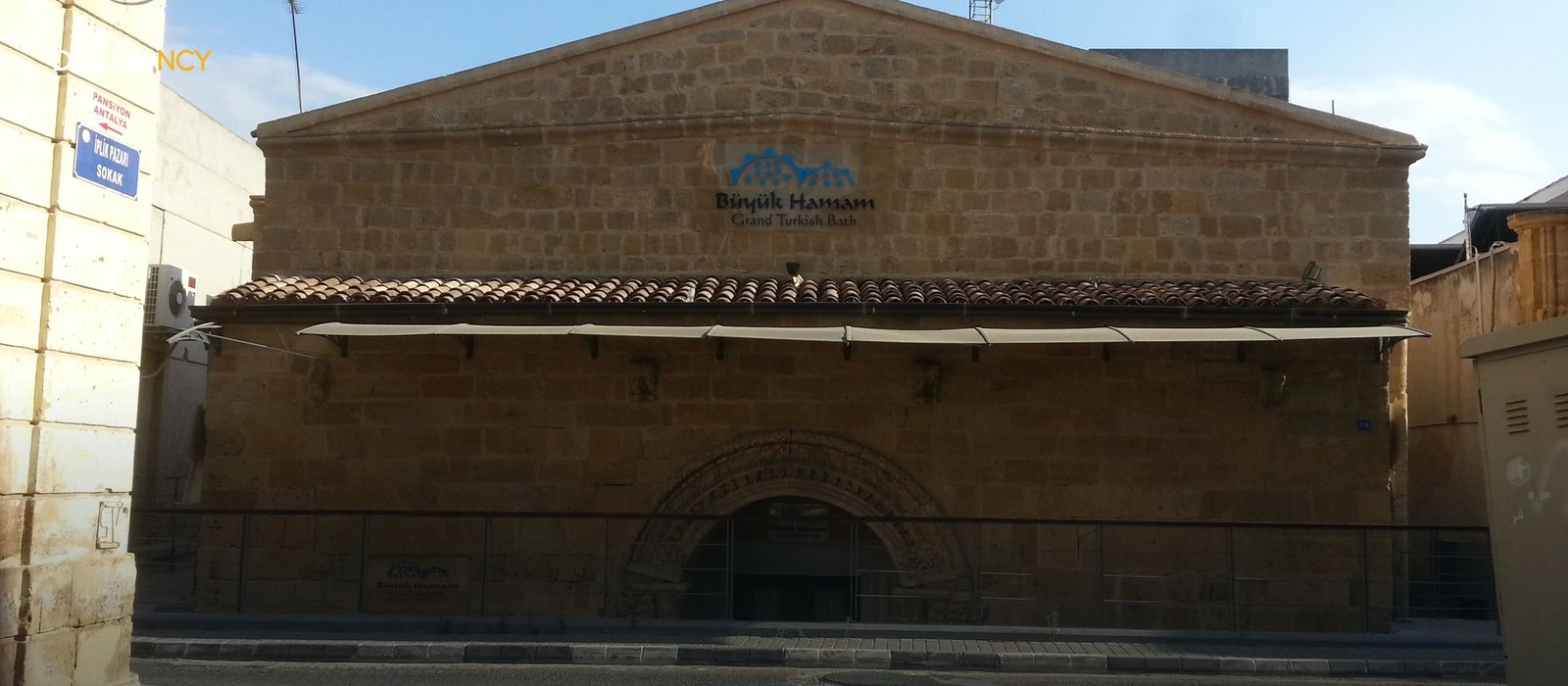
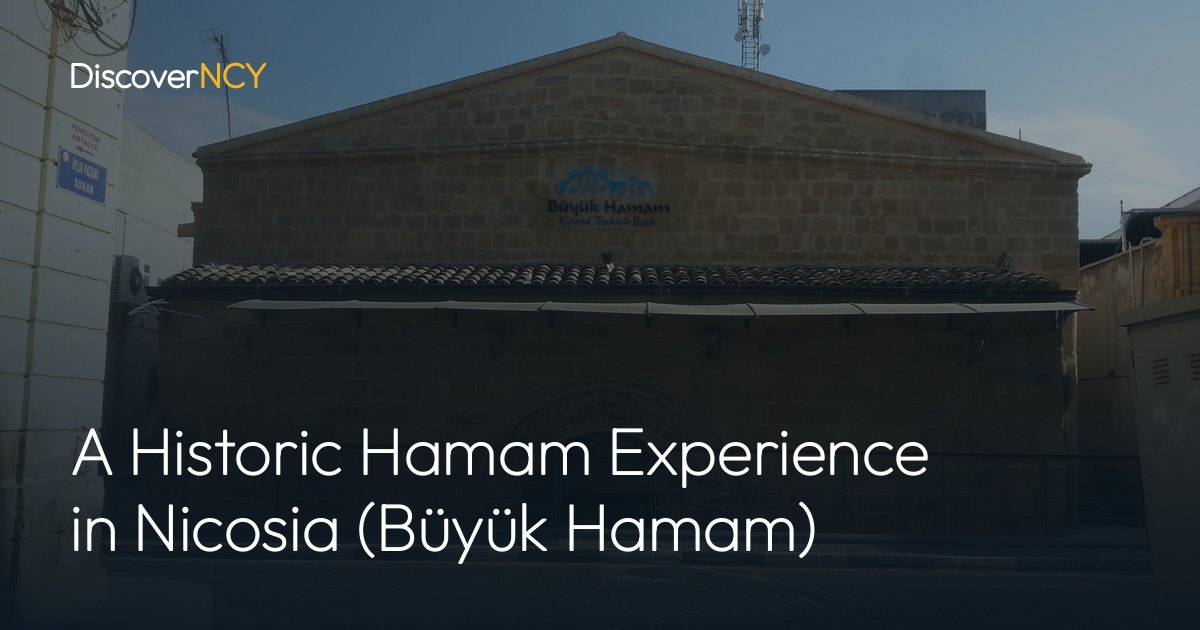
The moment you step through the door of the Büyük Hamam in Nicosia's walled city, you may find yourself facing a staircase that leads below ground. According to the sources, the entrance of this great bath building in the walled city sits about two metres below street level, and the bathing rooms about three metres below. That does not mean the building has "collapsed". The ground around it rose over the centuries while the building stayed where it was, which is why the Gothic carved portal that passes through the same threshold now appears so low. Left behind beneath a city that rose layer by layer, this building is still a working business that takes customers.
Opened as a Church, Stayed a Bath
For those curious, the building began life as a place of worship. In the Lusignan period, construction began in 1306 as the Latin church of St. George, and it was ceremonially opened in 1309. The dates are the same in three sources, including the official website. In the early years of Ottoman rule, at some point between 1571 and 1590, it was converted into a bath; the exact year and the architect behind the conversion are unknown, so it is worth treating promotional texts that present a single construction year as certain with some caution. In the records we compiled, the earliest known evidence of the building operating as a bath goes back to 1593, when a janissary named Hacı Mehmed Racil leased it for sixteen years, a detail cited with reference to Jennings. Alongside the dry language of the records, an account attributed to Keshishian also notes that in the Ottoman period the bath served as a gathering place for women.
We Are Here, but the Question Is: Why Is the Floor So Far Down?
People have asked this online, and the answer is the street. According to the sources, the ground level of the walled city rose over the centuries while the building appears to have stayed at its original level. The recorded proof of this build-up surfaced in 1891, when a medieval tombstone was found between the marble floor slabs of the hot room. The floor is layered in the most literal sense, and this is recorded in the history section of the official website. We should add that when we looked, the figures in the sources are given as "approximately", because they all draw largely on the same origin. The visible traces of the layering are still there: in the changing room you can spot the church's large window sills, and at the entrance the same church's carved arch is still standing, so those few steps down into the building are the result of ground that accumulated over the centuries.
Three Sections Beneath the Dome
The building is single-storey and built of dressed stone. Inside, the three classic sections of a great hamam plan follow in order: the changing room, the warm room and the hot room. A wide dome rises over the hot room, and in the middle of the room is a "göbek taşı", the heated marble platform. The whole layout of the room is arranged around this stone. According to the sources, light falls onto the platform through the glazed openings in the dome; Evkaf's description adds that crescent-and-star motifs can also be seen inside the dome, and the changing room that carries the remains of the church sits within the same building, under the same roof.
Opened in 2010, Closed, Reopened in 2024
Its recent history does not follow a straight line. The building went through a restoration that began in the late 2000s and was completed around 2010, and at the end of that year it was put out to tender to be operated. Then it closed. By 2019 the building stood abandoned and made the press in that state, until finally Evkaf (the Cyprus Foundations Administration) announced that it would reopen the building, which belongs to the Lala Mustafa Pasha Foundation, to the public on 1 June 2024. The announcement appeared with the same date both on Evkaf's own website and in the local press. This timeline directly affects your visit plan. We should also note that the claim of uninterrupted service found in promotional texts does not account for the long closure in between: the building lived as a bath for centuries, but the business serving today reopened in 2024. The age of the stone and the age of the business are not the same number here, because as you pass through a fourteenth-century threshold you step into a service arrangement only a few years old.
Visiting Arrangements at a Working Business
The building is not a museum; it operates as a commercial hamam. The opening hours in the sources we have do not agree with one another, so we recommend getting the day and time information directly from the business, and you can ask about prices and package contents the same way. The service is paid. No price figure appears in the sources. If you set out without confirming, you may find a closed door. On the service side, the traditional "kese and foam" treatment (an exfoliating scrub followed by a foam wash) is mentioned in three separate sources, and according to the business's website three hamam packages and seven types of massage are listed in addition. A hamam visit calls for a different time plan than a sightseeing stop, because the time to set aside before and after bathing is not the same as wandering around a courtyard. Say I arrive and what I want is "just to see the architecture"; can someone who only wants to see the architecture walk in through the door? You may need to ask the business directly, as we could not find any entry condition in the sources.
Which Stops to Combine It With in the Walled City
The building stands in the walled city, around the İplik Pazarı area, and Büyük Han and Selimiye Mosque are generally mentioned as its neighbouring stops in the same district. One more thing: do you want to visit the hamam in the morning, or should you put it at the end of the day? Because time spent in a hamam calls for a different tempo than sightseeing, we recommend placing it at the end of the day, so that after bathing you do not have to go back out onto the street to collect more stops or build a new route. The walled city is small in diameter. It is possible to link the hamam with the surrounding stops in a single walk. There is one more reason to put this building at the end of the day: according to the sources, this great bath building is the one referred to as the only original Turkish bath still operating in the TRNC. The practical upshot is this: if you put the hamam at the end of your programme, the walking and the post-bath rest will not clash.
| Field | Value |
|---|---|
| Place | Nicosia walled city, around İplik Pazarı |
| Earlier building | The Latin Church of St. George, begun 1306, opened 1309 |
| Conversion to a bath | Between 1571 and 1590; exact year and architect unknown |
| Ownership | Evkaf (the Cyprus Foundations Administration), Lala Mustafa Paşa Foundation |
| Sections | Changing room, warm room, hot room (dome, heated marble platform) |
| Floor level | Door about 2 m, rooms about 3 m below ground level |
| Reopening | 1 June 2024 (first opened 2010, closed in between) |
For the neighbouring stops you can link with the hamam in a single walk, see our Buyuk Han Nicosia and Selimiye Mosque Nicosia articles, and to plan the walled city as a whole, the Nicosia travel guide.