Büyük Han
📍 Asmaaltı Street, next to Asmaaltı Square, walled city, Nicosia
Büyük Han. The name of Nicosia's most visited historic stop does not appear on the visiting-hours list of the TRNC Department of Antiquities and Museums. In our research we found Büyük Han past a thousand reviews and listed as one of the top two things to do in the city on Tripadvisor, yet we could not find a single line for it on that official timetable. What looks like a contradiction is actually a simple matter of registration, because the Department's regulations cover museums and archaeological sites, while this building is a historic market structure open to the public. That distinction goes straight to your wallet, because there is no ticket desk at the entrance and stepping into the courtyard costs nothing at all. For someone planning half a day in the walled city, the only thing this stop adds to the bill is the price of a coffee. The hours, though, follow a different logic.
A Stop With No Ticket Desk
A museum subject to the Department's regulations has a ticket and a published closing day. Because the building on Asmaaltı does not fall into that category, the same system does not apply here: the courtyard stays open for most of the day, from morning until late afternoon, while the shops and cafes inside set their own hours. But does someone setting out in the late afternoon go in vain? The courtyard is open, but as of September 2026 there is no closing time jointly announced by the shops, and some of the shutters may already be down towards evening.
Two options go into your plan. If you only want to see the courtyard and take photos, 20-30 minutes is enough; add a coffee break and a browse through the workshops and it stretches to 1-2 hours, and it is worth timing the second option for midday. A stop with no ticket desk is also a free rest break, and since the cost you pay on the way out of a museum never arises here, the building also works as a backup stop if your schedule runs over.
1572 and Muzaffer Pasha
We could not find an inscription giving the exact construction date, but the sources converge on a single year. It is generally accepted that it was commissioned around 1572 by Muzaffer Pasha, the first beylerbey the Ottomans appointed to Cyprus, and its founding purpose is far from today's touristic associations: it was to provide lodging for merchants coming from Anatolia and from the island's other settlements. With that function, the building has survived as the island's largest Ottoman caravanserai and the most prominent example of Ottoman-era architecture in Nicosia.
The first name comes from that trade. The building was initially called Alanyalılar Hanı, the han of the Alanya merchants; later, when Kumarcılar Han was built nearby, the two buildings were measured against each other and the larger one took the name everyone uses today. So the name is not a title but the result of a simple comparison. That same comparison produces a small confusion today, because Kumarcılar Han is a separate building and is definitely not another name for the same structure. The two buildings stand close together and their names are often mixed up. When looking up the address, aiming for Asmaaltı Street ends the confusion from the start, because Büyük Han stands right beside Asmaaltı Square, the historic Wheat Market, and the street runs through that square.
68 Rooms, a Small Mosque in the Middle
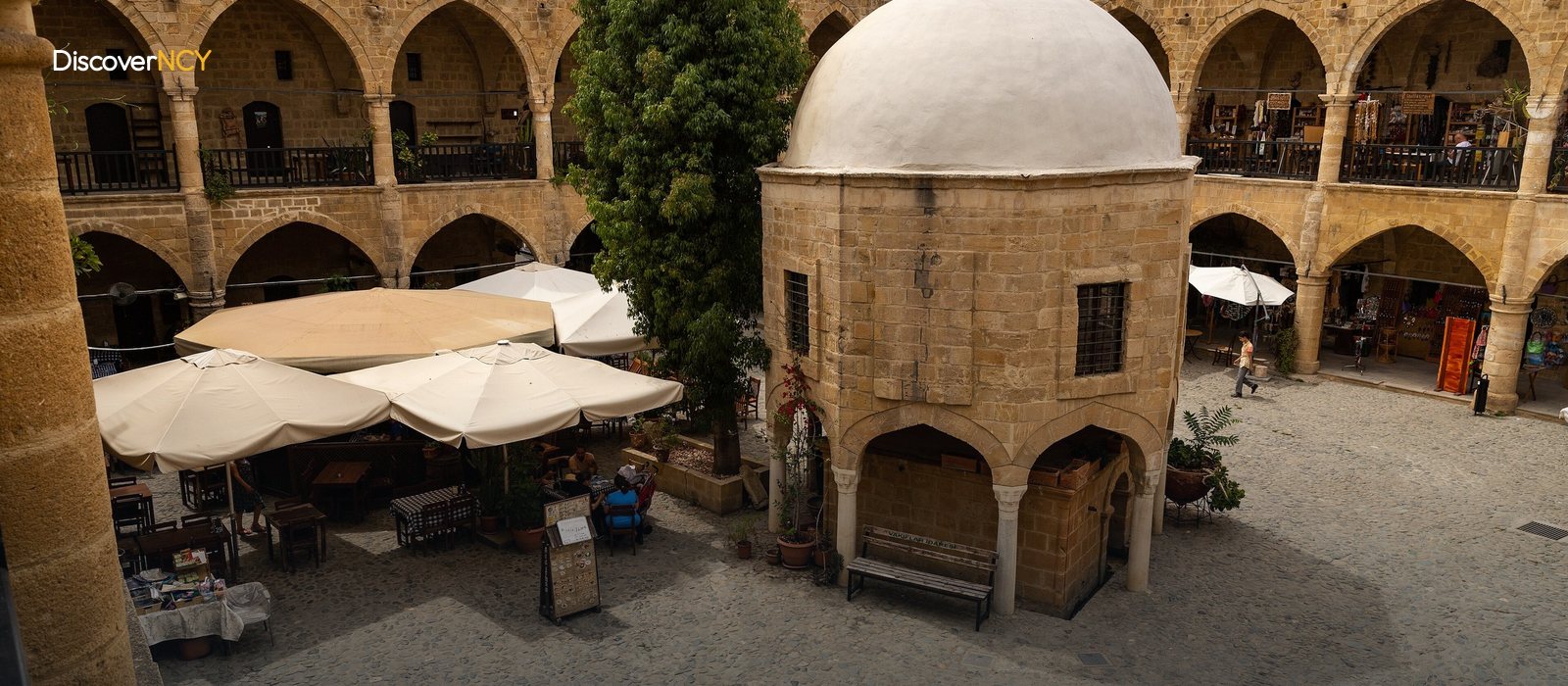
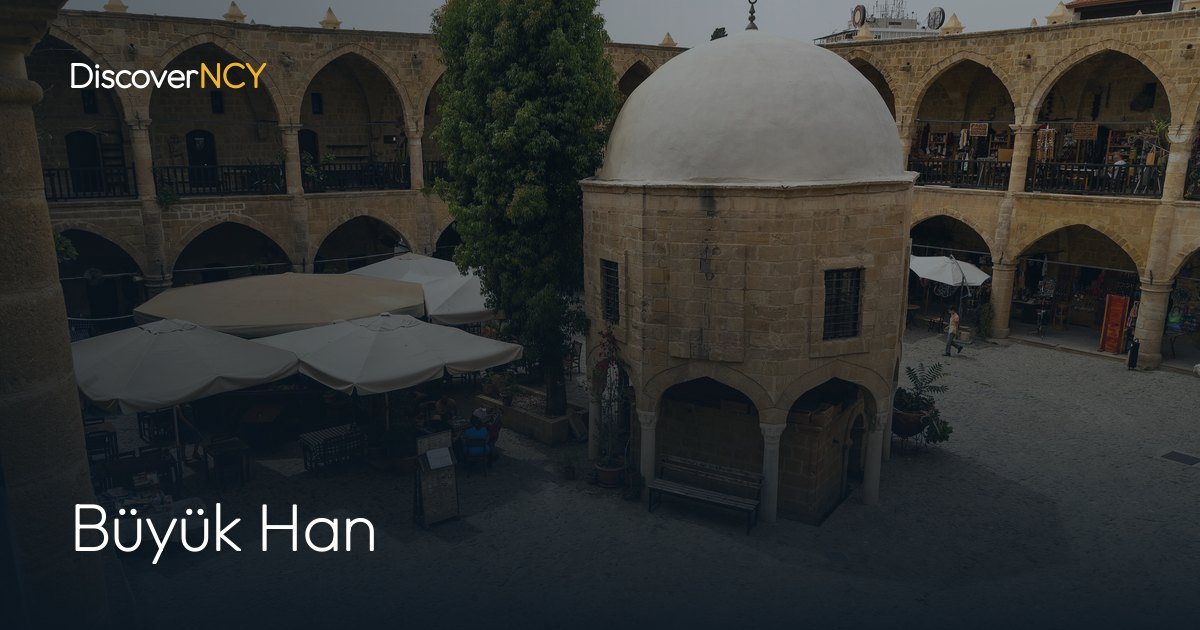
The plan is rectangular, with two storeys. An arched, domed arcade runs around the four sides of the wide courtyard, and the rooms are lined up behind it, so there is a covered passage in front of every door. The two floors hold 68 rooms in total; historically the ground-floor ones were used for trade and the upper-floor ones to lodge visiting merchants. The number looks cold on paper, but its meaning changes once you stand in the courtyard, because you follow the same row of arches repeating itself again and again with your own eyes.
Right at the centre of that repetition rises a small pavilion mosque (mescit) on an octagonal base. Why is the mosque right in the middle? Placing a mescit at the heart of the courtyard is the established layout of Seljuk and Ottoman han architecture, so it is not an invention specific to the island. The mescit still stands in place today. It also settles naturally into the centre of every photo looking onto the courtyard. The orderly repetition of the rooms is the trace of a business logic, while the pavilion in the middle is a sign of the courtyard's everyday life, and the two logics sit side by side here. Most of the doors stand open. So you measure for yourself what the number 68 means in a single lap.
What Is in the Courtyard Today?
The merchants' rooms emptied long ago. The building still did not fall idle, because today the rooms on the ground and upper floors house art galleries, handicraft workshops, boutique shops, cafes and restaurants. This arrangement works even for someone with no intention of shopping, because as long as the doors are open, looking inside the workshops is free too, and for a traveller who sees the making done on the spot, a lap of the courtyard turns into something other than window shopping.
The physical side also counts. Because the ground floor opens flat onto the courtyard, it is easy to get around, while the upper-floor galleries are reached by stairs, so anyone with a bad knee or luggage in tow plans accordingly. The building has one more comfort: if you do not like it, you are out in ten minutes and nothing leaves your pocket.
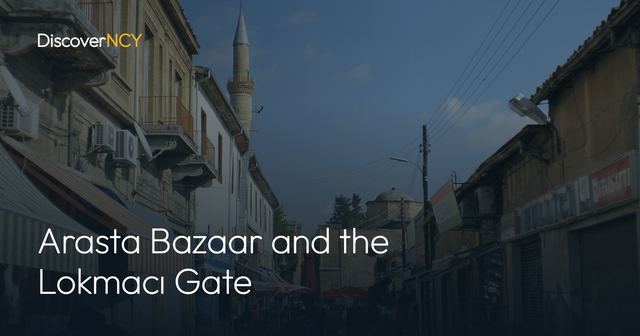
Out of the Gate and into Arasta
In front of the gate leading south out of the courtyard runs the market street of Arasta Bazaar, and the end of that street reaches the Lokmacı (Ledra Street) crossing. Selimiye Mosque is a few minutes' walk away. Bandabuliya, also known as the Municipal Market, and the Mevlevi Tekke Museum fall within the same walking loop, and this proximity turns the han from a standalone destination into the natural centre of a walled-city tour. It makes the sums easier too, because once the parking question is solved, all these stops are collected on foot, and for those heading south, the end of the street already leads to the crossing, so no separate transport cost arises. Arriving early in the morning, you complete the same loop before midday.
Getting from Ercan to Asmaaltı
From Ercan Airport to Nicosia city centre is a drive of roughly 23 kilometres; sources that measure from the Kyrenia Gate put the figure at 27 kilometres and about 35 minutes. Both measures end up in the same place. After landing on the island, reaching the walled city is not a half-day job and fits easily into the same day, but because of the narrow streets, leaving the car at a nearby spot and walking burns less time than trying to drive into the heart of the square. That leaves a single decision: will the time you set aside be half an hour or two hours? What decides it is not the building itself but how many of the workshops in Büyük Han's courtyard you step into.
| Field | Value |
|---|---|
| Construction date | 1572 (no definitive inscription; this date is accepted) |
| Commissioned by | Muzaffer Pasha, the first Ottoman beylerbey of Cyprus |
| Building type | Ottoman-era caravanserai/han |
| First name | Alanyalılar Hanı |
| Location | Nicosia walled city (Suriçi), near Asmaaltı Square |
| Number of rooms | 68 (on two floors) |
| Courtyard feature | Pavilion mosque (mescit) on an octagonal base |
| Entry fee | Free, no ticket desk |
| Visiting hours | Most of the day; no official Department record (September 2026, may change) |
| Time needed | 20-30 minutes for a quick lap, 1-2 hours with cafe and workshops |
| Use today | Art galleries, handicraft workshops, cafes and restaurants, souvenir shops |
| Distance to Ercan | Roughly 23 km (Nicosia centre) |
| Nearby stops | Selimiye Mosque, Arasta Bazaar, Bandabuliya, Kumarcılar Han, Mevlevi Tekke Museum |
| Physical difficulty | Flat courtyard on the ground floor, stairs to the upper-floor galleries |
For the Gothic cathedral-turned-mosque a few minutes away, see our Selimiye Mosque Nicosia page; for the market street starting at the south gate, the Arasta Bazaar page; and for the island's other castles and ancient cities, our guide to the historic sites of North Cyprus.