Mevlevi Tekke Museum
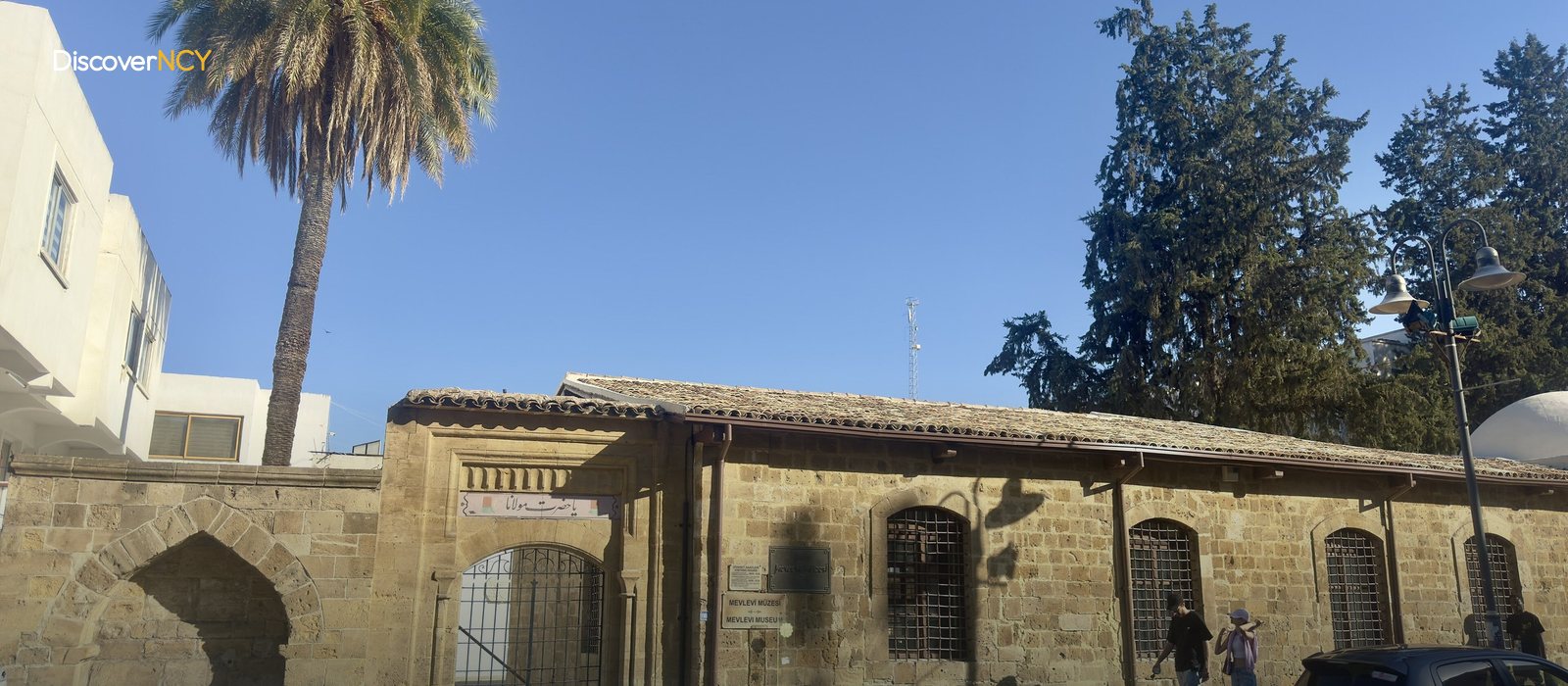
📍 Girne Street, İbrahimpaşa quarter, walled city, Nicosia
The Mevlevi Tekke Museum is one of those places people are curious about but know little of. In Nicosia's walled city (Suriçi), a display case in a three-part building holds an original copy of the Mesnevi. Whoever tours the Mevlevi Tekke Museum sees the semahane (whirling hall), the kitchen and the tomb, and that is all, yet when the tekke was founded the courtyard was far busier, so the part you walk through today is the fragment left over from a sprawling complex. Its smallness is not a shortcoming; it is the story itself. And some of the information circulating online about the museum is no longer valid.
A Fairly Recent Reopening - The Doors Opened Again in 2025
The building was a construction site from May 2023 to January 2025, which is why we still see "closed" listings from that period sitting in search results. The restoration and landscaping were carried out jointly by TİKA, which reports to Turkey's Ministry of Culture and Tourism, and the TRNC Department of Antiquities and Museums; when the work was finished, the building was reopened to visitors the same year with an official ceremony. President Ersin Tatar and Prime Minister Ünal Üstel attended the opening, as did TİKA President Serkan Kayalar, so it would be a mistake today to look at records from 2019-2024 and drop the place from your route. The door is open, and the exhibition layout has been refreshed too.
The restoration also covered an exhibition design project, meaning the work was not limited to the building; the display arrangement was touched as well, so a returning visitor finds a familiar but refreshed space. The building's history as a museum goes back much further, though, because it first opened to the public on 30 April 1963 and gained its present identity with the 2002 rearrangement. The 2025 restoration is not a beginning. It is the latest link in a long chain of upkeep, and that has a practical consequence: whatever year a photo or opening-hours note found online belongs to, using it without checking it against the post-2025 situation is misleading.
Why Is It So Small?
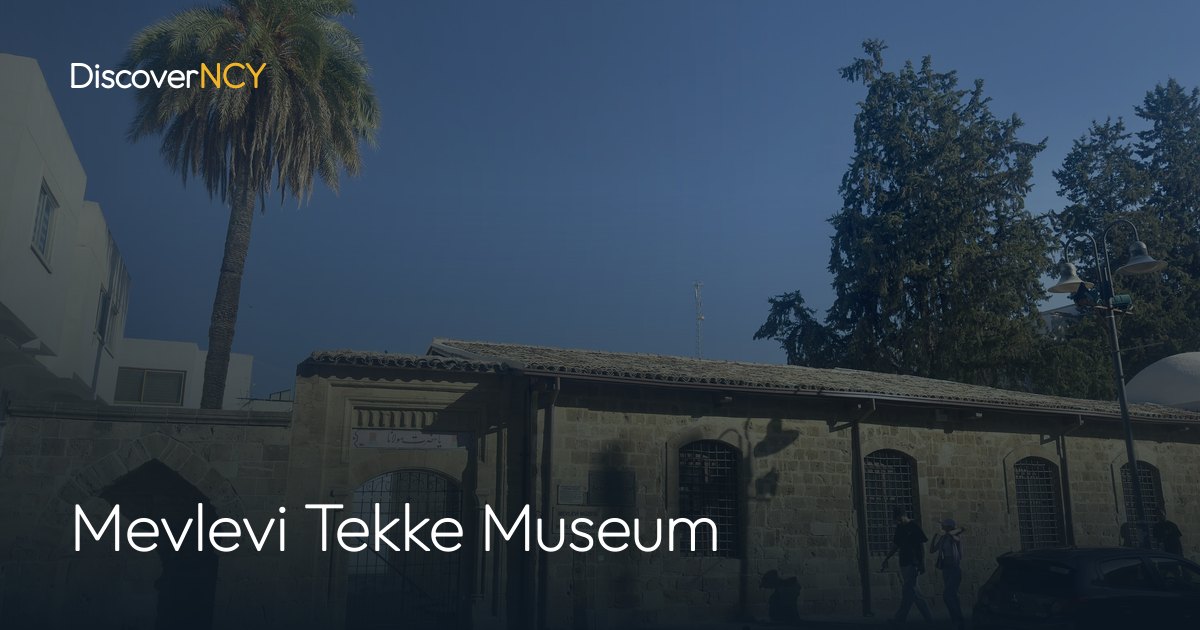
According to the sources, the scale here was not like this from the start. When the tekke was founded, its courtyard was lined with dervish cells, guest rooms, a kitchen, a tomb, a semahane and a well surviving from the Venetian period, but most of the buildings were demolished one by one up until the 1950s. A commercial building called the Vakıflar Pasajı went up on the vacated plot, and only the semahane, the kitchen and the tomb section were left. The courtyard that feels cramped today actually gives you the measure of that loss. The land it was founded on had not been assembled in a single stroke either; it grew with a plot donated by Emine Hatun from the village of Cira, so a complex that once grew through donations was later shrunk by planning decisions.
The founding of the tekke falls between the late 16th and early 17th century. Two names appear in the records: the building was founded by Arap Ahmet Pasha, one of the Ottoman conquerors of Cyprus, and rebuilt by Ferhat Pasha after it fell into ruin, while the department's official museum page points directly to the early 17th century. The Mevlevi order had already reached the island after the conquest of 1571, mostly with migrants from Anatolian settlements such as Konya and Karaman, so by the time the tekke was founded the island already had a ready congregation. The period the Mevlevi Tekke Museum tells today closes here, because dervish activity continued until 1954. The order's official end came on 15 April 1956, when its administration was transferred to Evkaf (the Cyprus Foundations Administration).
The Two Elephant Feet That Carry the Semahane
You enter the cut-stone building through an L-shaped courtyard entrance, and this form of entry shows that the building was designed to face its own courtyard. The most talked-about section is the semahane (whirling hall), because its sloping timber ceiling rests on two thick columns known locally as "elephant feet", and since these two columns stand in the middle of a narrow hall, the space looks more divided than it really is. Load-bearing supports this thick in such a small hall look out of proportion at first glance, but once you consider that a floor used for whirling has to be solid and silent, the choice makes sense.
The display cases hold Mevlevi garments, instruments used in ceremonial music, imperial edicts and warrants, manuscripts, weapons, gravestones, and a replica of the kitchen and the Mevlevi dining table. What does a visitor expecting a live sema performance find here? The garments, the ceremonial instruments and the table replica. Not a whirling dervish. Some visitor reviews complain about the lack of a live show as a negative, and it is worth knowing this from the outset, because the place is not designed as a performance venue but as a historical archive preserving the everyday life of an order. The kitchen section is conceived in the same spirit we have been describing. The table setting is the most tangible piece telling the story of the dervishes' daily life.
Six Domes, Sixteen Graves
Six domes cover the tomb. Lined up here are sixteen graves belonging to elders of the Mevlevi order, but only five of them have been identified with certainty. Who the rest belong to is unknown. That is why the number of names to read in the tomb is smaller than people assume.
Among the figures who trained at the tekke are dervishes who left their mark on Turkish-Islamic intellectual life, such as Müneccimbaşı Ahmed Dede, so the real legacy of a tekke centre is read not in the size of the building but in the people it raised. In online visitor reviews, the most admired section of the museum is the "sequence of sheikhs", and the same reviews note that people found the personal details striking.
Confirm the Hours Before You Go
The Department of Antiquities and Museums does not publish an hours and admission schedule for this museum, so it is worth asking the department directly for the current hours and fee. In the TRNC, museums are state institutions ticketed separately. Since a ticket bought at one stop is not valid at the next, anyone planning to visit several places in the walled city back to back budgets a separate admission fee for each stop. That is the arrangement in force as of September 2026; tariffs may change over time.
First Stop on a Walled-City Tour
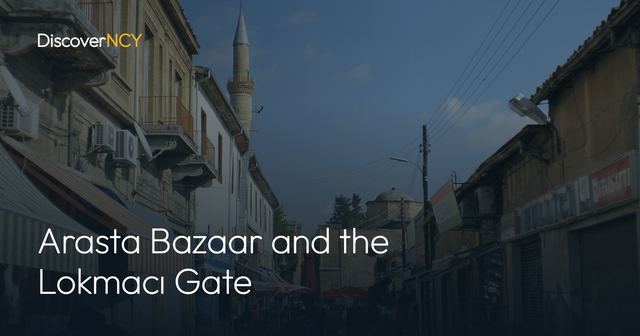
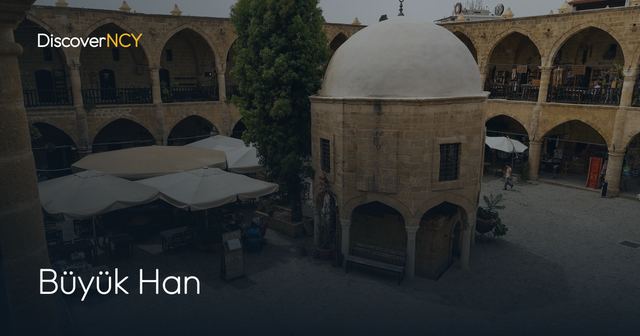
The museum is in the walled city, in the İbrahimpaşa neighbourhood, on Girne Street, just south of the Kyrenia Gate. No separate trip is needed to get here. A visitor coming from Ercan allows twenty-five minutes for the road; coming down from Kyrenia, the drive is about half an hour. Since Selimiye Mosque, Büyük Han and Arasta Bazaar follow one another within a few minutes' walk, giving the first hours of the day to the Mevlevi Tekke Museum and leaving the bazaar for later is a sensible order. Those who have been through it remember the place as small but well cared for, and that tidiness is its standout quality. The visit is short. Because its scale is small, it slots easily into a packed programme. You do not need to set aside half a day for a three-part building, but anyone who comes to the walled city and skips these three sections never learns why the building shrank so much.
| Field | Value |
|---|---|
| Site name | Mevlevi Tekke Museum (Nicosia Mevlevihane) |
| Location | Nicosia walled city (Suriçi), İbrahimpaşa neighbourhood, Girne Street |
| Construction period | Late 16th - early 17th century |
| Founder | Arap Ahmet Pasha (founding), Ferhat Pasha (rebuilding) |
| Original function | Mevlevi tekke: semahane, tomb, dervish cells, kitchen |
| End of the order's activity | 1954 in practice, official transfer 15 April 1956 |
| First museum opening | 30 April 1963, as the Turkish Cypriot Ethnography Museum |
| Opening as the Mevlevi Museum | 7 December 2002 |
| Latest restoration | May 2023 - January 2025, TİKA and Department of Antiquities and Museums collaboration |
| Reopening | 2025, with an official ceremony |
| Highlights | Semahane, tomb, kitchen |
| Tomb | Six domes, 16 graves, five identified |
| Fees and hours | Confirm with the department; no tariff published |
| Nearby stops | Kyrenia Gate, Selimiye Mosque, Büyük Han, Arasta Bazaar |
To continue your walled-city walk, see our pages on Selimiye Mosque Nicosia and Buyuk Han Nicosia, both a few minutes on foot from here, and our Nicosia travel guide for the wider city plan.