Bellapais Abbey (Kyrenia)
📍 Bellapais (Beylerbeyi), Kyrenia
In the spring of 2026, a refectory built for monks hosted the concerts of the 21st music festival. Yes, this place is called Bellapais Abbey. The hall is 30 metres long and 10 metres wide, and its ceiling is carried by seven columns. The eight centuries of Bellapais Abbey are hidden in exactly this contradiction: rather than tearing down whatever still stood, every ruling power put it to its own use. According to the sources we reviewed, the building standing in the village of Beylerbeyi, southeast of Kyrenia, can be laid out along a single line, from its chronology between 1187 and 1912 to its interior sections and the practicalities of a visit. Map apps list it as both Beylerbeyi and Bellapais; the two lead to the same gate, at the end of a 10-15 minute uphill drive from the centre. Knowing which section dates from which century decides what you will look at during a one-hour visit.
The Origin of the Name and Its Place in the Village
When the abbey was first consecrated it bore the name "Abbey of Our Lady of the Mountain". The French "Abbaye de la Paix", the Abbey of Peace, took hold later, and Bellapais is the worn-down form of that name. In time the village took the same name. Because the village itself sits on a high slope at the foot of the Besparmak ridge, the view opens onto Kyrenia harbour and the sea, which appears all at once after the last bend. The price of this hillside is the streets: narrow lanes limit parking, and depending on the season, finding a space can unfortunately take time. That is why most visitors leave the car at the village entrance and walk the rest of the way. "Bellapais Monastery Village", two kilometres away, is a separate hotel carrying the same name; the only thing it shares with the abbey is its name. It is worth double-checking when you type the name into your navigation app.
Monks Fleeing Jerusalem, 1187
When Saladin took Jerusalem in 1187, the Augustinian canons attached to the Holy Sepulchre took refuge in Cyprus. On the island they were received by the newly founded Lusignan kingdom, and King Aimery de Lusignan is named as the founder. The year the monks arrived and the year the abbey was founded are certainly not the same date. The first buildings rose between 1198 and 1205, so more than a decade separates the monks setting foot on the island from the first stone. Soon afterwards, from 1206 onwards, the order changed as well: according to the records, the Premonstratensian, or Norbertine, rule was adopted. Since this order was known as the "White Canons", documents from the 15th and 16th centuries refer to the building as the "White Abbey". The church you visit today, however, does not date from this early period but from the royal investments of the following century.
Two Hughs, a Century of Building
Most of the main buildings were constructed under King Hugh III, between 1267 and 1284, and the church is the work of this period. The cloister and the refectory were left to the next century: King Hugh IV reigned from 1324 to 1359, and the arcaded cloister and the refectory were completed in his time. The king did not merely finance the building; from 1354 to 1358 he lived in his own apartments inside the abbey. The years in which the cloister was completed therefore overlap with the four years the king spent living within these walls, and in that period the building was more than a house of monks. The present silhouette of Bellapais Abbey is clearly the sum of these two reigns: a 13th-century church and a 14th-century cloister. This is also the peak of its rise, because the next century brought not construction but plunder.
The Decline from 1373 to 1912
In 1373 the Genoese attacked Kyrenia, and whatever the abbey held that was portable and valuable was looted. After this date the abbey never regained its former strength, and discipline slackened along with the stones. How much did it slacken? When the island passed to Venetian rule in 1489, the canons were recorded as marrying and having their children admitted as new novices. When the Ottomans took the island in 1571, the Premonstratensian monks were expelled and the abbey was handed over to the Orthodox Church of Cyprus. The church section received small additions for Orthodox worship, while the rest was left neglected. The last link in that neglect is the British period: the army turned the refectory into a hospital and concreted the floor, and the bullet marks on the walls are also attributed to this era. Repairs only began in 1912, at the hands of George Jeffery, Curator of Ancient Monuments. The state you visit today began with that work. The building is now under the TRNC Department of Antiquities and Museums, and maintenance and restoration continue under the Department's responsibility.
The Seven Columns of the Gothic Refectory
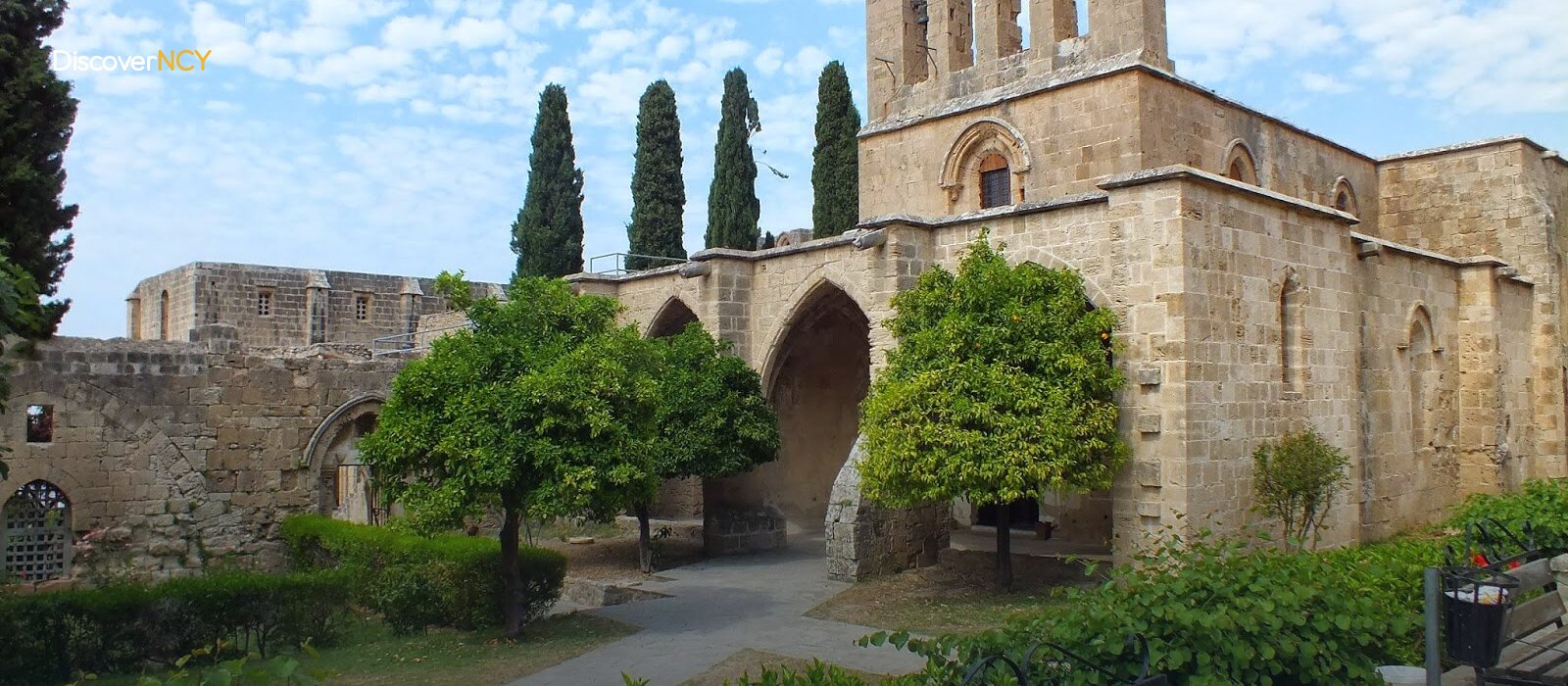
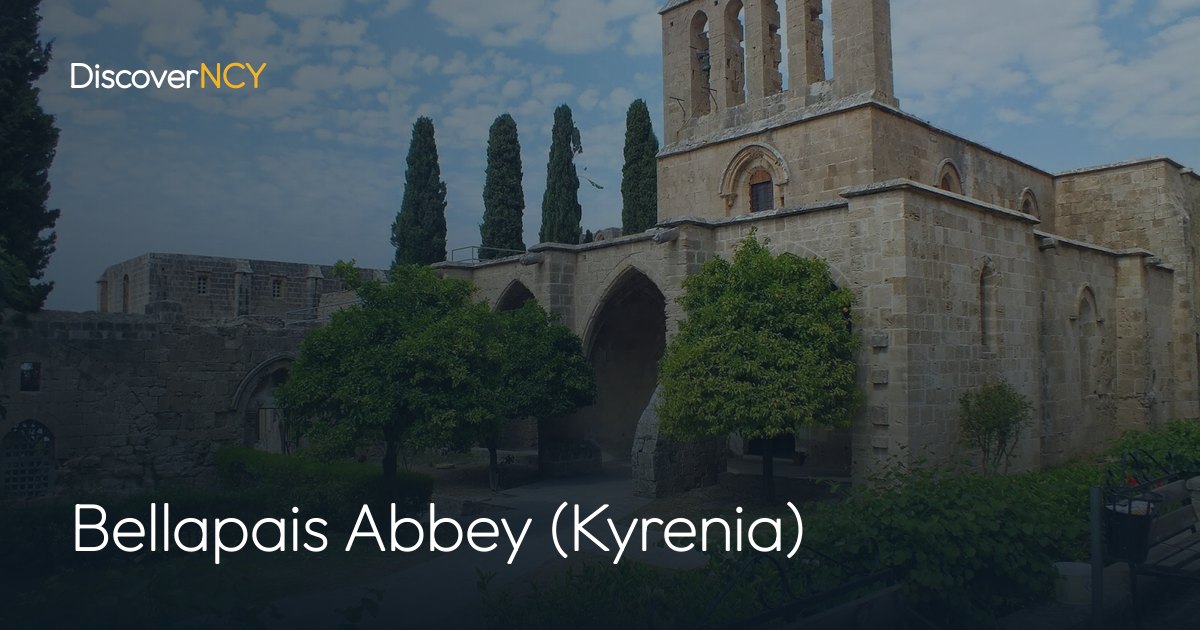
The church is without doubt the best-preserved section: the nave and two side aisles are standing, and the carved pulpit, the bishop's throne and five chandeliers partly survive. The frescoes on the walls are medieval, though their century varies from source to source. The small additions made by the Orthodox congregation after 1571 are also in this section, because for four centuries the church was the only part of the abbey in actual use. Moving into the Gothic refectory, the scale grows: there is a reading pulpit in the north wall and a large rose window at the far end. In the hall where the monks once ate, concerts are heard today, and the acoustics are the hall's main asset. An 18-arched gallery surrounds the cloister, and beneath the arches stand Roman-era sarcophagi. The monks used these sarcophagi as water troughs: water flowed from the upper basin to the lower one and from there into the garden, and visitors can still follow the same water channel step by step today. The fine Gothic stone carvings and medieval figures in the chapter house complete the list. The visit takes an hour. Starting in the church, moving on to the refectory and finishing in the cloister is the usual order, because the cloister is the last stop, opening onto the view.
Concerts in April, Weddings All Summer
The Bellapais International Spring Music Festival is held every year, with most of the concerts in the refectory. The 21st festival, in 2026, ran from 11 April to 14 May. Over 125 artists from Cyprus, Turkey, Russia, Luxembourg and Bosnia and Herzegovina performed in 12 concerts, and the opening concert was given on the evening of 11 April at 20.00 in aid of the Nicosia Anadolu Fine Arts High School. Since the dates shift from year to year, the programme is announced afresh every spring. When the concerts end, the cloister does not stay empty; the wedding side is in the hands of a separate business. "Kybele Restaurant", inside the abbey, opened on 14 February 1985 with four tables and sixteen guests. Today it can host events of up to two thousand people in a brunch or cocktail format, and weddings, engagements, henna nights, graduations, launches and corporate events are all set up in the same cloister. Kybele presents itself as one of the first businesses to bring wedding tourism from Europe. The same village also has its counterpart in literature: Lawrence Durrell lived here from 1953 to 1956, wrote Bitter Lemons (1957) here, and the book won the Duff Cooper Prize the same year.
From Eight in the Morning to Six in the Evening
The abbey is open every day from 08.00 to 18.00. As no summer/winter distinction is announced, it is worth checking the current hours before you go. There is an entrance fee, and a student discount is available. How much is the ticket? The figure varies by source and is updated often, and payment is made at the ticket office. The visiting hours and the entrance fee are by no means equally certain: the hours are fixed, the figure moves. You can get there from Kyrenia by shared minibus (dolmus) and taxi, although since the frequency of services varies, most people come in their own car. For a one-hour visit, the hours before the midday heat are the most comfortable. No restoration is closing Bellapais Abbey in 2026; the festival, exhibition and wedding calendar is running as normal. The only variable remains the figure at the ticket office.
| Field | Value |
|---|---|
| Name | Bellapais Abbey (official village name: Beylerbeyi) |
| Location | Southeast of Kyrenia, hillside village with views |
| Distance to Kyrenia | 10-15 minutes by car |
| Arrival of the monks | 1187, Augustinian order |
| First buildings | 1198-1205 |
| Change of order | Premonstratensian from 1206 |
| Main construction | King Hugh III, 1267-1284 |
| Cloister and refectory | King Hugh IV, 1324-1359 |
| Genoese plunder | 1373 |
| Transfer to the Orthodox Church | After 1571 |
| British-era restoration | 1912, George Jeffery |
| Current administration | TRNC Department of Antiquities and Museums |
| Visiting hours | 08.00-18.00, every day |
| Entrance fee | Paid, student discount, tariff confirmed at the ticket office |
| Music festival | Bellapais Spring Music Festival, 2026: 11 April-14 May |
| Weddings/events | Kybele Restaurant, since 1985, abbey cloister |
For Kyrenia's other medieval stop, see our St. Hilarion Castle article; for the island's castles, ancient cities and monasteries in one place, our historic sites of North Cyprus guide; and if you are thinking of staying in the village, our Bellapais Monastery Village hotel page.