Nicosia Travel Guide: The World's Last Divided Capital
What surprises you when you first see Nicosia usually isn't the walls — it's the line running through the middle. That line was born not in 1974 but on 30 December 1963: British Major General Peter Young drew the ceasefire line on a map that day with a green wax pencil, which is why it later became known as the Green Line. More than sixty years have passed since; this is still the world's only capital effectively split in two. That's why a list of places to see in Nicosia reads less like a familiar city tour and more like a manual for wandering a divided city: within the same old town live two separate administrations and two separate rhythms.
The Old Town: Inside the Venetian Walls
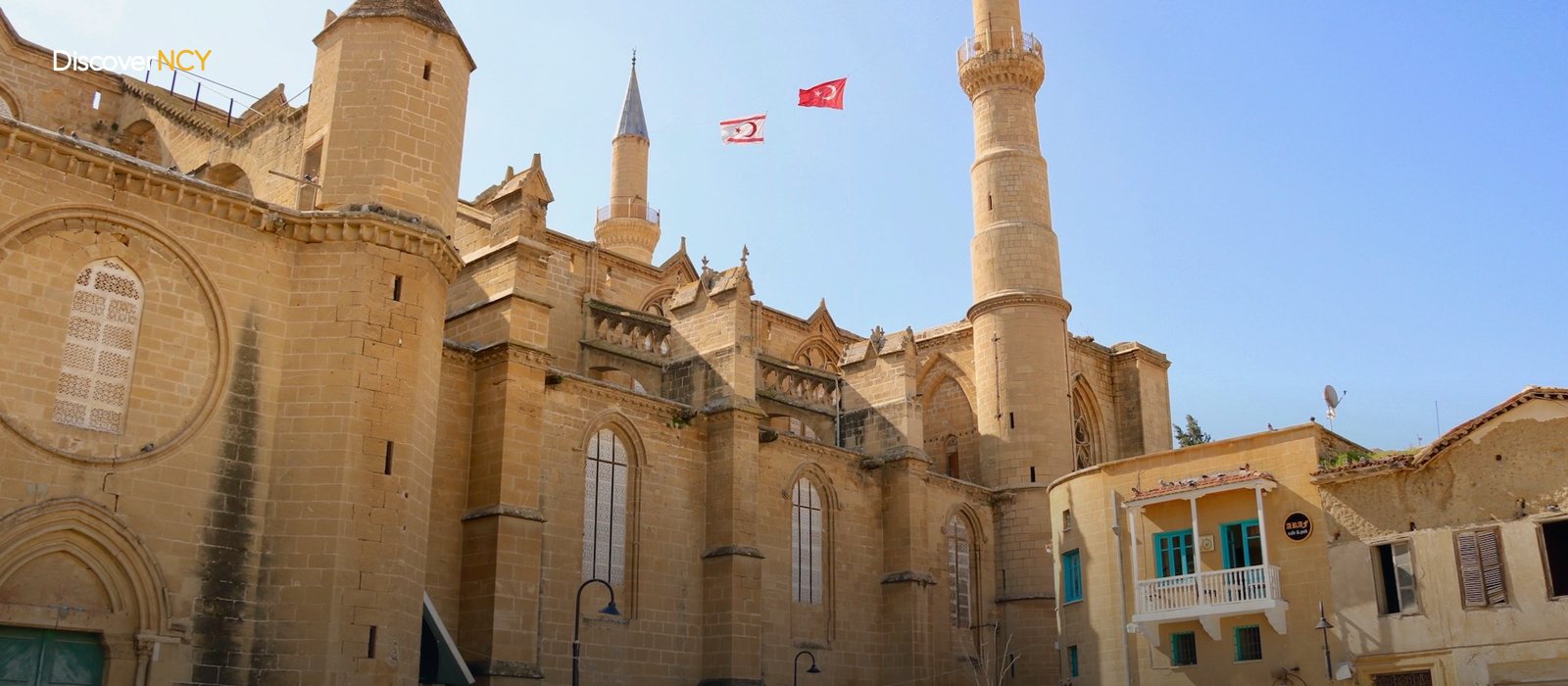
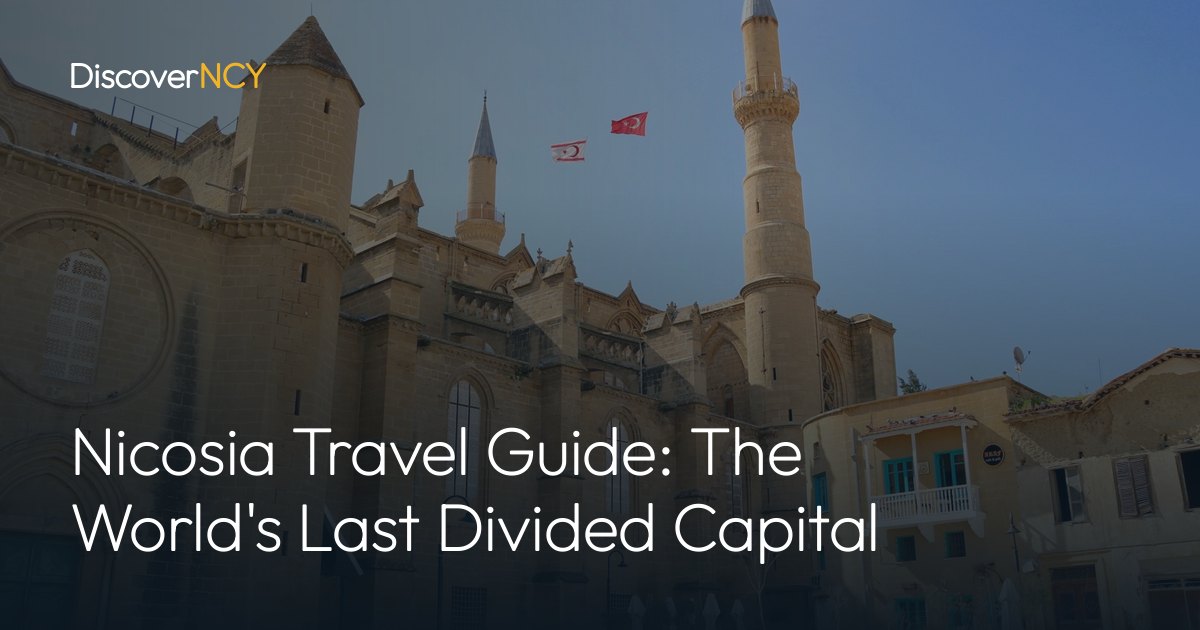
The heart of North Nicosia still beats inside walls dating from the 16th century. Between 1567 and 1570 the Venetians ringed the city with a star-shaped fortification; 11 bastions line the roughly 4,800-metre circuit, each dedicated to a different noble or office. The Selimiye Mosque stands at the very centre of this fabric, but in recent years it has lived a story of its own. Is the Selimiye still under restoration, still closed to visitors? No; the mosque reopened for worship in May 2025 after years of work — don't trust sources that keep that information stale. The courtyard of Büyük Han now hums with workshops and cafes; just to its south begin the souvenir shops of the Arasta, and a little further on, the Bandabuliya's market hall from the 1930s still does business. We've told the story of each of these buildings in our Historic Sites of North Cyprus guide. The old town's diameter is small anyway: the two farthest stops are a fifteen-minute walk apart.
The Border: Seen, Not Crossed
The old-town tour ends at Lokmacı. Someone arriving on a Turkish ID card cannot cross to the other side. The Greek Cypriot side doesn't accept the chipped ID card, and the required visa can only be obtained from the mission in Athens. For anyone who entered via the TRNC (North Cyprus), that road is effectively closed. Lokmacı is therefore less a crossing gate than a point for seeing the border. The line doesn't end at the city — it runs the length of the island; Lokmacı is merely its busiest point. The gate opened on 3 April 2008, after thirty-four years of closure; its continuation to the south is the Ledra Street crossing. The story of the Ledra Palace gate to the west is older: it takes its name from the Ledra Palace, one of the island's most famous hotels from its opening in 1949 until 1974; the hotel later became a UN headquarters, and the gate opened in 2003. The name's root is older still: the city's earliest known name was Ledra, and both the hotel and Ledra Street in the south carry it. The gate used for vehicle crossings is Metehan; insurance formalities are handled there too. For readers coming from Turkey the conclusion doesn't change: the tour is completed on the northern side, and walking up to the border for a photo is the plan's final stop.
The Modern Face: From Dereboyu to Köşklüçiftlik
Step outside the walls and the city shifts into an entirely different tempo. The density of cafes and bars gathers along Dereboyu — Mehmet Akif Avenue by its street sign. The roughly 1.5-kilometre strip is a shopping axis by day and an entertainment axis by night; we've covered the nighttime side separately in our North Cyprus Nightlife guide. A little to the south lies Köşklüçiftlik; once considered the showcase of the whole island, the district today holds the buildings of the Assembly of the Republic and the Central Bank. The political weight is concentrated here too. Since Turkey is the only country that recognises the TRNC (North Cyprus), the city's only embassy is Turkey's — standing on the same plot since 1978. Other countries, Britain and the United States included, are represented here at mission level rather than embassy level. This area rarely appears on lists of places to see in Nicosia, yet the capital's real working life happens here.
A City of Eight Universities
One group reshapes Nicosia's population every single day: students. There are eight universities and 47,000 enrolled students — most from Turkey, the rest from dozens of countries. This crowd is barely visible by day, because the campuses are scattered outside the walls across different districts. The only student trace left in the centre is the crowd descending on Dereboyu towards evening. It's an unusual ratio for a capital: a political centre living intertwined with a population this young and this international.
The Capital Without a Sea
The city has no coastline of its own; anyone wanting to add the sea to a Nicosia itinerary heads up to Kyrenia, and the road over the Five Finger Mountains via the Boğaz pass takes about half an hour. This is also the major city closest to Ercan Airport; flights land at Ercan's new terminal, opened in 2023, and the journey into the city from there takes no more than twenty to twenty-five minutes. You can even drop your luggage and head straight for the old town. In the summer months this geography exacts a price: sitting in the middle of the Mesaoria Plain, Nicosia is one of the hottest spots on the island, with July-August daytime temperatures running between 34 and 40 degrees. There's no point hiding that heat; the old-town walk is far more comfortable in spring or autumn. If you're going in summer, plan for early morning or late afternoon, and give the midday hours to Kyrenia to cool off. Winter, by contrast, is an advantage: no oppressive heat, and the old town is comfortable to explore at any hour of the day.
Seeing Nicosia in a Day
Do Nicosia's sights fit into a single day? For the old town, yes — and a few extra hours cover the border and the modern city. Start the morning in the old town and walk from the Selimiye to Büyük Han, head down to Lokmacı towards noon to see the border, and spend the afternoon on Dereboyu or around Köşklüçiftlik. If you want the sea, carry the day over to Kyrenia and have dinner back in the capital on your return. If you'll be driving yourself, remember that driving on the left in Cyprus is the rule. And one more thing: if you plan to go down to Kyrenia and return in the evening, that half hour is paid twice — build the day accordingly.