Soli Ruins
📍 Aşağı Bağlıköy, 1.5 km west of Gemikonağı, Lefke
The area you can actually walk over at Soli today is roughly 10 to 15 percent of the city. In other words, what we call the Soli ruins is a small corner, left above ground, of a harbour city going back to around 700 BC. When you sit on a step of the theatre, what lies right beneath your feet is that unexcavated majority. The site sits near Lefke, about 1.5 kilometres west of Gemikonağı, within the boundaries of Aşağı Bağlıköy, on a slope facing the shore. Because the city was placed at a point overlooking both the sea and the copper deposits behind it, the harbour and the mine run through its story as two ends of the same thread; leave one out and the other makes no sense. There is also an excavation calendar that has not been renewed in half a century, and it was that calendar that really drew the site's present boundaries.
The Majority Still Underground
The city's past goes back a long way, roughly to the 700s BC, and in that period the harbour worked together with the surrounding copper mines. Its brightest age was the Roman period. That brilliance ended with the repeated Arab raids of the 7th century. Set against such a long history of settlement, the part opened up today is small, so we think it is worth factoring in the grassy flats you assume are empty as you walk around, because the unexcavated majority lies exactly there. The 10-15 percent figure is not a precise measurement; it gives a rough idea of the site's scale. But does that ratio narrow what you will see when you go? Since the two main structures that have been uncovered, the theatre and the basilica with the swan mosaic, already lie within that narrow strip, what is missing is not the number of buildings to visit but the unseen scale of the city. Because the opened section is narrow, the site stays at a size that suits an unhurried stroll.
The Roman Theatre Facing the Sea
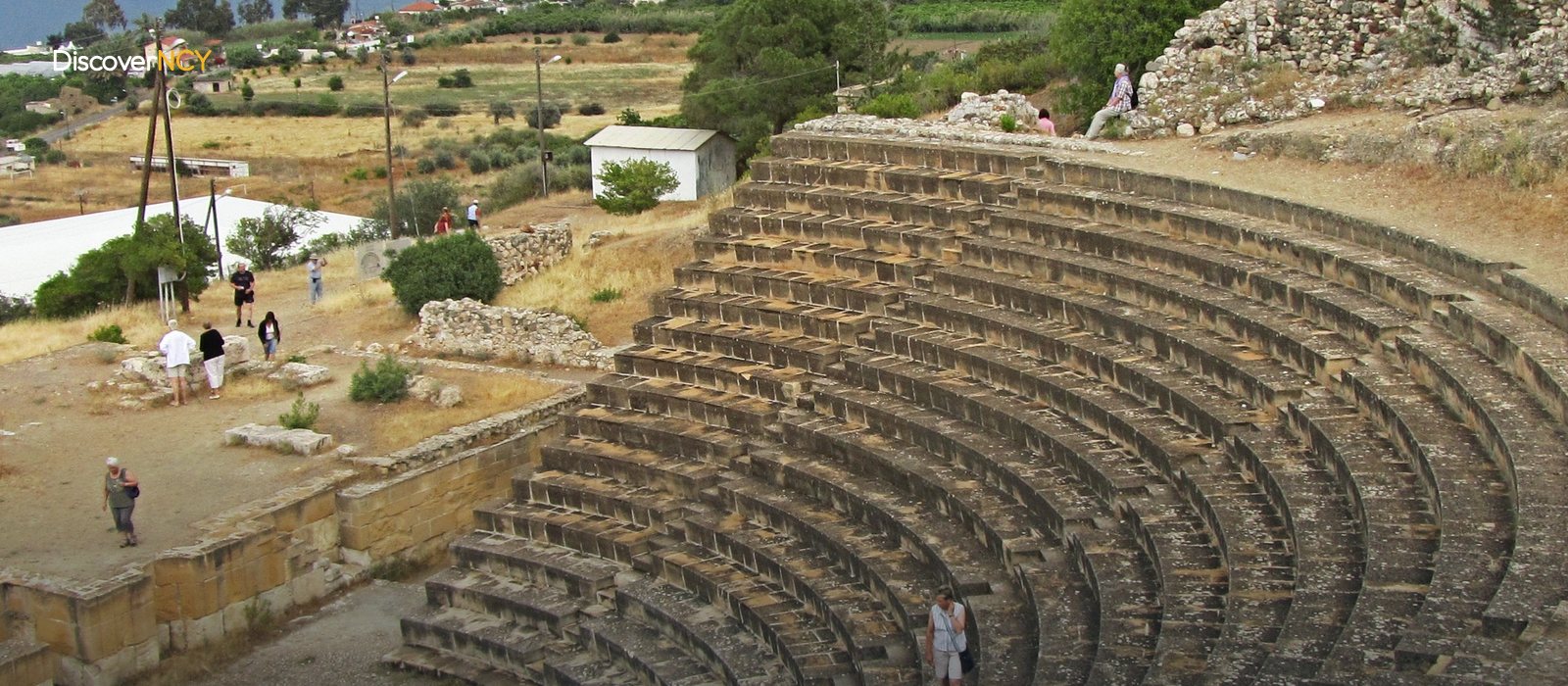
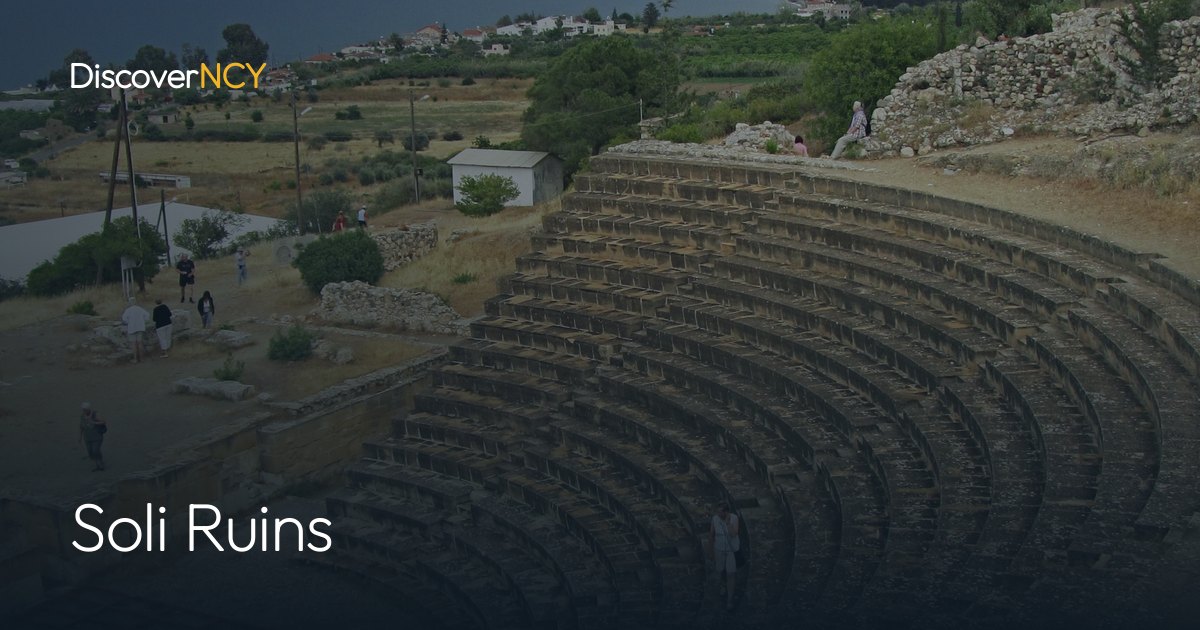
The first structure to emerge from the soil at the site was the theatre; the capacity of this Roman building, leaning against the slope that faces the sea, is given as roughly 4,000 people. What you see today dates from the beginning of the 3rd century AD. Most of the steps are Roman workmanship. There was a Greek theatre on this slope first, and the Romans built their own structure directly on top of it. Because the rows of seats were carved out of the rock, when you perch on a step you are sitting directly on the rock itself. The steps were not laid; they were cut. When you cross to the stage side and look up, the sea appears behind the seating, and you understand at first glance why the building was set on this slope and nowhere else. This is the first stop for most visitors entering the site, because it is the section closest to the entrance and the best preserved, and the seating rows carved into the slope read far more clearly than the rest of the site. It is also the most photographed corner, especially in the late afternoon when the light hits the slope head-on.
The Swan Mosaic Under a Roof
The Soli Basilica dates from the second half of the 4th century AD and is counted among the first churches on the island. Its floor measures roughly 45 metres by 27 metres, a size that shows the building was planned as something much larger than a village church. The real find on the floor is the Swan Mosaic. Plant motifs and four small dolphins circle the swan figure, but the real meaning is carried by the inscription beside it, because it reads as a wish: "have mercy on those who made the mosaic". The craftsmen left behind not their names but their wishes. The section holding the mosaic is protected under a covered roof today and shown to visitors within that protection. Do not expect an open floor stretching out under the sun; the part you will see is in the shade and limited in extent. For a 4th-century AD floor, that roof is the condition of survival.
The Swedes Began the Excavation in 1929
The first systematic work began in 1929 with the Swedish Cyprus Expedition, and it was that team that brought the theatre to light. After a long gap, a team from Laval University in Canada took over the excavation in 1964. The work ended in 1974. Since no new programme of comparable scale has been announced, the layout you walk through inside the Soli ruins today remained limited to where two foreign teams, spread across a forty-five-year interval, chose to dig. The remaining soil lies outside those two choices. Behind the site's narrow ratio today is this calendar; in other words, what determines the view in front of you is not the size of the city but the history of the excavation itself.
The Four-Month Maintenance of 2022
Once excavation stopped, maintenance took the lead. In October 2022, Soli and its neighbour, the Vouni Palace, went through a conservation project lasting about four months within the framework of the bi-communal Technical Committee on Cultural Heritage, and the site took its present form at the end of that work. UNDP provided the technical support, the European Union provided the funding, and the total cost of the work was announced as roughly 200 thousand Euros. When the work was done, both sites were reopened to visitors. So will you run into ongoing works when you go today? You will not, because no new restoration programme has been announced since 2022, and the site has remained open to visitors in the same arrangement ever since. That the last comprehensive maintenance dates back four years is not a sign of neglect either; conservation on this scale is not repeated often anyway.
The Road to Lefke and Visiting Hours
From Ercan Airport towards Gemikonağı there are about 77 kilometres of road, 23 of which are covered between Ercan and Nicosia; the real distance begins after the capital. Those coming from Kyrenia drive about 70 kilometres. For those coming via Nicosia, it is about 40 kilometres to Morphou (Guzelyurt) and roughly 18 from there to Lefke. As of September 2026, summer hours are 08.00-18.00 with last entry at 17.00, and it is worth noting that winter hours are applied as 08.00-17.00. Since summer and winter schedules can shift within the season, confirming your day of travel on the Department of Antiquities and Museums page is the safest route. Admission is charged. Archaeological sites are ticketed separately, and whether Müzekart (Turkey's museum pass) is valid here is unclear.
The Vouni Palace is right nearby. St. Mamas in Morphou (Guzelyurt) with its archaeological museum and Lefke's Ottoman quarter fit comfortably into the same day too; indeed, agencies running tours to the region bundle these four stops into a single programme of about six hours. On Tripadvisor, Soli is listed with 68 traveller reviews as one of the two most-reviewed stops in Lefke. Because Vouni, Morphou and Lefke line up in the same direction, most visitors do not set aside a separate day for the Soli ruins; they plan it as one stop on that route. Since the distances gather all four stops within the same small area, there is no practical point in separating one stop from the others on a half-day route.
| Field | Value |
|---|---|
| Site name | Soli Ruins (Ancient City of Soli) |
| Location | Near Lefke/Gemikonağı, ~1.5 km west of Gemikonağı |
| Period | c. 700 BC - 7th century AD, peak in the Roman period |
| Highlights | Roman theatre (~4,000 seats), Soli Basilica (4th century AD, Swan Mosaic) |
| Excavation history | 1929 Swedish team, 1964-1974 Laval University, Canada |
| Excavated share | Roughly 10-15% of the site |
| Latest maintenance | 2022, conservation with UNDP technical and EU financial support, ~4 months |
| Visiting hours (summer) | 08.00-18.00, last entry 17.00 |
| Visiting hours (winter) | 08.00-17.00 |
| Admission | Charged, separate ticketing, Müzekart validity unclear |
| Distance from Ercan | ~77 km, ~1 h 16 min |
| Distance from Kyrenia | ~70 km (68-73 km depending on the source) |
| Nicosia-Morphou / Morphou-Lefke | ~40 km / ~18 km |
| Nearby stops | Vouni Palace, St. Mamas and museum in Morphou, Lefke's Ottoman quarter |
| Tripadvisor | 68 reviews, one of the two most-reviewed stops in Lefke |
For the other stops on the same route and Lefke's Ottoman quarter, see our Guzelyurt and Lefke guide; for the island's other great ancient city, our Salamis ancient city page; and for the full list of castles and ruins, our guide to the historic sites of North Cyprus.