Morphou (Güzelyurt) & Lefke Guide: Citrus and Mining History
Kyrenia's harbour, the beaches of the Karpaz Peninsula...
That's how most visitors to North Cyprus draw their route, skipping the island's west. Morphou (Güzelyurt) rarely makes the list of places to see — but it should. Here you'll find a plain that smells of citrus, the legend of a tax saint, a palace never rebuilt after it burned, and an abandoned mining pier in Lefke. You can fit it all into a single day — and without the crowds.
Morphou (Güzelyurt): A Story of Citrus and Water
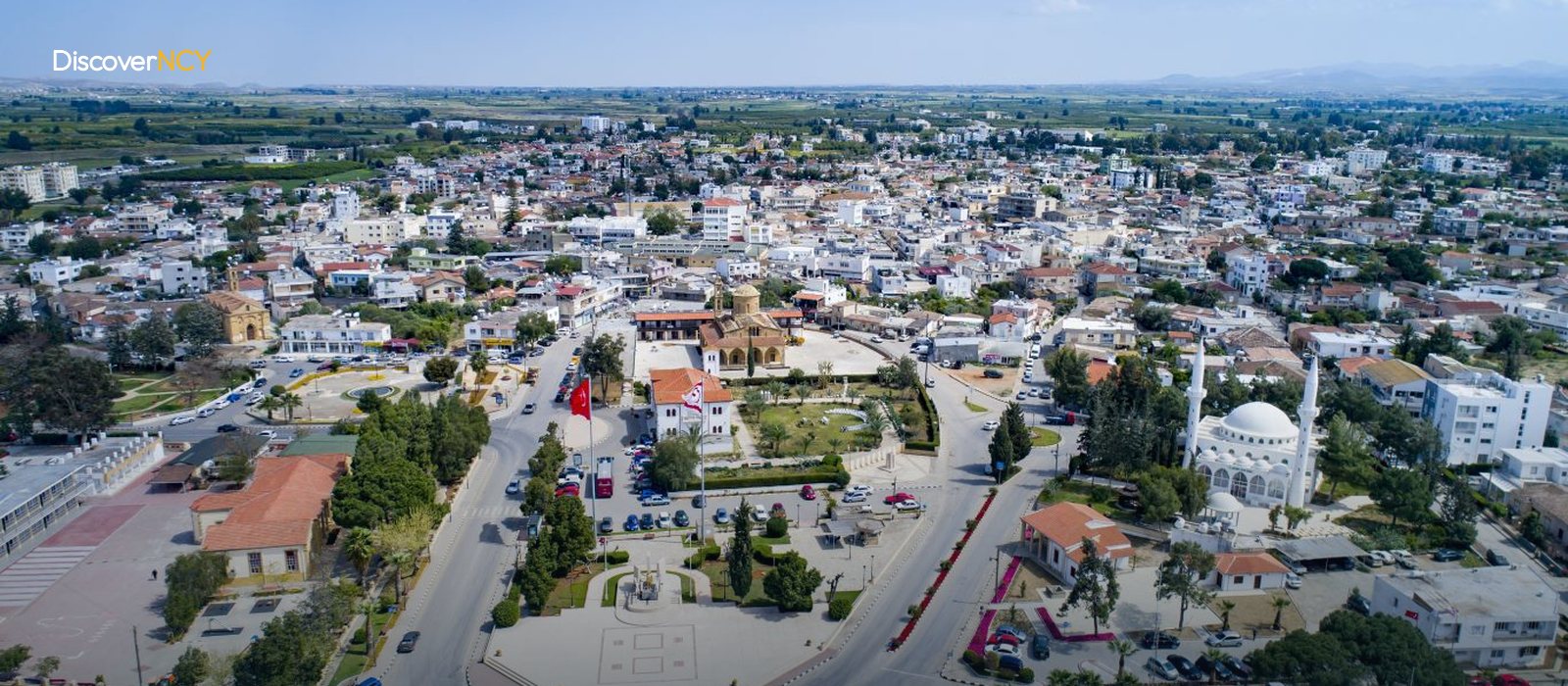
The list of places to see around Morphou (Güzelyurt) gathers around this plain. The town's old name was Omorfo, Greek for "beautiful"; in 1975 it was given the name Güzelyurt, which carries the same meaning. Today it is considered the island's citrus capital, its orchards stretching all the way to Lefke. In the TRNC (North Cyprus)'s exports, citrus takes second place after halloumi; mandarins and oranges lead the way, with clementines alongside them. The Orange Festival has been held every mid-June since the late 1970s; the 48th edition in 2026 opened with a parade and continued with folk dances and a concert.
The plain has a water story of its own. Years of over-extraction turned the groundwater salty; farmers found themselves drawing brine from their wells. So where does the water come from now?
From Turkey, by pipeline. In April 2025 the line was connected to the plain, and today around 26,000 dönüms (donums) are irrigated with this water.
St. Mamas and the Güzelyurt Museum
St. Mamas Monastery stands at the very centre of town. According to legend, Mamas was a poor hermit who refused to pay his taxes. As soldiers were marching him away, a lion attacked a lamb on the road; Mamas stopped the lion, took the lamb in his arms and rode into the city on the lion's back. Faced with this miracle, the Byzantine governor exempted him from taxation. He is therefore considered the patron saint of tax avoiders, and in icons he is always depicted riding the lion. The church's entrance and columns date from the Lusignan period; the central dome was added in 1725, in Ottoman times.
The iconostasis — the icon screen — carries 16th-century woodwork in deep blue and gold. The Icon Museum adjoining the church displays other icons reaching back to the same century. The Güzelyurt Museum was the first museum to open after 1974; the ground floor is devoted to natural history, the upper floor to archaeology. The most precious piece is a 68-centimetre statue of Artemis. It bears a startling resemblance to the statues at Ephesus — not something you'd expect in a small-town museum.
Soli: The Swan Mosaic and the Missing Stones
The most photogenic stop on the Morphou (Güzelyurt) sightseeing list is the seaside site of the Soli Ruins, counted among the ancient cities in Cyprus. The first excavation began in 1929 with Swedish archaeologists, and the first structure uncovered was the theatre; between 1964 and 1974 the dig was continued by a team from Laval University in Canada. The Roman theatre overlooking the sea held around 4,000 people; its present form dates from the early 3rd century AD, built over an older Greek theatre. Are the stones you see today original?
Mostly not. In the 19th century, under British rule, the theatre's stones were stripped out and used to build the quays of the port of Port Said. A little further on stands a basilica from the 4th century AD, one of Cyprus's first churches; on its floor lies the swan mosaic that has become Soli's emblem, ringed by four small dolphins. Look closely at the mosaic — along its edge runs a plea to the effect of "have mercy on those who made this mosaic". No one ever recorded the maker's name.
Vouni: The Palace That Fell, the Treasure That Remained
The hill west of Soli rises about 250 metres, looking down on the sea; the ruins of Vouni Palace are there. At the hill's highest point there's also the remnant of a Temple of Athena. The kingdom of Marion built it at the start of the 5th century BC to keep watch over pro-Greek Soli; climb the hill and the reason becomes obvious — the plain lies at your feet.
The palace of more than a hundred rooms descends towards the sea in terraces, its architecture showing first Persian, then Greek influence. It was burned around 380 BC and never rebuilt. Among the ashes, inside vessels blackened by the fire, gold and silver bracelets and hundreds of coins were found; the coins bore the stamps of Marion, Kition, Lapithos and Paphos — four separate kingdoms. Known today as the Vouni Treasure, this find is the most tangible trace left of the palace's destruction.
Lefke: What the Copper Left Behind
Lefke's story was written less by farming than by mining. The American firm Cyprus Mines Corporation arrived here in 1912, began exporting copper ore the following year, and operated until 1974-75. The company had its own hospital, workers' housing and social facilities; accounts of the period describe it as "like a miniature government". The port at Gemikonağı loaded the ore onto ships. The rusted, ruined pier that remains is now a favourite haunt of photographers — the local press calls it "the Eiffel Tower of Cyprus". But it shouldn't be romanticised: the mine's waste heaps still sit in the area, an environmental problem never cleaned up. Lefke has a much older face as well. The Piri Mehmet Pasha Mosque was founded in 1572; the Piri Pasha Medrese, opened eight years later, was the first medrese outside Nicosia. In the town's old cemetery, the marble tomb of Mir-i Miran Vizier Osman Pasha, who died in 1839, still stands, and the texture of Ottoman-era houses can be felt in the streets.
Today's Lefke is younger: the European University of Lefke brings life to the streets with its thousands of students, and the gardens are full of citrus and of the dates locals insist "taste like nowhere else".
Practical Information: Route, Distances and Accommodation
Morphou (Güzelyurt) is roughly 40-45 kilometres from both Nicosia and Kyrenia; agencies cover Güzelyurt, Soli, Vouni and Lefke in a single six-hour day tour. You can add Yeşilırmak on the border to your route; the village is famous for strawberries, and at the festival held in the square each early May, strawberries are picked straight from the fields. The village's border crossing opened in 2010 and cut the journey between Kato Pyrgos and Nicosia from three hours to an hour and a half. For those coming from Turkey, entry is easy: you can enter Cyprus with an ID card as long as it's the chipped kind, no passport needed, and the currency is already the Turkish Lira. There are no big hotels on the Morphou (Güzelyurt) list — the properties are small and family-run in scale. Most visitors come for the day and return to Kyrenia or Nicosia in the evening. If that's your plan too, start the day in Morphou (Güzelyurt) — Lefke lies furthest west.