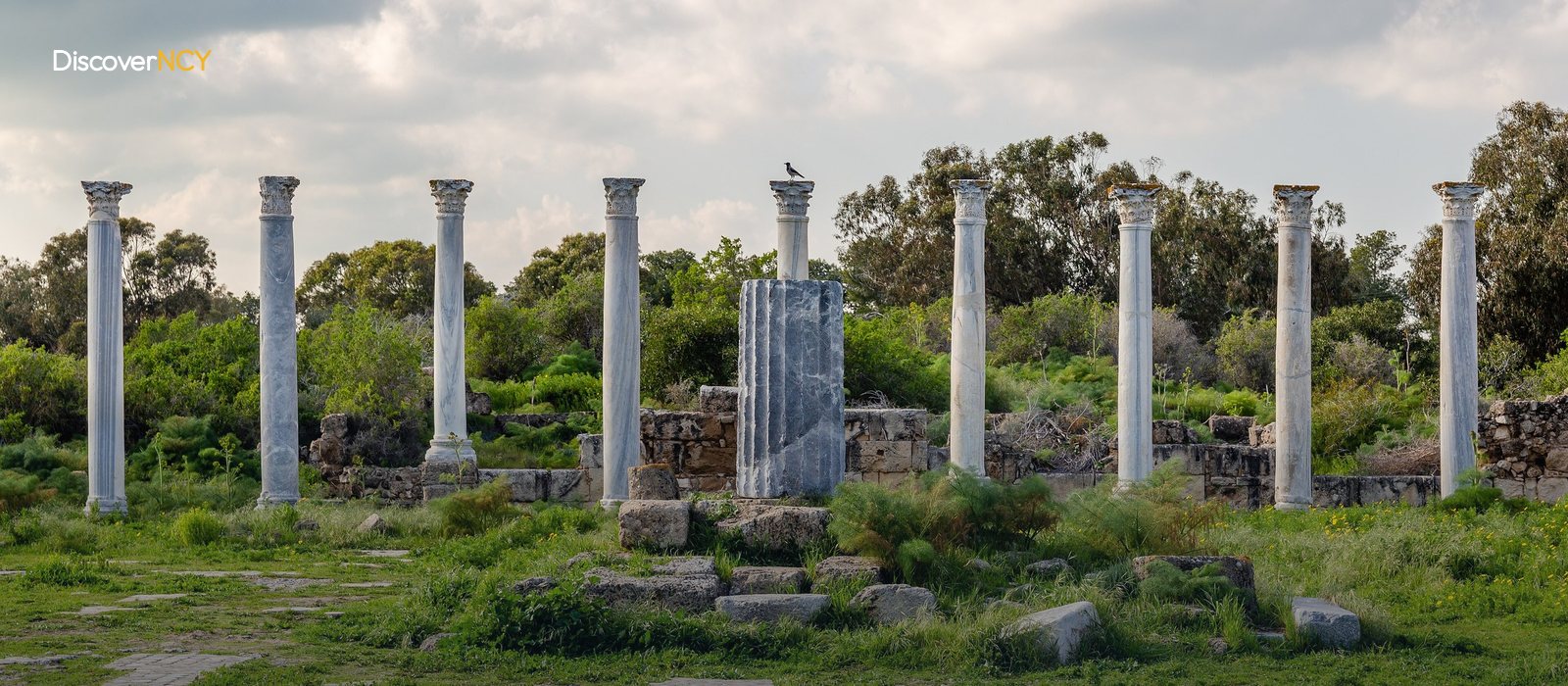
Salamis Ancient City
📍 Yeni Boğaziçi coast road, Famagusta
In 1952 a French mission from the University of Lyon put its spades into the dunes north of Famagusta, and according to the sources we consulted that work went on for a full twenty-two years. Most of the columns and theatre steps you see today once you pass the ticket office and step onto the path are the fruit of that "mission's" labour. The excavation was cut short in 1974 and resumed in 1998 as a joint project of Ankara University and Eastern Mediterranean University (it continues today). That is why the ancient city of Salamis is not considered a finished archaeological site, and according to the sources there are sections east of the cistern still thought to lie buried under sand. It is also why one end of the site looks like a well-kept park and the other like a construction site only just abandoned.
The Site Left by a Twenty-Two-Year Excavation
The structures uncovered by the French mission still form the backbone of the site today. You walk across a pine-scented, wooded flat; the sound of the sea comes from behind you and at intervals a new group of buildings appears. The long gaps in between surprise newcomers like you. The excavation's interrupted history also explains the site's scattered appearance today. Since signage and waymarking are limited, most visitors put their route together as they walk, and our suggestion is to go to the farthest point first and pick up the nearer structures on the way back. We realise that the unfinished excavation looks like a shortcoming at first glance, but in truth that is the most honest side of the site, because here you are inside a genuinely excavated city rather than a restored stage set.
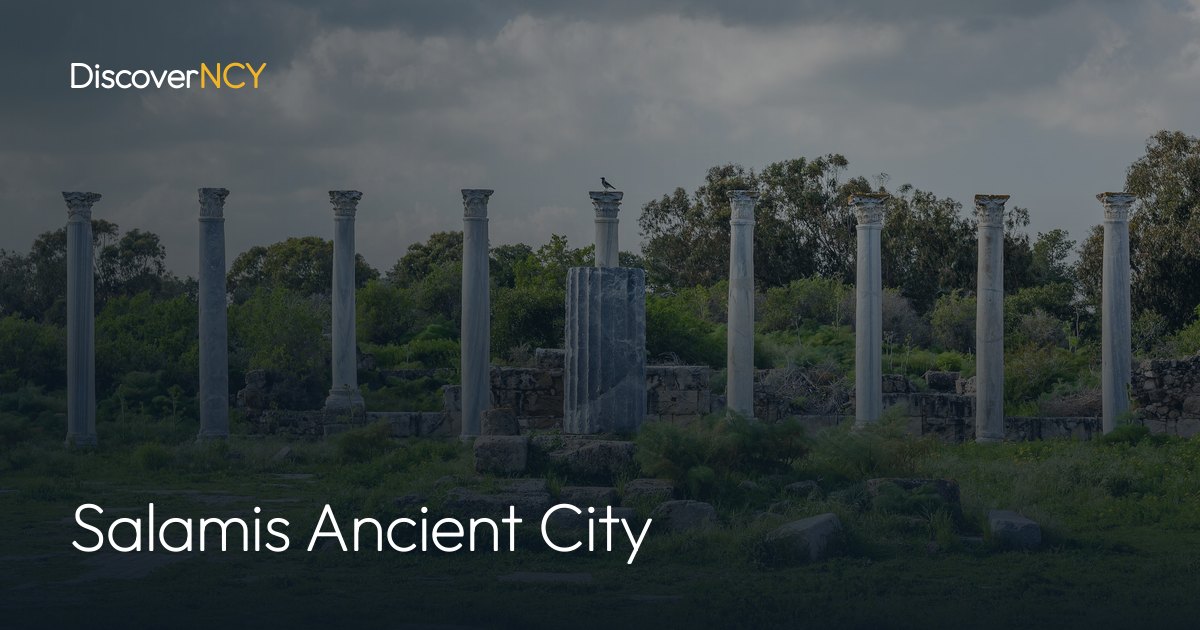
The Standing Columns of the Gymnasium
The city's most impressive ruin is the Gymnasium. The building was badly damaged in the earthquake of "AD 76" and was then rebuilt under the Roman emperors "Trajan" and "Hadrian". Standing in the middle of the colonnaded courtyard, you see rows of columns still upright on all four sides and, on two of them, the arched chambers of the bath complex. In the Byzantine period part of the courtyard was converted into a bath, so the traces of three separate eras can be read here one on top of the other. Some of the statues still stand in their own niches, which is why the courtyard is busier than it looks in photographs. As there is no shade, the morning hours are noticeably more comfortable here.
The Theatre Still Has a Job
The Roman Theatre dates to the reign of "Augustus" and has a capacity of around fifteen thousand. Some of the tiers collapsed in the 4th-century earthquakes, and the dismantled stones were reused in the nearby bath buildings. Most of the seating rows are still standing, though, and when you climb to the top tier the whole stage floor lies below you. Concerts and events are still held here today, so it is possible to come across a rehearsal on the day of your visit. Seeing a sound system being set up in one corner while the rest of the site lies silent is a reminder that the building is still doing its own job.
What Remains Around the Forum
The Forum also dates from the Augustan period and was the city's centre of trade and assembly. "At its southern end stands the Temple of Zeus." According to the sources, the remains of a water reservoir, marketplaces and a Roman villa can be seen around it. There is almost no shade in the area, and walking becomes hard in the midday heat. The necropolis containing the royal tombs stretches out towards "Enkomi".
So when exactly was the city founded? No document gives a definite answer; the narrative rests on legend and says that Teucer came to the island after the Trojan War. To be clear, that does not count as a historical record. It is also said that there are traces of the ancient harbour along the shoreline, but that information comes from secondary accounts. The long sequence between "707 BC", when Assyrian rule began, and the 4th century AD, when the city was refounded as Constantia, also explains why the site presents such a jumbled pile of structures.
Summer Hours and Weekend Opening
According to the summer timetable of the Department of Antiquities and Museums, the site is said to be open between "08.00" and "19.00". In addition, last entry here is at 18.00. In the same official table this site stands out as the latest-closing archaeological site in the TRNC and one that also stays open at weekends and on holidays (we recommend checking again before you go). Weekend opening is not the case for every archaeological site in the TRNC. For a visitor planning a short day or setting out on a Saturday, this is a serious advantage. The hours valid as of September 2026 may change, and the official table does not announce a separate timetable for the winter season. Those who arrive first thing in the morning benefit from both the cool and the empty paths. There is an entrance fee; tickets are bought at the ticket office. Whether Müzekart (Turkey's museum pass) is accepted here is unclear, so it is worth assuming that each site is ticketed separately.
Getting to the Site from Famagusta
The site sits on a wooded flat facing the sea in the Yeni Boğaziçi area north of Famagusta. From the city centre, according to the sources we found, the drive takes around ten to twelve minutes. Following the coast road, you reach the car park with the shoreline and the signpost on your right. What about those without a car of their own? If you don't have one, you can look into the "Cyprus car rental" services we covered in earlier articles, or, most practical of all, take a taxi from the centre; inside the site everything is explored on foot. Since there is no shade, comfortable shoes and a hat can be a real necessity in the summer months. As the ancient city of Salamis covers a large area, we suggest setting aside a few hours to wander without hurrying, and take plenty of photos.
Stops on the Same Route
On the other side of the main road is "St. Barnabas Monastery". It was restored in 1992 and turned into an Icon and Archaeology Museum, where some of the finds from the site are displayed. Being only a few minutes away, it fits easily into the same day trip. The Late Bronze Age settlement of Enkomi is also nearby and chronologically represents the period before this city. The stretch of beach right in front of the site is used for a short break after the visit. Beyond getting in and out of the car between the two stops, no extra planning is needed. Fitting both stops into the same day is more than possible for anyone who sets out early in the morning.
The fact that the excavation resumed in 1998 means the number of structures to be seen within the boundaries of the ancient city of Salamis may grow in the coming years.
| Field | Value |
|---|---|
| Location | Yeni Boğaziçi / Famagusta, TRNC |
| Distance from Famagusta | About 10 minutes by car |
| Founded (legend) | After the Trojan War, the Teucer narrative |
| Historical span | From the Bronze Age to the Byzantine period, the ancient capital of Cyprus |
| Key periods | Assyrian 707 BC, Evagoras 411-374 BC, Ptolemy 294 BC, Roman, Constantia 4th century AD |
| Main structures | Gymnasium, Roman Theatre, Forum, Temple of Zeus, water reservoir, necropolis |
| Excavation history | 1952-1974 University of Lyon, since 1998 Ankara University and EMU |
| Summer hours (official) | 08.00-19.00, last entry 18.00 |
| Winter hours | Not announced separately, may be shorter in season |
| Entry | Paid, tickets at the ticket office |
| Müzekart | Validity unclear, not to be relied on |
| Shade | None, morning hours recommended |
| Nearby stops | St. Barnabas Monastery, Enkomi, Salamis beach |
| Visitor impression | Large and atmospheric, limited signage |
For the museum across the road, see our St. Barnabas Monastery page; for the other stops in the city, our Famagusta travel guide; and for the island's other ancient cities and castles, our list of historic sites of North Cyprus.