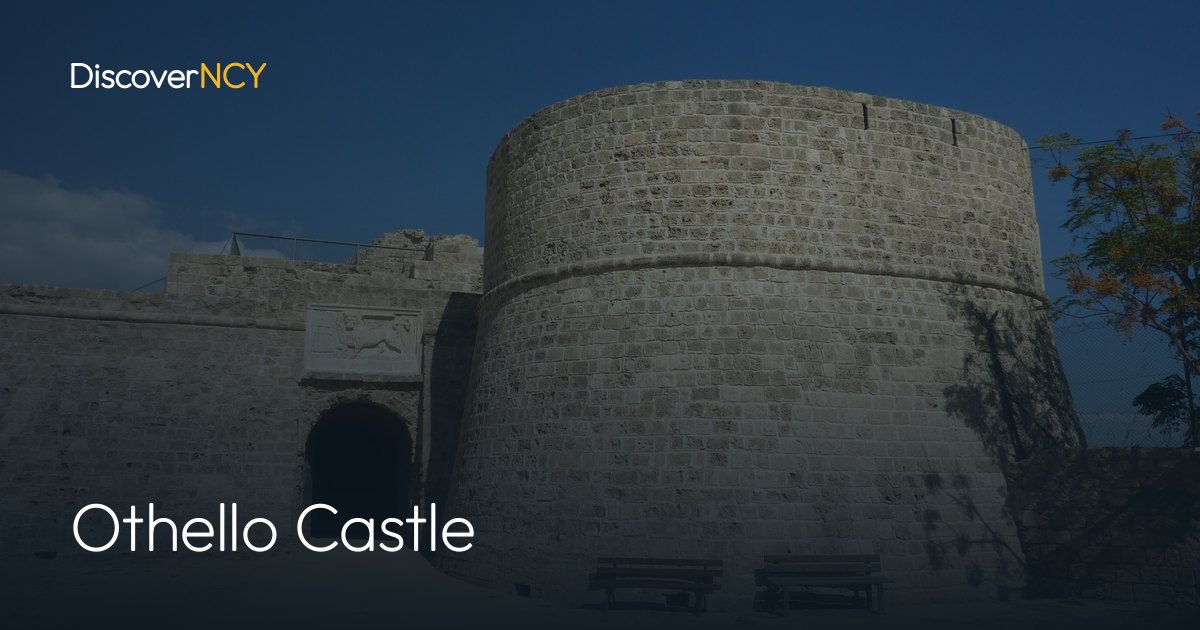
Othello Castle
📍 Walled city, beside the Sea Gate, Famagusta
In Cyprus, going to a castle is rarely a matter of the calendar. That is especially true for anyone wanting to visit Othello Castle... In Kyrenia the gate is open all year round and the traveller sets off without picking a day. At its sibling in Famagusta, we should remind you, things do not work that way. In April 2026 the Department of Antiquities and Museums closed the castle after some stones fell, and kept it closed for months. No date was given for reopening, nor were the details of the reason shared, according to what is available online... For someone heading into the walled city (Suriçi), the first question is therefore not the history of the building but whether the gate is open that morning. The decision facing a reader planning to visit Othello Castle starts right there; the rest is only useful once the gate opens.
The gate stayed shut for a long time in 2026
After the news in April 2026, no official reopening announcement followed. Local figures such as Okan Dağlı of the Famagusta Initiative called for transparency, but the department kept its silence. In the same days a citizen reacted on social media, saying the intervention carried out was not in keeping with the historic fabric. As of September 2026 the status of the gate is still uncertain, so before setting out it is worth checking the department's latest announcement or the tourism office in the walled city. The same question will also cover the hours, because summer and winter schedules differ and the sources give no clear picture. Admission is charged; in the TRNC archaeological sites are ticketed individually.
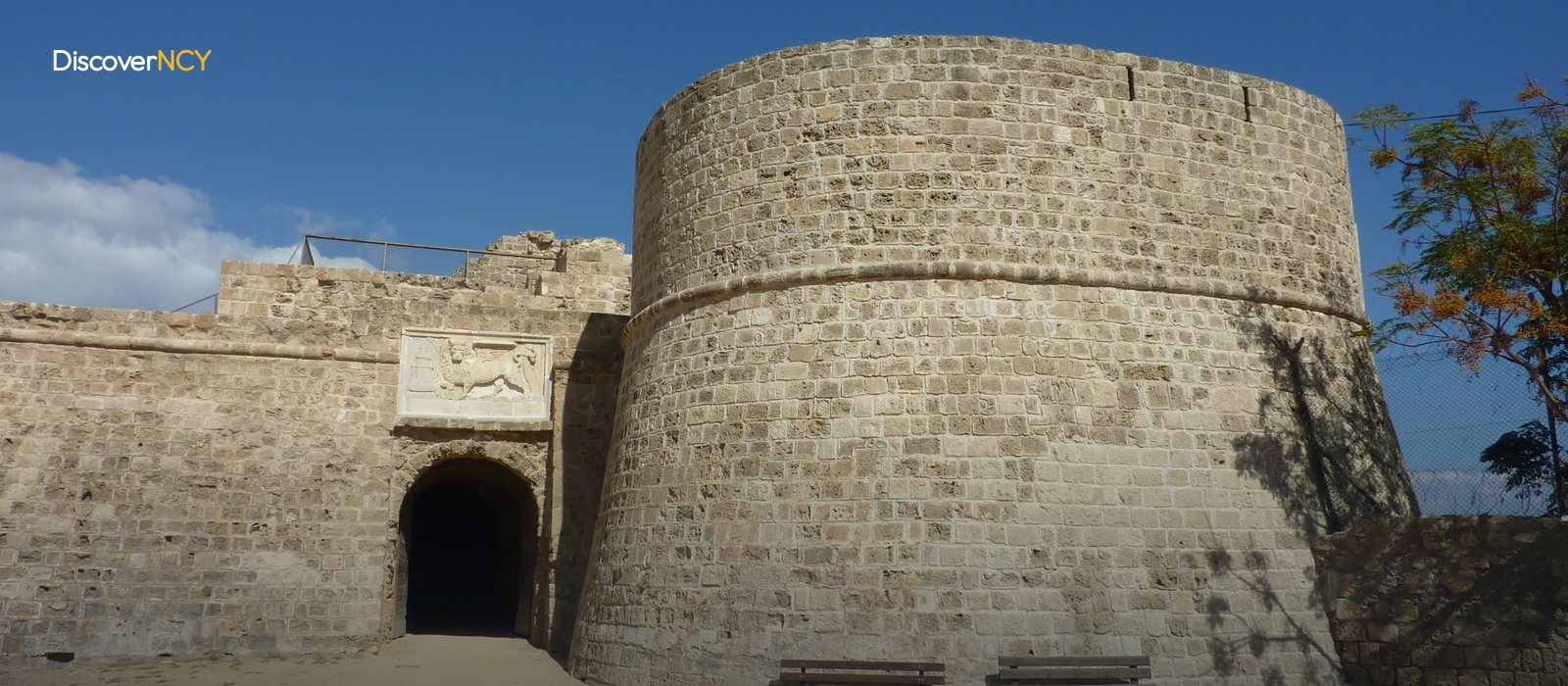
But is there any point in going as far as a closed castle? Partly, yes, because the outer wall, the line of the moat and the relief above the entrance gate can be seen from the street. There is no angle from outside that makes up for the hall inside and the view from the bastion... For the traveller who puts the castle at the centre of the programme, confirmation is therefore essential - for one who adds it as an extra stop on a walled-city tour, the risk stays small. What sets the difference is how many kilometres you have driven that morning...
In Kyrenia the chance of finding the gate closed is practically nil (here the chance is real). Although both come under the same department, the picture the visitor sees diverges... An archaeological site staying closed for months without an official statement says as much about the maintenance regime as about the site itself.
The five-domed hall facing the sea
When the gate is open, the courtyard turns out larger than expected, but the real surprise is the hall on the sea side. About thirty metres long, covered by five domes and high-ceilinged, this space is thought to have served as a meeting and dining hall. At Kyrenia Castle what holds the visitor is the shipwreck exhibition; here what holds you is an empty volume. That a hall can stop a person in their tracks without a single exhibit on show is proof that architecture can be content in its own right.
In the courtyard stand period cannons, cannonballs and catapult shot, all in the open air rather than behind glass and within arm's reach. A small display, yet it explains the castle's role in defending the harbour at a glance. The tower stairs are narrow and steep, so sturdy shoes will make things easier. If you are climbing with a small child, keep hold of their hand: the steps are stone and the railings are not consistent everywhere. The reward for going up is clear: from the bastion the city and the harbour appear in the same frame.
The gate reads 1492
The castle was built in the 14th century by the Lusignans to protect the harbour against possible attacks from the sea and to serve as one of the city's main entrances. Some sources give an earlier date, but most converge on the 14th century. The Venetians were not the builders; they arrived in 1492 and adapted the building to the artillery of the day. Under Captain Nicolo Foscari the square towers were turned into round ones, and the winged lion of St. Mark was carved above the entrance gate. Beneath the relief you can read the inscription "Pax tibi Marce, Evangelista meus", the date 1492 and the captain's name.
That is why it is worth spending two minutes at the gate before touring the interior; most visitors walk through without looking under the stone. Legend has it that Leonardo da Vinci visited the island in 1481 and advised the Venetians on defence, but the documentation for this is not clear. The moat surrounding the castle was drained much later, in 1900, because of the risk of malaria. The date on the gate does not tell of the building's founding; it marks the year it passed to Venetian artillery.
The Shakespeare link is symbolic
The present name was given during the British colonial period and refers to Shakespeare's Othello being set in a Cypriot port city. That is the extent of the link. There is no document showing that the play takes place here, and the sources themselves describe the connection as weak and symbolic. The small park next to the castle being named Desdemona continues the same literary allusion; the park is not considered part of the castle. Othello Castle thus became a building that took its name later on, and one remembered more for a stage text than for its own history. A building taking its name from a play written centuries later shows how early naming became intertwined with tourism.
The castle alone will not fill a day
The walled city is a small area, and the castle is covered in a short visit of around half an hour. It therefore makes more sense to build the programme around its surroundings. Desdemona Park, between the Sea Gate and the castle, is adjacent. Namık Kemal Square, Namık Kemal Dungeon and Lala Mustafa Pasha Mosque, converted from the former St. Nicholas Cathedral, are a few minutes' walk away, and Petek Pastanesi falls within the same circle. Coming by car from Nicosia means 55-60 kilometres and about an hour on the road; from Kyrenia it is over 76-79 kilometres.
It is possible to give Kyrenia Castle a whole day, whereas Othello Castle is a stop that slots into a walled-city tour. The restoration that began in 2014 was carried out with EU funding, in cooperation with the United Nations Development Programme and the bicommunal Technical Committee on Cultural Heritage, and the building reopened to visitors on 3 July 2015. Eleven years have passed since that opening, and the castle is closed again. This second closure, following a repair that cost around one million euros, affects the season of the walled city's traders as much as the traveller's plans.
| Field | Value |
|---|---|
| Name | Othello Castle (Othello Tower) |
| Location | Walled city of Famagusta, near the Sea Gate |
| First built | 14th century, Lusignans |
| Remodelling | 1492, the Venetians, Captain Nicolo Foscari |
| Inscription | "Pax tibi Marce, Evangelista meus", lion of St. Mark, 1492 |
| Origin of the name | British period, reference to Shakespeare's Othello |
| Architecture | 4 round towers, ~30 m five-domed Great Hall, cannons and cannonballs in the courtyard |
| 1900 | Surrounding moat drained against the risk of malaria |
| Restoration | 2014-2015, EU-funded, reopened 3 July 2015 |
| Status in 2026 | Closed since April 2026, current status needs confirming |
| Admission | Charged, the figure varies |
| Visit duration | Around half an hour |
| Nearby stops | Desdemona Park, Namık Kemal Square, Lala Mustafa Pasha Mosque, Petek Pastanesi |
| Getting there | Nicosia 55-60 km, Kyrenia 76-79 km |
If you find the gate shut, our pages on the Famagusta city walls and Lala Mustafa Pasha Mosque in the same circuit will save the day; for the whole of the walled city, see the Famagusta travel guide.