Namık Kemal Dungeon
📍 West of Namık Kemal Square, Venetian Palace courtyard, walled city, Famagusta
The Namık Kemal Dungeon... The year was "1873", and in the spring of that very year five men were put on a ship "without trial" because of a play they had staged. One of them was Namık Kemal, and he would spend exactly 38 months in Famagusta. The room that held him is known today as the Namık Kemal Dungeon, a small museum standing in the courtyard of the Venetian Palace. Anyone touring the walled city (Suriçi) in half a day can easily walk straight past its door, yet that single room in the courtyard directly carries a handful of the best-known books in Turkish literature. At the gate, what interested us most was the weight of the sentence; what stayed with us on the way out was what the man wrote and finished here.
Three eras, two floors, one building
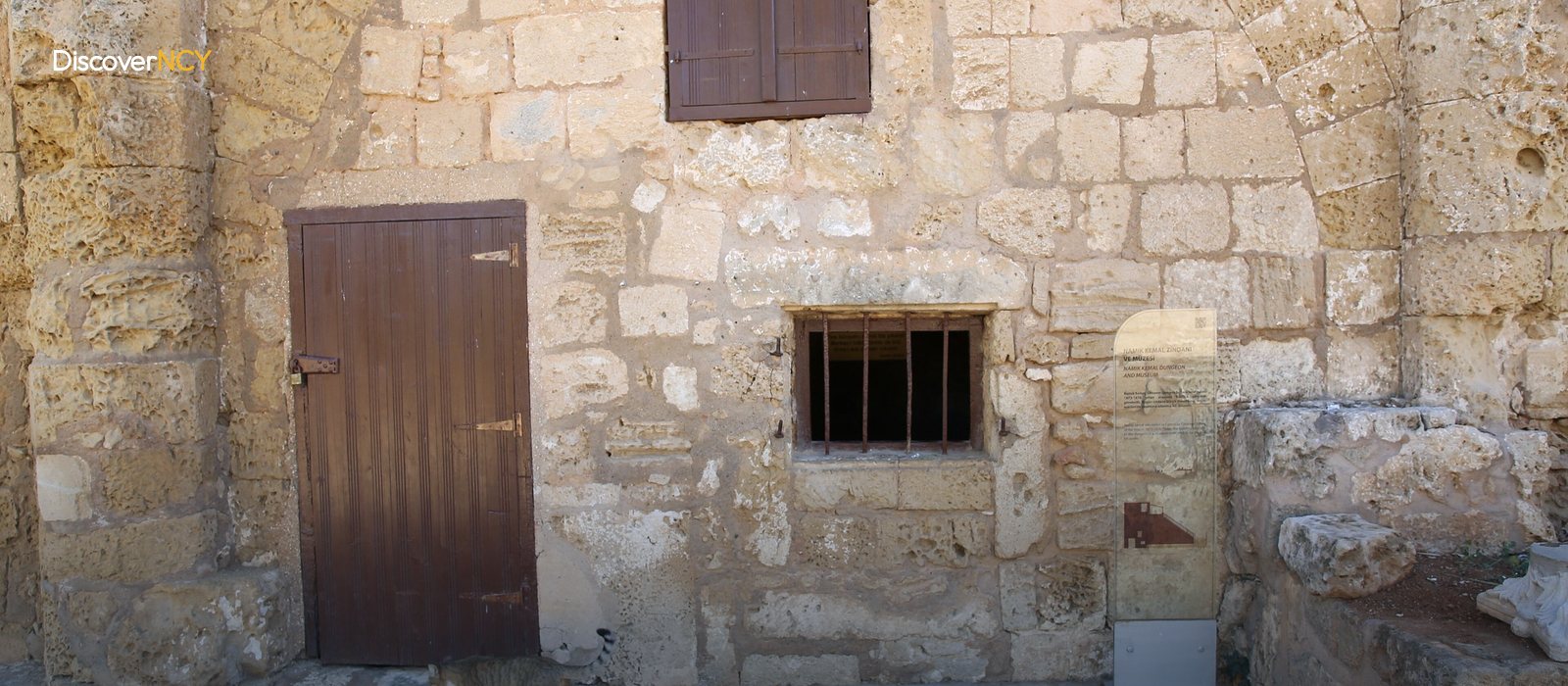
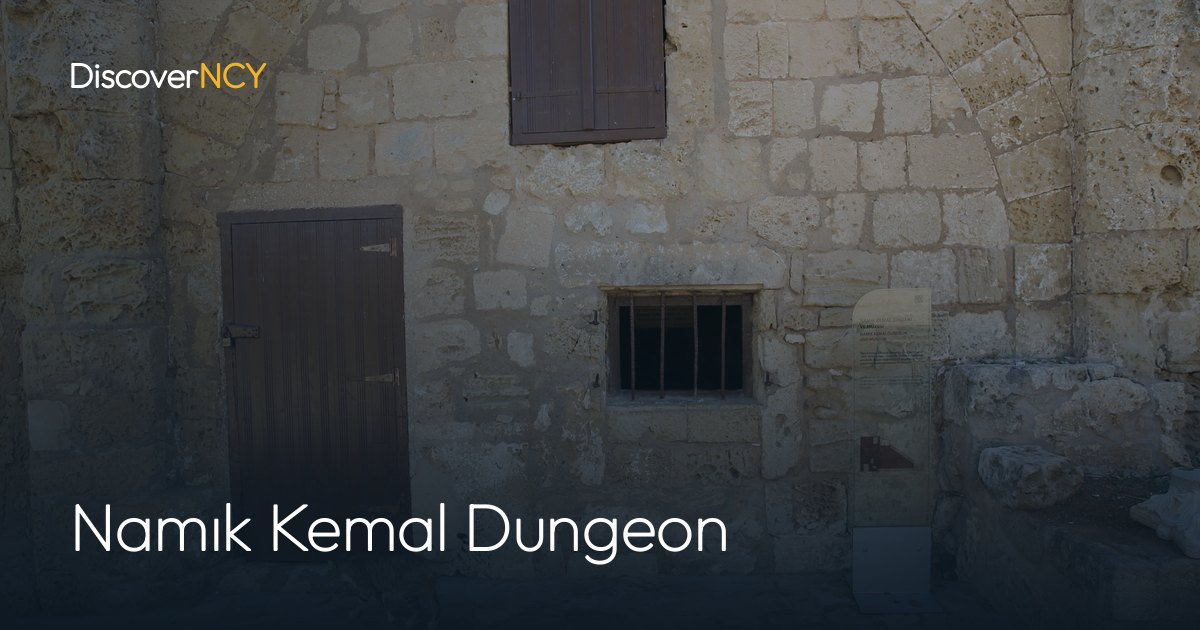
The courtyard lies at the western end of Namık Kemal Square, right next to the Lala Mustafa Pasha Mosque. This is the courtyard of the Palazzo del Provveditore, the palace itself, left over from the Venetian period. The rectangular, L-shaped two-storey building sits in one corner of this courtyard and is entered directly from it. The lower floor, with its dressed-stone masonry, belongs to the Lusignan period, while the upper floor is an Ottoman addition built in the lath-and-plaster (bağdadi) technique. The door of the single cell opens onto the courtyard, and there is a small landing in front of the room upstairs. That is why sticking an "Ottoman monument" label on the building would be wrong: three separate eras are layered on top of one another in the same walls.
The cell on the lower floor really is dark and cramped. A stone floor, a mattress on it, and that is all. Looking from the courtyard, the scale becomes clear at once: this is not a castle dungeon but a single room opening onto the palace courtyard. To reach the upper floor you have to use the steep stone staircase outside. This difference between the two floors stands right at the heart of the story told here.
How did the exile begin?
When "Vatan yahut Silistre" (Homeland or Silistra) was staged in Istanbul, it stirred up far more enthusiasm in the audience than anyone expected. The government of Abdülaziz found both the play and its author dangerous, so Namık Kemal was sent to Cyprus with four friends, without trial. But why did the sentence land here? The poet spent his first months in the stone cell on the lower floor; in time, with the permission of Veyis Pasha, the governor (mutasarrıf) of Cyprus, he moved to the room upstairs. The relief was relative, because throughout his exile he frequently fell ill with malaria and other diseases.
The final act closed with a change inside the palace. Abdülaziz was deposed on 30 May 1876; a general amnesty was declared on the accession of his successor Murad V, and the poet was pardoned on 3 June 1876. He returned to Istanbul on 29 June 1876. In other words, his release from the cell came not through a court ruling but when the name on the throne changed. Rounding the period off as "a full three years" also falls short: the 38 months stretch from the spring of 1873 to the summer of 1876.
Four plays and a novel finished in the cell
What is truly surprising is the list of works. The plays Gülnihal, Akif Bey, Zavallı Çocuk and Kara Bela, together with the novel İntibah, were completed within these walls. He also began the novel Cezmi here, finishing it on Lesbos (Midilli). When 38 months in a cell end with a list like this, it becomes hard to read the exile purely as punishment. This is also where the importance of moving upstairs becomes clear, because finishing that much text without paper and light would have been unthinkable.
The museum's present layout brings the same side to the fore. There are no giant display cases or digital shows inside; what you see is mostly wooden panels, a few objects and text. The place remains small and steers clear of showiness; frankly, on first entering it looked rather plain to us as well. What carries the weight of the visit is what was written between those walls. That is what makes a visit to the Namık Kemal Dungeon interesting: a room of a few square metres directly carries a handful of the best-known books in Turkish literature.
It closes at 15.30
As of September 2026, the summer hours of the Department of Antiquities and Museums apply. Between 1 April and 31 October the doors open at 08.00 and close at 15.30, with last entry at 15.00. The museum is closed at weekends and on public holidays, so a visitor who misses this detail should not be surprised to find a locked door on a Saturday morning... The department does not announce separate winter hours, so if you are thinking of going after November, it is worth confirming in advance. There is an admission fee, with separate full and student tariffs. Mornings are both cool and quiet, while a visitor arriving close to closing time is quite likely to end up rushing.
The visit itself is usually short and does not exceed half an hour. The difficulty is moderate, because you need to walk into the walled city and climb that steep outside staircase for the upper floor. For anyone with a bad knee, that staircase may be the most tiring part of the day, whereas the cell on the lower floor, being at courtyard level, troubles nobody. The museum has no car park of its own; cars are generally left near Othello Castle or outside the walls.
What is there once you leave the courtyard
The Lala Mustafa Pasha Mosque is already standing right beside you. The giant sycamore fig (cümbez) in the square is one of the island's oldest fig trees, and its shade genuinely comes in handy in the hot hours. The Cafer Pasha Baths are also within the same walking distance, a few streets from the square. Othello Castle is a few minutes away, but in the same official table the castle is marked as closed for restoration, so you must check its current status before setting out. The same closed note has been entered for the Canbulat Museum and the Royal Tombs.
If you plan to tour the walled city in half a day, these stops fit comfortably into a single walking loop, and the Namık Kemal Dungeon is the shortest but most loaded point on that loop. The building was restored and opened as a museum in 1993 by the Department of Antiquities and Museums, and after a fresh restoration it reopened to visitors on 9 May 2023. What stands before you as you drink your coffee in the square is a scene from literary history.
You can continue your walled-city tour with the Lala Mustafa Pasha Mosque on the same square and Othello Castle a few minutes away, and turn to our Famagusta travel guide for the rest of the city.
| Field | Value |
|---|---|
| Name | Namık Kemal Dungeon and Museum |
| Location | Famagusta walled city (Suriçi), west of Namık Kemal Square, Venetian Palace courtyard |
| Construction period | Courtyard Venetian, lower floor Lusignan, upper floor Ottoman addition |
| Historical event | Place of exile after "Vatan yahut Silistre" |
| Length of exile | Spring 1873 - 29 June 1876, 38 months in total |
| Pardon | Murad V's accession amnesty, 3 June 1876 |
| Conversion to museum | 1993, restoration by the Department of Antiquities and Museums |
| Latest reopening | 9 May 2023 |
| Visiting hours (summer 2026) | 08.00-15.30, last entry 15.00 |
| Closed days | Weekends and public holidays |
| Admission | Paid, separate full and student tariffs |
| Visit duration | Short visit, under half an hour |
| Parking | None; near Othello Castle or outside the walls |
| Nearby stops | Lala Mustafa Pasha Mosque, sycamore fig (cümbez), Cafer Pasha Baths, Othello Castle (closed in 2026) |