Famagusta Walls and the Land Gate
📍 Land-side main entrance of the walled city, Famagusta
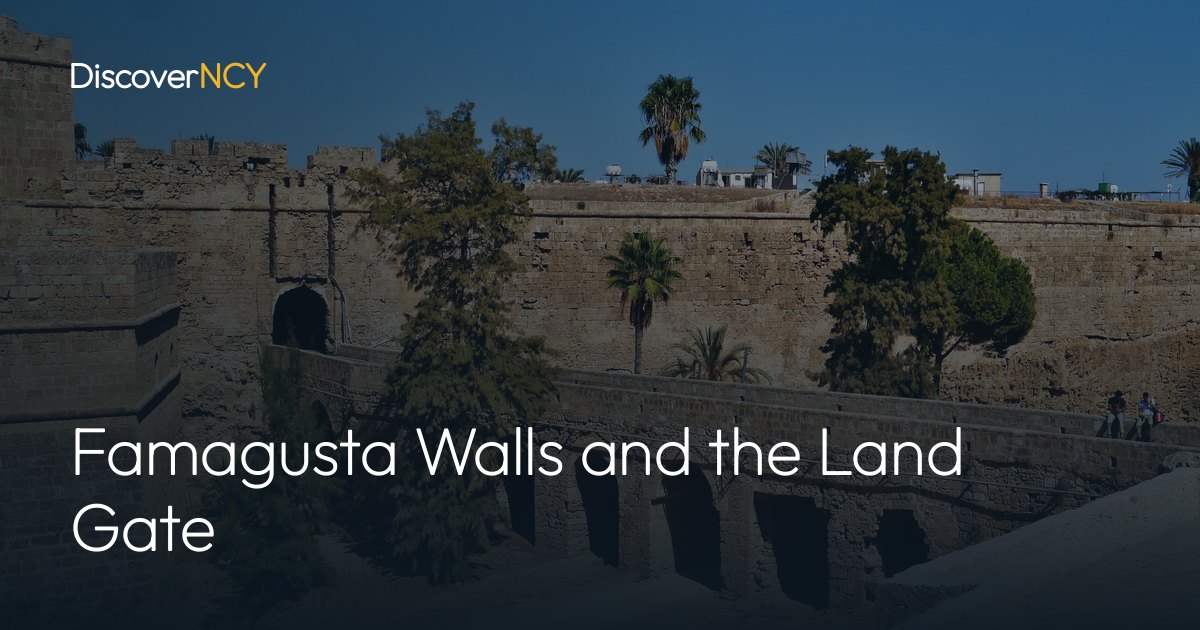
Famagusta's city walls are one of the places you have to stop at in Cyprus. On the morning of 1 August 1571 a white flag was raised over the bastion on the landward side, and a siege that had lasted ten months ended with that flag. Out of powder and out of food, the Venetians surrendered the city, and the Turks gave the structure where the flag was hoisted the name "Akkule", the White Tower. Today almost everyone who drives into the walled city (Suriçi) passes under that same stone arch. Its name is the Land Gate; after Othello Castle it counts as the oldest part of the Famagusta walls, and since it is the only main entrance on the landward side, any route naturally starts here. A traveller setting aside half a day for the walled city builds the tour from this point too.
Ravelin, Akkule and the Land Gate are names for the same structure
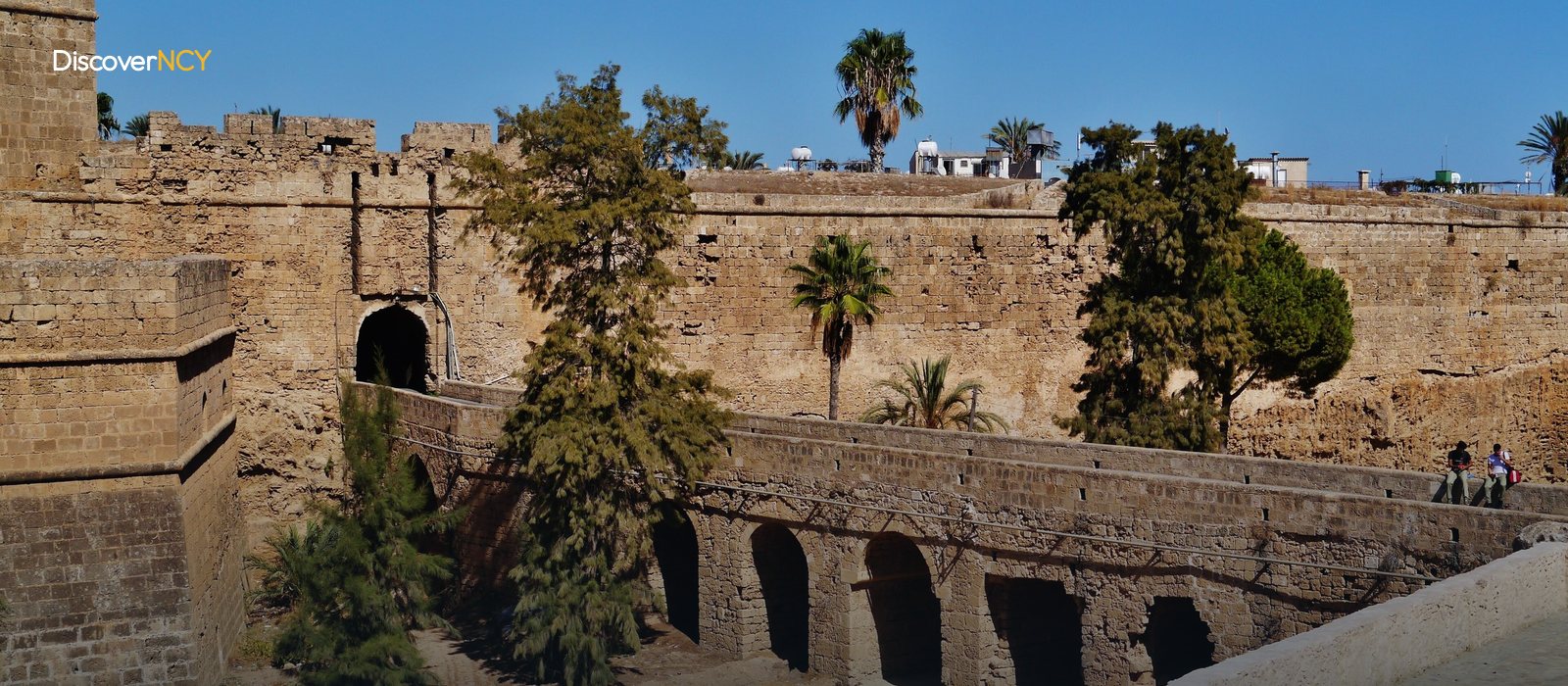
The technical name for the structure is "Ravelin", a crescent-shaped outwork. The hexagonal tower inside was known in the Lusignan period as "Rivettino" or "Limisso", because in those years the gate handled the overland trade heading towards Limassol. The same function continued under Genoese rule, between 1373 and 1464, when the gate was recorded this time as the "Porta di Limisso". The Venetian administration reworked the tower from scratch and added a symmetrical, horseshoe-shaped ravelin outside it; Marco Paulo is named as the designer. In the same overhaul the passages and lookout points were multiplied and gun embrasures were opened in the walls. Akkule (Ravelin), meanwhile, is the name the local people gave it after the surrender. All four are names for a single complex left behind by different periods; the Land Gate is the umbrella term that covers them all, and that is usually what the signs say.
The siege ended at this gate
The final assault of the ten-month siege of 1571 came through this gate, and it was here that the defence collapsed. The surrender was completed in a single morning; the fate of the city was decided at this bastion on the landward side. When the original passage, damaged in the siege, became unusable, a new opening was cut beside the tower, and this is reported to have been ordered by a decree dated 6 August 1572. In those years the Venetian moat was filled with water, and over it stood a wooden bridge raised and lowered by chains. After 1878 the British administration abolished the practice of locking the gate at night, drained the water from the moat and tidied up the area. Three separate governments wrote their own decisions onto the same stone, and as you walk under the gate you are really reading those decisions.
Nicolo Prioli's name is still on the inscription
Above the gate sits a winged lion carved in marble, the coat of arms of the Republic of Venice. On the same surface you can also read the name and arms of Nicolo Prioli, which is why the sources often refer to the structure by his name. But in exactly which year was its present form finished? Here the sources part ways: some take the early date on the inscription as their reference, others say the construction stretched over decades. What is safe to say is that the structure took its present shape in the early 16th century under Venetian rule. Inside, vaulted passages, gun embrasures, cisterns, magazine rooms and underground chambers once used as dungeons await you, while on the side facing the city there are wall frescoes and a small chapel. A ramp built so that cannons and soldiers could reach the upper levels was part of the same arrangement. The original passage opening outwards no longer stands, but the original Venetian entrance inside survives together with its coats of arms.
What did the 2017-2018 restoration change?
The structure went through a comprehensive conservation between February 2017 and June 2018, with a project budget announced at roughly 930,000 euros. In this EU-funded, bi-communal project the building was approached with the diagnosis "structurally sound but not healthy". Cracks were sealed by injection, decayed stones were replaced, the vegetation covering the walls was cleared, and stone paving to ease access was added along with electrical and security infrastructure. The completion ceremony was held on 19 June 2018, and more than four hundred people attended, including Greek Cypriots and Turkish Cypriots as well as UN and EU officials. The strengthening of the wall line against firearms, on the other hand, had begun in the 1550s with experts brought from Venice; in that work the seaward walls, the Martinengo Bastion and the Land Gate were overhauled. So you are looking at a surface that has seen two major repairs five centuries apart, and its present state is the work of the last eight years.
Walking order on a walled city tour
Namık Kemal Square, Lala Mustafa Pasha Mosque and Othello Castle are a few minutes' walk from the gate, because the walled city is a compact and entirely walkable area. Going by the figures, setting aside a fifteen- to twenty-minute stop for the gate itself should be enough, so your whole day is not tied to a single structure. There are also narrow passages and sloping floors inside, so, as we mentioned in an earlier article, it helps to come in comfortable shoes. I could not find an official opening time or fee for entry; this section of the Famagusta walls stands as an open area you can wander freely. The stone bridge crossing the moat was built later and provides a one-way entrance. One note: at midday there is almost no shade, so the early morning hours are more comfortable both for walking and for photographs.
The Famagusta Gate in Nicosia is a completely different structure
The biggest confusion we saw as a team in the search results comes from a similarity of names. One of the three gates in the Nicosia walls also carries the name "Famagusta Gate"; it took its name because it faces towards Famagusta, and today it is used as the municipality's arts centre. That building, with its own visiting hours and arrangements, is in no way the same place as the Land Gate in Famagusta. Making this distinction when you save your directions rules out driving to the wrong city and back; typing Famagusta walled city (Suriçi) into the address field is enough. Because of the same confusion, some travel sites speak of the city's twelve gates, yet no such number appears in verifiable sources; the known layout is built around two main gates, one on the land side and one on the sea side.
This gate on the landward side of the Famagusta walls carries both the city's trade and its decline on the same stone, and its newest entry is the restoration completed in 2018.
| Field | Value |
|---|---|
| Name | The Land Gate (Ravelin / Akkule) |
| Location | Famagusta walled city, main entrance on the land side |
| First built | Early 14th century, Lusignan-period hexagonal tower |
| Present form | First half of the 16th century, Venetian period |
| Name link | Nicolo Prioli's name and the winged lion arms on the inscription |
| Turning point | 1 August 1571, Venetian surrender |
| Ottoman alteration | New passage beside the tower, decree of 1572 |
| Highlights | Vaulted passages, gun embrasures, chapel, cistern, underground chambers |
| Latest restoration | February 2017 - June 2018, roughly 930,000 euros |
| Entry | Open area, free to wander, no official hours announced |
| Nearby stops | Namık Kemal Square, Lala Mustafa Pasha Mosque, Othello Castle |
| Getting there | 55-60 km from Nicosia, 76-79 km from Kyrenia, about 45 minutes from Ercan |
| Physical difficulty | Narrow passages and sloping floors, comfortable shoes recommended |
| Watch out | Not to be confused with the Famagusta Gate in Nicosia |
From the gate it is only a few minutes on foot to Othello Castle Famagusta and Lala Mustafa Pasha Mosque; for the rest of the walled city and how to plan the day, see our Famagusta travel guide.