Kırklar Tekke (Shrine of the Forty)
📍 Kırklar village, Nicosia
The most basic thing to know when you arrive at Kırklar Tekke (Shrine of the Forty) is that the village takes its name from the building itself. When Turkish Cypriots gave the village of Tymbou the name "Kırklar" in 1975, they took the name directly from the nearby tekke, that is, from the story of the forty martyrs. Kırklar Tekke is therefore the building that gave the village its name. In the sources, especially in some older files, you may also meet it in the form "Kırklar Tekkesi". Since the building stands in an area east of Nicosia next to Ercan, do not be surprised if you cannot find this shrine on your route while touring the city's stops inside the walls. In the sources we examined we saw that the building has two separate histories, one belonging to tradition, the other to the foundation register.
The Story Behind the Name
Popular tradition takes the building back to the 7th century. According to the legend, forty companions of the Prophet who came to the island around the year 648, in the time of Caliph Uthman, fell as martyrs in a night raid, were first buried in two graves and later interred one by one. The tradition also says that after the conquest the graves were found again and a shrine was built over them. Let us say that this part of the story is passed on without names or a year, because the sources differ on whose hands found the graves. According to one source the identity of those lying in the graves is unknown, and there is no claim in the sources of "exactly forty people" either.
The years in which the name passed to the village were also the years in which the village itself changed. After 1960 only a Greek Cypriot population lived here; in 1973 the figure was 1,288, in 1974 around 1,200 people were displaced, and the same settlement's 2011 population is recorded as 384. The village emptied. In other words, the settlement that inherited the shrine's name was, at the time it took that name, a village that had largely emptied. The airport just to the north also received its name later. It was first a military airfield built by the British in the Second World War, and it carries its present name from Pilot Major Fehmi Ercan. Its old name, too, came from the village: the British called it Tymbou airfield.
The Recorded Date: 18 November 1742
On the recorded side, we can note, there is a single day. The foundation record bears the date 18 November 1742, and the founder of the foundation is Sheikh el-Hac Abdülgafur Efendi. According to the record we have, the endowment was established for the upkeep and continuation of the tekke. (So according to the records, the foundation was established in 1742.) When the building's stone was raised cannot be read from this record. This distinction has to be drawn by looking at the sources, because one rests on popular tradition and the other on the foundation record. A similar uncertainty is seen in the number of graves: one source counts twenty-five single dervish graves and seventeen martyrs in the mass grave, bringing the total close to forty, while the others give the number forty directly. The figure does not settle outright. Because the number is round, the name comes from a tradition.
What follows the endowment reads as a chain of maintenance: according to one source the graves and cenotaphs were repaired in 1813 by order of the governor of Cyprus of the time. The mosque section was added in 1816, and the 1940 restoration was carried out by the Evkaf Commissioner Sir Mehmet Münir. That the building was damaged after 1963 rests on a single newspaper report. The same report also writes that in 2006 a repair was planned after a gap of forty years. The scope and outcome of the repair are not clear in the sources; it was only reported that in October 2007 mosaics came to light while earth was being removed from the roof. Kırklar Tekke is mentioned in lists of Ottoman-period monuments in Cyprus together with the Aziziye, Mevlevi, Yediler and Kutup Osman Efendi tekkes.
Hands That Touch the Spear at Kırklar Tekke
The visiting culture of Kırklar Tekke is described through two practices. The first is the spear on the corridor wall. Visitors are said to touch this spear and make a wish, and to read from a sign whether the wish has been granted. The second belongs to times of drought. Gathering for rain prayers, sacrificing animals and sharing a communal meal of bulgur appear within the same account. Can someone going to the shrine today still see these two practices? The records are silent on this. Since we found both in a single source we do not pass them on as fact; we note them as folk belief. Both practices assume that whoever comes here has a wish or a need, which means the shrine's visitor is a votary rather than a traveller.
Can You Visit the Shrine Today?
There is no clear answer to this question, and there is a concrete reason for that. According to a report dated 2006, the site has been inside a military zone since 1974. What condition applies at the gate today, whether permission is needed and which unit grants that permission have not been openly announced. For that reason our advice is firm: confirm the situation with the responsible authority before setting out. Do not set out without confirmation.
There is confusion over the address too. The shrine is not the same building as the Mevlevi Tekke Museum inside the walls of Nicosia; it is in the east of the city, near the village of Kırklar, in an area next to Ercan. The two are separate addresses. Being close to the airport and being close to the shrine are not the same thing, so do not use the airport as a reference for directions. When searching you may confuse this building with the shrines of the same name in Turkey; there is no connection between them.
The Older Layer Beneath the Floor
In October 2007 it was reported that while earth was being removed from the building's roof a far older remain emerged beneath it. According to this information, which rests on a single source, what came to light were the floor mosaics of an Early Christian basilica; a three-aisled plan with geometric and animal motifs is described, and the mosaics are likened to 5th-6th century examples. According to one source the village's old name derives from a word meaning tomb, and there is a Hellenistic and Roman cemetery in the surroundings. So can these mosaics be seen in place today? There is no confirmation to give on this; the present state of the section exposed in 2007 has not been announced in any source. On the other hand, the traces of two separate faiths stand one above the other on the same floor.
What Kind of Place It Is Today
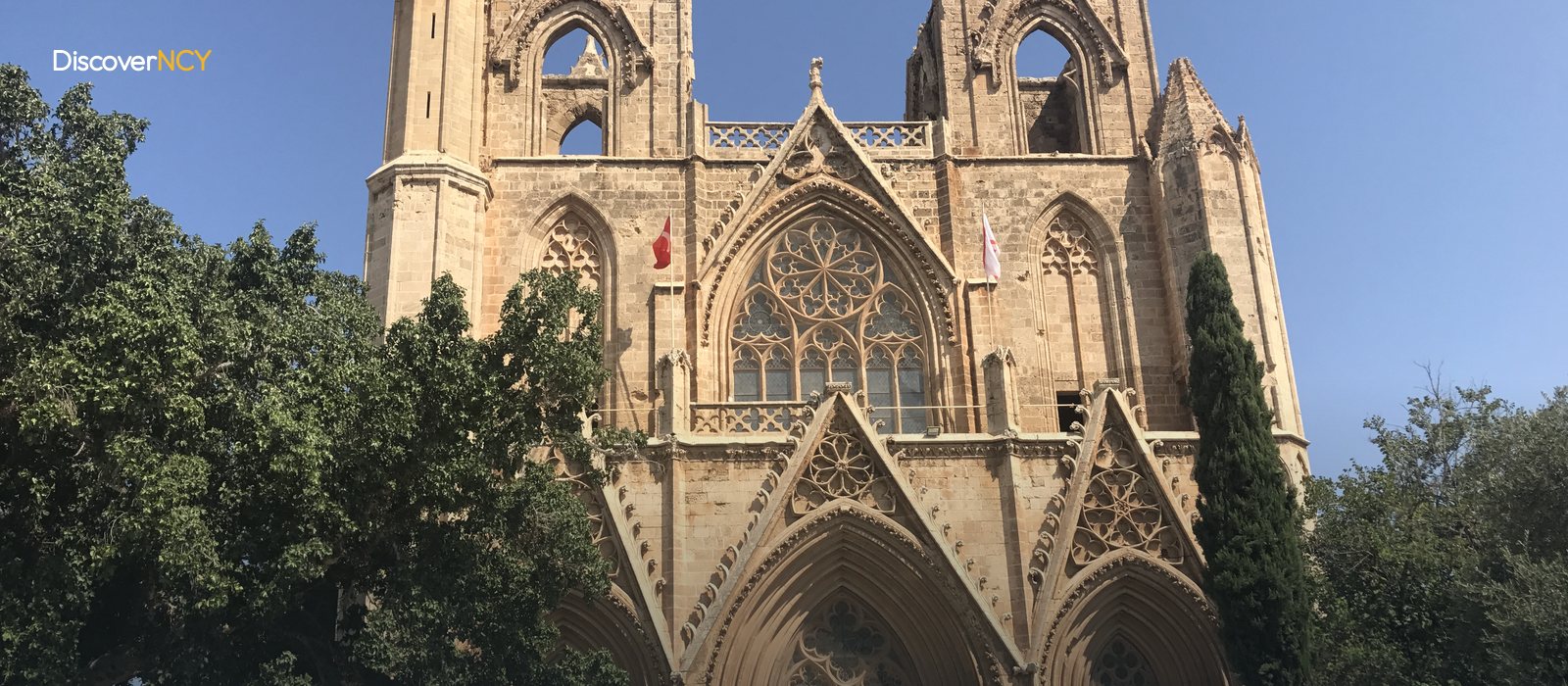
The building is no longer an active tekke. In the records we have, its present definition is given as a historic shrine that is visited, meaning no regular order activity goes on inside. The architectural description in the sources is clear. Three parallel corridors, light entering through chimney-like windows, a domed shrine section in the middle and stone paving are listed. The Evkaf Administration and the Department of Antiquities and Museums both deal with the building, and it is not certain which of them holds responsibility today. There is no single contact. Anyone who plans this place like a museum is looking at the wrong timetable from the very start, because here the limit of a visit is set not by an announced schedule but by the military zone's own order. That is why Kırklar Tekke needs to be planned as a place of pilgrimage. The gap between legend and record does not close either, so whoever comes here walks around without confusing the 7th-century story with the endowment dated 1742.
| Field | Detail |
|---|---|
| Name | Kırklar Tekke, Kırklar Türbesi (Shrine of the Forty) |
| Location | Nicosia district, near Kırklar village, next to Ercan |
| Architecture | Three parallel corridors, chimney-like windows, domed tomb section in the middle, stone flooring |
| Current function | Not an active tekke, a shrine that is visited |
| Responsible bodies | Evkaf (the Cyprus Foundations Administration), Department of Antiquities and Museums |
| Access conditions | According to a 2006 news report, a military zone since 1974; the current situation needs confirmation |
| Visiting hours | No up-to-date hours in the sources |
For the Mevlevi lodge inside the walls that this shrine is often confused with, see the Mevlevi Tekke Museum page; the city's other stops are in our Nicosia travel guide, and the island's full list of monuments in the historic sites of North Cyprus guide.