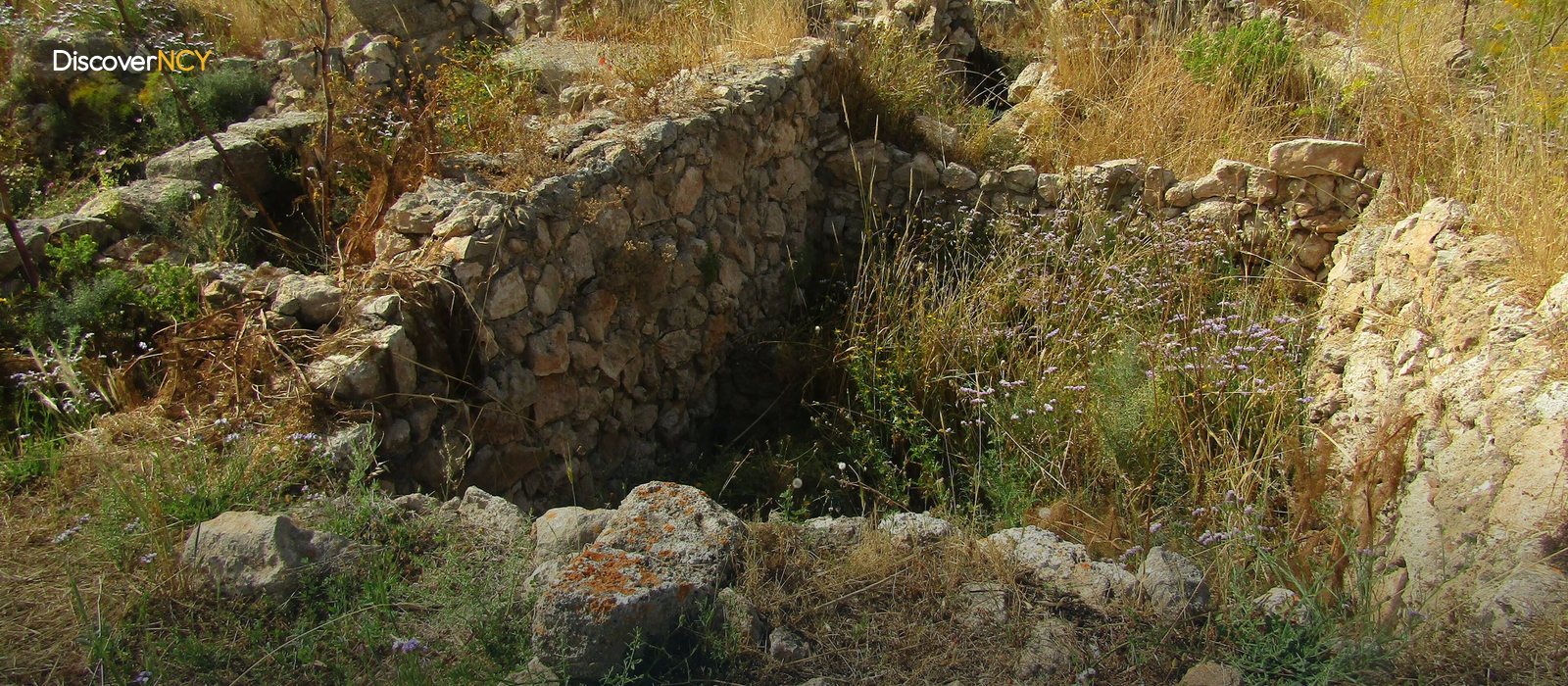
Enkomi Bronze Age City
📍 Tuzla, Famagusta
Enkomi, a Bronze Age city, is one of the most mysterious ancient sites on the island. The team that worked here between 1895 and 1898 opened roughly a hundred tombs, then looked at the medieval pottery that came out of them and assigned the city to the wrong period. Thanks to that mistake by the British Museum expedition, the ancient city of Enkomi was long taken for a settlement far younger than it really was (unfortunately), and the correction had to wait until the French archaeologist Schaeffer's trial trenches of 1934. When we put the records side by side, it becomes clear that the city's story cannot be separated from its excavation timeline: which layer was opened when directly determines what is known. The site charges admission and the gate closes at 15.30. Knowing this sequence before you go in will certainly serve you well.
A Hundred Tombs and a Misdated City
Alexander Stuart Murray's excavation was the first major intervention on the site; the medieval pottery from the tombs misled the team, and the city was dated to a period long after its own. Because the inscribed tablets and ornaments from that same dig went to the British Museum, today you have to look for the city's first finds in London, meaning Enkomi's earliest records are not on the island at all. In 1930 the Swedish Cyprus Expedition, with Einar Gjerstad among its members, arrived and opened twenty-two more tombs. The step that corrected the dating, though, came from yet another team.
Schaeffer's Soundings and a Dig That Ran Until 1974
According to the records available to us, the correction came in 1934. The French archaeologist Claude Schaeffer opened around two hundred trial soundings on the site, and in the course of that work he uncovered the building known as the "Maison des Bronzes". The real gain, of course, lay elsewhere: it was these soundings that first established that the settlement and the tombs were contemporary. But when did the excavation end? The joint French-Cypriot mission founded in 1948 continued its work until 1974. Which questions the city is remembered for today also depends largely on this timeline; most of the question marks you will meet in the sources can be traced back to this programme coming to a halt.
Within the joint mission, two archaeologists disagreed over the same pottery. Porphyrios Dikaios of the Cyprus Department of Antiquities placed the arrival of Mycenaean pottery on the island in the 12th century BC, while Schaeffer put the same finds in the 14th century BC. Two centuries lie between them, and because later research has largely sided with Dikaios, the chronology in use today stays close to his reading. In the records this may look like a mere dating dispute, yet it changes from start to finish how the city's final phase is to be read.
Layers from around 2000 BC to the 12th Century
According to the site description of the Department of Antiquities and Museums, the first traces of settlement reach back to around 2000 BC. The city's real entry onto the stage of history, however, begins in the 18th century BC. In the Late Bronze Age, copper was the city's main occupation. The settlement grew as a trading centre where copper was worked and exported in ingot form, which is why the ancient city of Enkomi consists of phases stacked one on top of another. The city was built on a rocky plateau near the village of Tuzla, on the northern bank of the Kanlıdere stream.
The same official description also gives the city plan, and we recommend reading it before you go. The streets cross each other at right angles; the lower parts of the buildings are of large dressed stone blocks, the upper parts of mud brick. The settlement is surrounded by a strong wall, and according to the same description Achaean settlers moved into the city in the 13th century BC, so the population behind the wall changed over time too. The claim that there was a stone-paved square in the middle of the city and that the wall was built for defence comes from a second-hand summary and is not in the official description. If a travel page presents the square as part of the official description, you will need to check the source twice.
According to the records, the city suffered a major destruction around 1220 BC. Around 1125 BC it was abandoned. In the data we have, the emptying of the city and the rise of Salamis in the island's trade are two developments that follow one another, but the reason for the abandonment is still debated.
Copper Ingots and Two Bronze Statues
The list of finds tells the story of the city's trade on its own. Unworked oxhide-shaped copper ingots, finished bronze tools, slag, scrap bronze and smiths' tools all came out of the same settlement, so this list shows that this was a workshop city engaged in production. Meanwhile, the records we examined confirm that some of the pieces from the city now sit in the Louvre collection.
The site's best-known work is the solid bronze statue known as the "Horned God". It stands about fifty-five centimetres tall. The figure depicts a young man wearing a double-horned helmet, and the statue was found in the 1960s in one of the cult rooms of the sanctuary that bears the same name. The sanctuary is thought to have been dedicated to Apollo. The Hittite influence is strong. Even so, the figure is accepted not to be of Hittite manufacture. Alongside this statue, the "Ingot God" is usually mentioned. This bearded figure of about thirty-five centimetres, wearing a horned conical helmet, stands on an oxhide-shaped ingot base. He carries a round shield and a spear. Both statues are dated to the 12th century BC. Is going to the site enough to see these two statues themselves? Let us note this: the originals are not exhibited in the North.
Is This Really the Capital of Alashiya?
Alashiya is the place named in the Late Bronze Age tablets found at Amarna and Ugarit (in some sources "Alasia"), and the ancient city of Enkomi is cited in most texts as its capital, a link that travel pages present as an almost proven fact. As far as we can see, the academic picture is far more cautious. The view that Alashiya corresponds to Cyprus is widely accepted; the part about the capital being here is disputed. The counter-argument comes from clay. The petrographic study by Goren and his team looked at which soil the tablets were made from. The clay of these tablets is linked to the fringe belt of the Troodos, and the tablets produced locally at Enkomi do not match that clay. Nevertheless, the city was a major port that grew rich on the copper trade, and from the 16th to the 12th century BC it maintained a strong connection with Ugarit on the Syrian coast.
Visiting Rules and What to Confirm Before You Go
In the Department's summer timetable the site opens at 08.00 in the morning and closes at 15.30, with last entry given as 15.00. These hours are noticeably earlier than those for Salamis in the same table. If you are putting both on the same day, the time difference means you need to go to Enkomi first, and since Salamis rose where Enkomi emptied out, your day will follow the order of history as well. Admission is charged. Two tariffs apply, full and student, and the safest thing is to ask the exact amount at the gate.
The Department's general rule grants free entry to citizens of the TRNC on Sundays at open archaeological sites. In the Enkomi row, however, there is a note about closure on weekends and holidays, so do not count on free Sunday entry here; call the Department before setting out. We could not reach the winter opening hours, so a plan looking beyond October 2026 needs to stay flexible. In the table the site also appears as "Engomi". Bear that in mind when looking for your row. With last entry cut off at 15.00, the ancient city of Enkomi is no longer a stop to drop into in the middle of the day.
| Phase | Approximate date (BC) |
|---|---|
| Late Cypriot I | 1650-1550 |
| Late Cypriot IIA | 1550-1450 |
| Late Cypriot IIB | 1450-1300 |
| Late Cypriot IIC | 1300-1200 |
| Late Cypriot IIIA-B | 1200-1050 |
| Major destruction | c. 1220 |
| Abandonment of the city | c. 1125 |
For the second stop of the same day, see our Salamis ancient city article, the St. Barnabas Monastery page right next to Enkomi, and, to see all the stops in the area on a single route, the Famagusta travel guide.