Dervis Pasha Mansion
📍 Beliğ Paşa Street, Arabahmet quarter, Nicosia
Dervis Pasha Mansion... In 1979, a two-hundred-year-old house in the walled city of Nicosia stood on the brink of demolition. Most of those who wander its courtyard today leave without ever hearing of that year, yet had Dervis Pasha Mansion been lost that winter, one of the finest examples of Ottoman civil architecture on the island would have been struck from the record. The state bought the building in 1981. A long restoration followed, and this is exactly the point that travel writing most often gets tangled up in, because there is a nine-year gap between the year of the danger and the year the museum opened. Any timeline that ignores that gap inevitably gets confused. Let's take a detailed look at the Dervis Mansion.
A Rescue That Took Nine Years
After restoration, the purchased building opened to visitors on 21 March 1988 as the Ethnographic Museum. The same date appears both on the Department of Antiquities and Museums' own website and in international sources, so there is no room for doubt; nevertheless, years such as 1979 or 1986 still circulate in some travel writing. The confusion comes from compressing three separate dates into a single event. 1979 counts only as the year of the danger. 1981 is the date the state took over the building, and the nine years in between were spent on restoration.
And the work did not end in 1988 either. The mansion went under repair again in 2016, the work was completed the following year, and the building reopened its doors on 23 May 2017. A house being overhauled twice within thirty years may seem excessive at first glance, but in reality even ten years is enough for a mudbrick upper floor to fall into disrepair, so the second repair here is hardly an extravagance. Inside today you can see Cyprus-specific costumes, kitchenware, embroidery samples and swords. Since most similar mansions display only furniture or only textiles, this completeness gives the exhibition extra weight: when a house's dining table, chest and weapon stand side by side on the same floor, the period comes together as a single whole.
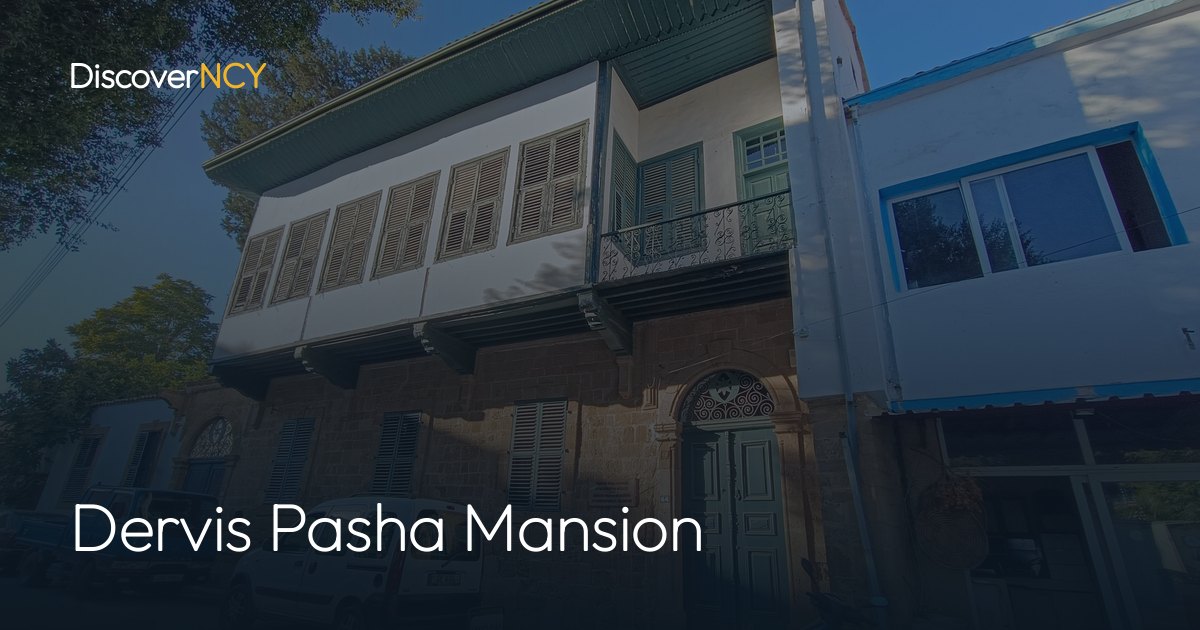
Stone Below, Mudbrick Above
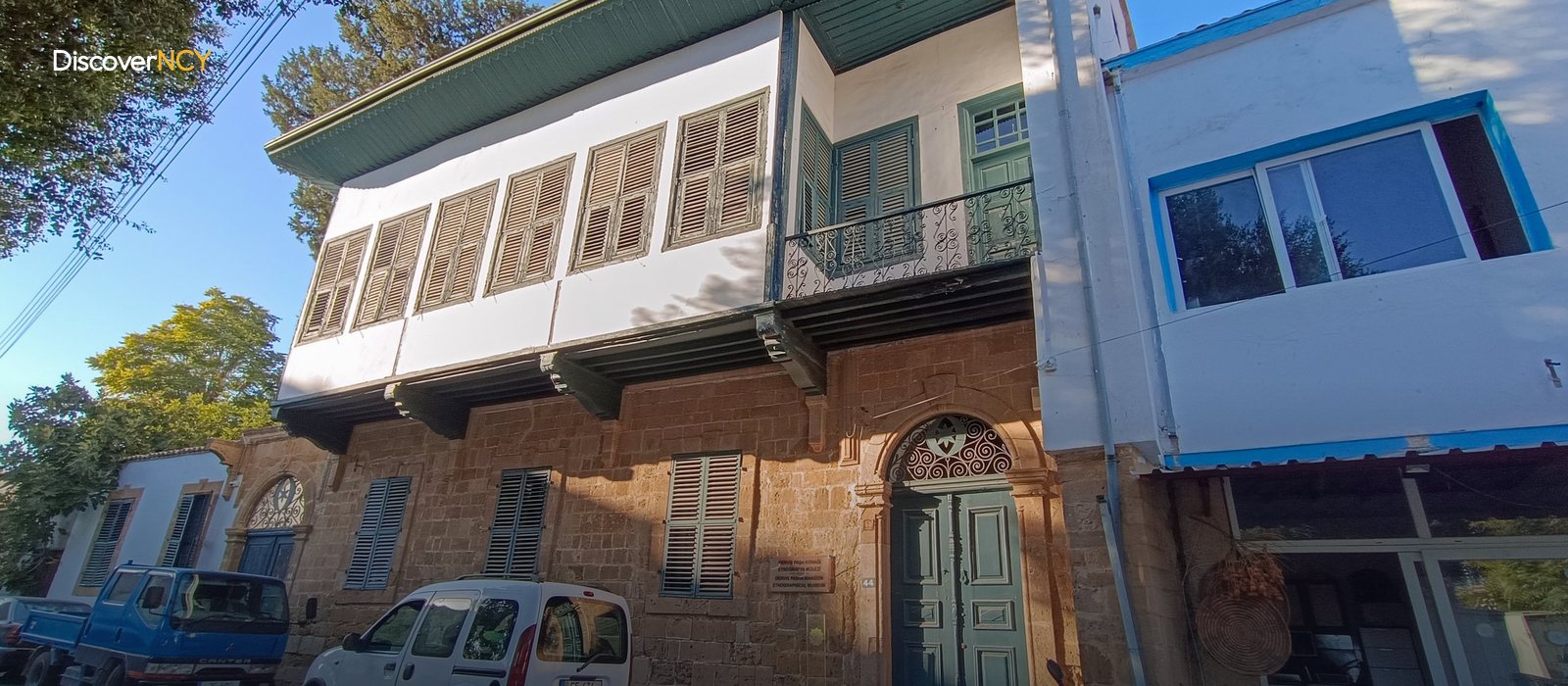
The building layers two separate traditions on top of each other. The ground floor is built in Gothic-based stonework, while the upper floor is mudbrick in keeping with the Ottoman building tradition, and on that mudbrick floor a Baghdad-style bay window (cumba) projects out over the street. For those wondering why the same house has two different materials: the strength of stone serves below and the coolness of mudbrick serves above; in the sources we consulted, this distinction is a cost and climate decision rather than a matter of taste. Inside, the carved wooden ceilings were repaired in 1869. In the middle is a large inner courtyard, and the whole logic of the house revolves around it.
Rather than heading upstairs as soon as you walk through the door, it is worth lingering in the courtyard for a few minutes. Where can you see the line where the two floors meet? Only by looking up from the middle of the courtyard, because a visitor who climbs to the upper floor leaves that boundary behind and, once inside the rooms, wanders without noticing where the material changes. That is why the courtyard is the centre of the plan.
Why Are There Two Separate Doors?
The street-facing facade has two separate entrance doors. This duality is not a symmetrical flourish but a direct result of the house's historical division, because one door opened onto the selamlık, where guests were received, and the other onto the harem, where the family lived. At the start of the 19th century this house was designed as a single building with two separate flows.
The division no longer operates in the museum; visitors follow a single route. Still, those who go in without seeing the two doors miss the house's most telling detail, and since the doors look very much alike from outside, they easily slip by unnoticed at first glance. Try to read the sequence of rooms inside according to this dual logic, and the plan falls into place by itself.
About Dervis Pasha and the "Zaman" Newspaper
The person who had the mansion built was Hacı Ahmet Derviş Efendi, a wealthy Turkish Cypriot with extensive lands outside the walls. The building is also commonly associated with Dervis Pasha, who published "Zaman", one of Cyprus's first Turkish-language newspapers, so a printing press and a mansion meeting under the same name also explains why the house is not regarded as a purely architectural example. When touring Dervis Pasha Mansion, these two layers are read separately: one is the living space of a wealthy family, the other a link to the island's press history.
The sources do not fully agree on the year of construction. The date read above the door is 1801, while the year in the official record is a few years later, which is why we prefer to use the phrase "the early 19th century" here. For a building as old as the inscription on its door, relying on a single figure is not a measured approach, but what is certain is this: the building is regarded as a product of the period when Ottoman civil architecture on the island reached maturity.
Opening Hours and a Short Route Through Arabahmet
As of September 2026 the museum opens at eight in the morning on weekdays, closes at half past three in the afternoon, and does not open at all at weekends. Since hours can change, it is worth checking the latest information before setting out. There is an entrance fee. Because every museum in the TRNC is ticketed separately, the ticket you pay for at one stop is not valid at the next; this miscalculation is common on the island, and most travellers only find out on reaching the ticket desk. There are 25 reviews of the mansion on Tripadvisor.
The location is the easiest part of the visit. Dervis Pasha Mansion stands on Beliğ Paşa Street in the Arabahmet quarter and is within walking distance of the rest of the walled city, so much so that there is no need for a separate drive to Büyük Han, Selimiye Mosque, Kumarcılar Han or the Mevlevi Tekke Museum. Because of the weekend closure, putting the mansion at the top of the list and leaving the hans and the mosque for later really does work. If you are coming from Ercan, Nicosia is roughly a twenty-five-minute drive, so even with a morning flight you can be inside before noon. Someone setting out from Kyrenia should allow about half an hour, but the real time is lost driving around inside the walled city, so the traveller who leaves the car outside comes out ahead.
Should this mansion be part of a one-day Nicosia itinerary? For a weekday visitor, yes, because there are not many buildings on the island where Gothic stonework and Ottoman mudbrick meet on the same facade.
| Field | Value |
|---|---|
| Name | Dervis Pasha Mansion (Ethnographic Museum) |
| Location | Arabahmet quarter, Beliğ Paşa Street, walled city of Nicosia |
| Construction period | Early 19th century |
| Architectural style | Ground floor stone (Gothic-based), upper floor mudbrick (Ottoman) |
| Highlights | Baghdad-style bay window, large inner courtyard, two separate entrance doors |
| First owner | Hacı Ahmet Derviş Efendi |
| Threat of demolition | 1979 |
| State purchase | 1981 |
| Opened as a museum | 21 March 1988 |
| Latest restoration | 2016-2017, reopened 23 May 2017 |
| Visiting hours | Weekdays morning to afternoon, closed at weekends |
| Entrance | Paid |
| Exhibits | Traditional costume, kitchenware, embroidery, swords, everyday objects |
| Nearby stops | Büyük Han, Selimiye Mosque, Kumarcılar Han, Mevlevi Tekke Museum |
For the other stops within the same walking distance, see our Buyuk Han Nicosia and Mevlevi Tekke Museum pages, and for the island's other museums and monuments browse our guide to the historic sites of North Cyprus.