Here is perhaps the thing that will test you most: the heat. Anyone planning a summer in Cyprus should accept one rule from the outset. Nothing is done without shade between noon and mid-afternoon. We know it sounds like an exaggeration, yet in the TRNC Meteorological Department's bulletin of 9 September 2026 the inland stations measured 36-37 degrees while the coast stayed in the 30-34 band on the same day; in other words, the rule matches the daily measurement records exactly. On a Cyprus summer holiday, what decides where you go at which hour of the day is, more often than not, that difference of a few degrees. Two warnings sat side by side. The same phrase was used for both the forest fire risk and the ultraviolet radiation: "very high". That is why those who plan a summer programme look at the clock before the map.
32 on the Coast, 37 Inland
The coastal strip sits in the 30-33 degree band through the summer months; June stays close to the lower limit, while in July and August the figure presses oppressively against the upper one, whereas the interior stays five or six degrees higher on the same day. In the two separate bulletins we scanned, even the ranking did not stay fixed: in the record of 9 September 2026 Ercan saw 37 degrees and Nicosia and Geçitkale (Lefkoniko) 36, while in the record a week later you can see Nicosia and Geçitkale move ahead. The principle did not change. The coast stayed cooler on both days, so look at the gap, not the ranking. The figures we are talking about here are not forecasts but measurements published in the daily official bulletins...
On humidity we could not find an official percentage; in the bulletins we see only the phrase "relatively humid air mass". But why does 33 degrees not feel like 33? In practice, 33 degrees weighs heavier than what the thermometer says. Relying on the sea to close the gap does not work either, because between July and September the sea water sits at 28-29 degrees and does not cool you on its own.
A Summer Day Splits into Three
The morning slot is the most productive part of a summer day; the hours from sunrise to noon suit almost any plan. In the afternoon, though, the outdoors can quickly become unbearable... Do not forget that the country's own rhythm is set to this hour too, because public institutions switch to shortened working hours in the summer months and stay closed for most of the afternoon. Most businesses also pull down the shutters for a few hours and reopen in the late afternoon. Putting a government office or a bazaar visit at midday therefore backfires twice: the heat sits on your head and the doors are closed. (This rhythm belongs to the country itself, and the only group that does not follow it is the tourists.)
Do not be surprised if the late afternoon greets you with a quite different air from the morning... With the cooling, the weather becomes liveable again and the real programme starts in those hours. Spending the midday slot somewhere indoors is not a wasted hour, because at that hour nobody is outside anyway. Air conditioning is the natural solution for this slot, but it pushes the electricity bill noticeably higher over the summer. Tying a Cyprus summer holiday programme entirely to air conditioning is not a fine calculation either. On the other hand, KIB-TEK announces planned maintenance outages in advance, and in "September 2026" close to thirty settlements around Nicosia had a four-hour outage of this kind; let us note this single example too when building the summer programme...
Which Beach at Which Hour?
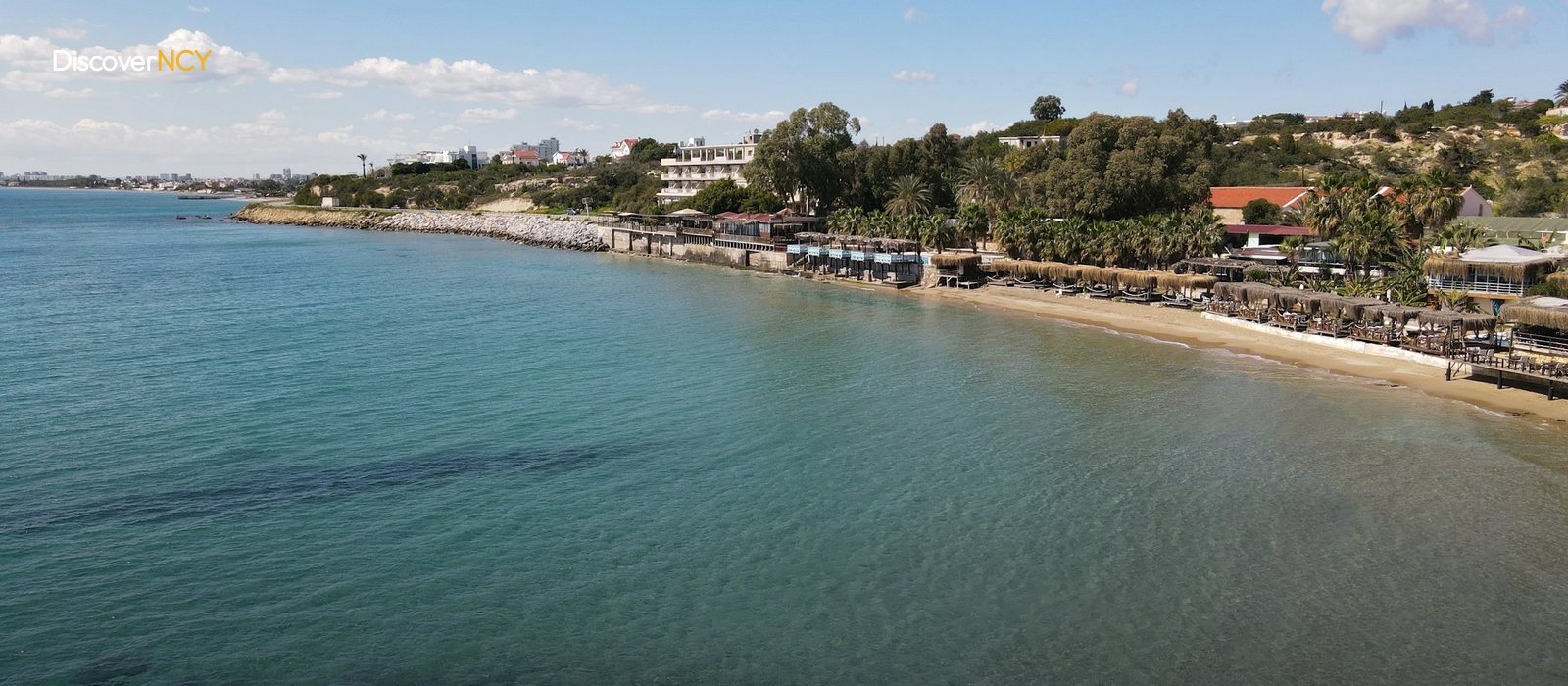
In summer, shade saves the beach. Managed beaches with umbrellas and shaded areas can be used even at midday, because there is somewhere to escape the sun, whereas public beaches without facilities offer no such option, and a midday hour spent on the sand does nobody any good. The long beaches towards the Karpaz Peninsula and the deserted coves reached by car are therefore left to the early morning or the late afternoon. If you are going to a beach like that, take your own shade with you.
So where do you spend the midday hour? Water parks open up a completely different option here: the big water park in Çatalköy is open to day visitors, and you will notice that a section of the slides is set aside for children. The day-use packages of the hotels on the Bafra and Iskele side do the same job, providing pool and shade all day long. Shade here is a service. Our suggestion is this: spend the morning in a cove without shade and midday at a facility with shade; on a Cyprus summer holiday it is this arrangement that works best.
The Hour for a Shadeless Site
Salamis Ancient City opens at eight in the morning and closes at seven in the evening in the summer months. The guides' common advice is to take the visit between nine and twelve or close to closing time, because inside there is almost no shade, the ground is covered in uneven stones and the midday sun meets no obstacle there. Midday is a lost hour. Touring an ancient city at that hour is not much different from never seeing it at all. That said, the same hour logic looks sensible for other open areas that stand without shade too. A site visit started without a hat and water is a short one in summer.
The Bulletin Says UV Very High
The Meteorological Department uses the description "very high" for ultraviolet radiation in its daily bulletins, and this phrase barely changes all summer. No numerical index is published either, and the commercial weather service figures we have fluctuate from day to day, so they cannot be read as a fixed value, but the bulletin's qualitative warning is clear enough throughout the summer. Drinking water regularly throughout the day without waiting to feel thirsty is item one, and the general advice of health sources points the same way. Thin, light-coloured clothing comes second, and staying in the shade as much as possible third.
The known symptoms of heat stroke are dizziness, blurred vision, dry mouth and reduced sweating; extreme weakness and changes in behaviour belong to the same picture. When such a symptom appears, you seek a health facility without losing time. These warnings are the same in every hot climate, and they apply to you in exactly the same way on a Cyprus summer holiday. A lukewarm shower to cool down is on that same general list as well. The list may look long, but its daily equivalent comes down to a single habit: never letting the water bottle leave your side all day.
What Changes on the Beach at Night?
Alagadi beach closes to the public at eight every evening during the nesting season and opens at eight in the morning. The reason for the closure is the Chelonia mydas and Caretta caretta nests; the nests beneath the sand are damaged by night-time movement. As far as we can see, you may come across a similar night restriction on some other beaches too...
Pitching a caravan or a tent and touching a nest are expressly forbidden on these shores. The whole of the summer holiday falls within this band, because the closed period at Alagadi runs from late May into September. Is the sunset programme cancelled altogether? The hours before eight in the evening are open, but anyone thinking of watching the sunset on the beach would do well to check the hours in advance. On the dunes of Alagadi there is no lifeguard and no shade either.
| Field | Value |
|---|---|
| Coastal daytime temperature (June-September) | 30-33 °C |
| Inland daytime temperature (September 2026 example) | 35-37 °C |
| Coast vs inland difference | about 5-6 °C |
| Sea temperature (July-September) | 28-29 °C |
| Humidity | officially "a relatively humid air mass", no percentage given |
| UV level | "very high" in the daily bulletin |
| Forest fire risk | "very high" in September 2026 bulletins |
| Hardest time of day | between noon and mid-afternoon |
| Salamis summer visiting hours | 08.00-19.00 |
| Recommended time to visit Salamis | 09.00-12.00 or close to closing time |
| Public sector summer hours | shortened, largely closed in the afternoon |
| Shop pattern | a few hours' break in the afternoon, open again in the evening |
| Air conditioning effect | marked rise in electricity consumption in the summer months |
| Power cuts | KIB-TEK announces planned maintenance cuts in advance |
| Alagadi night closure | 20.00-08.00, throughout the nesting season |
| Other beaches | some have seasonal night restrictions, list from a single source |
To see the shaded and shadeless beaches in a single list, turn to our North Cyprus beaches guide; for families planning to spend midday by the pool, see our round-up of North Cyprus water park hotels; and for the details of the night restriction at Alagadi, read our guide to the Alagadi turtle watching season.