When you climb the ridges of Tepebaşı or Avtepe on a March morning, you come across a protection belt whose boundaries in the Environmental Protection Department’s management plan were drawn primarily because of a single plant. At the top of the plan’s list of conservation priorities stands the endemic tulip “Tulipa cypria”, and right behind it one of the orchids of Cyprus. The priority, then, belongs directly to the flower. As Visit North Cyprus ties the tulip’s deep red flowers to March and April, you can see that species in the field for only two months a year. Your spring walk is decided more by the calendar than by the map.
A Boundary Drawn for One Flower
The management plan writes that this area was taken under protection “primarily” because of the endemic tulip species in the area, while it counts protecting the tulip’s current distribution and securing the density of orchids as its main aims. The site is at the same time farmland under cultivation, and according to the said plan, as the primary crop is barley, the endemic tulip grows side by side with ears of barley… In the document the fields are listed in the “High-Value Agricultural Land” class.
The protection belt stretches east from Avtepe village as far as Taşlıca; some of the fields belong to private owners or to Evkaf (the religious foundations administration), and some to the Forestry Department. In addition, the plan records temporary huts that shelter animals rather than permanent housing within the boundaries. The language, however, is in the mood of recommendation; the articles concerning the area are framed as “should not be done”...
The Month of Five Plants, the Place of Two
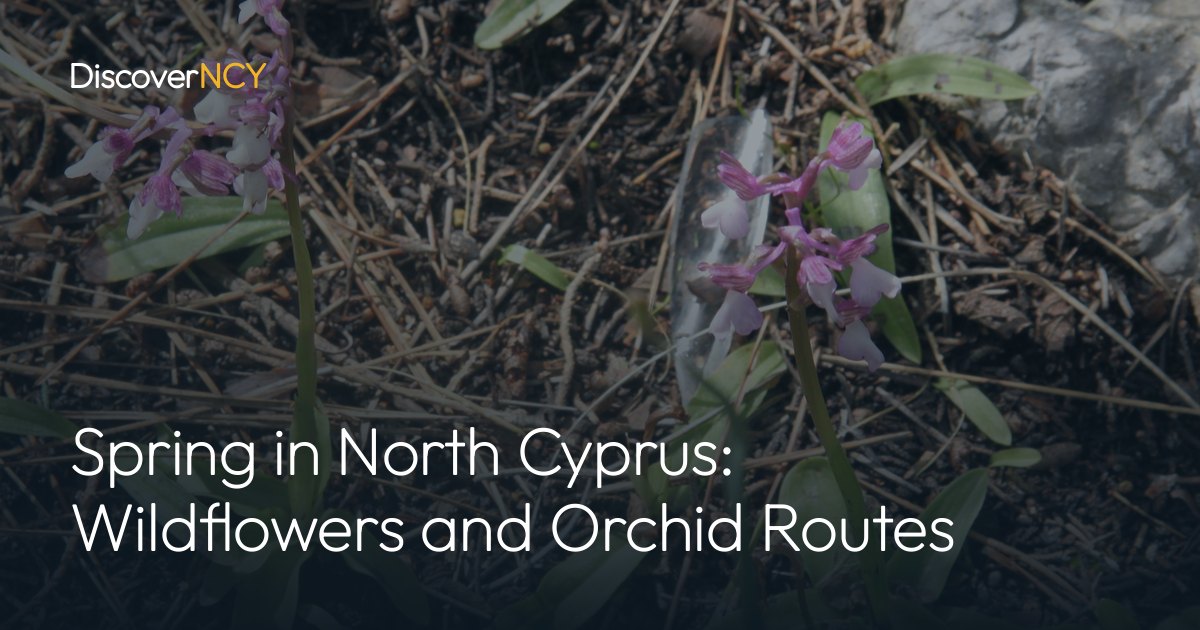
The department’s brochure gives the flowering month and habitat of three plants but does not name a village or area. By contrast, two separate documents emerge that combine month and place in the same record. “Visit North Cyprus” ties the tulip to the meadows around “Tepebaşı” and “Avtepe”, while the 2011 Alagadi management plan places the species Ophrys kotschyi on rocky slopes, that is, on quite different ground. We found no location record for the others.
The Alagadi plan recommends field monitoring of the orchid “Ophrys kotschyi” only during the flowering period. But what happens if you miss this window of a few weeks? Even the experts who keep the record for the orchids of Cyprus fit their field count into a single period each year, and when the flower closes, monitoring ends too. Their field calendar and your travel calendar intersect in exactly the same weeks...
In the table we have prepared for you, five plants, their flowering months, habitats and protection records are listed side by side, and you can also read in the same chart which piece of information comes from which document. The table gathers each species in a separate row. The source distinction in the cells is clear.
| Plant | Flowering | Habitat | Protection record | Source of the record |
|---|---|---|---|---|
| Narcissus (Narcissus tazetta) | January-March | Maquis, sometimes cereal fields | Protected on the Regulation list under the Environment Law | Environmental Protection Department brochure |
| Cyprus cyclamen (Cyclamen cyprium) | February-April | Forest clearings, rocky areas | Protected on the Regulation list | Environmental Protection Department brochure |
| Three-leaved gladiolus (Gladiolus triphyllos) | From late March | Barley and wheat fields | Protected on the Regulation list | Environmental Protection Department brochure |
| Tulip (Tulipa cypria) | March-April | Avtepe and Tepebaşı meadows | Protected, picking prohibited. Regulation list unknown | Visit North Cyprus |
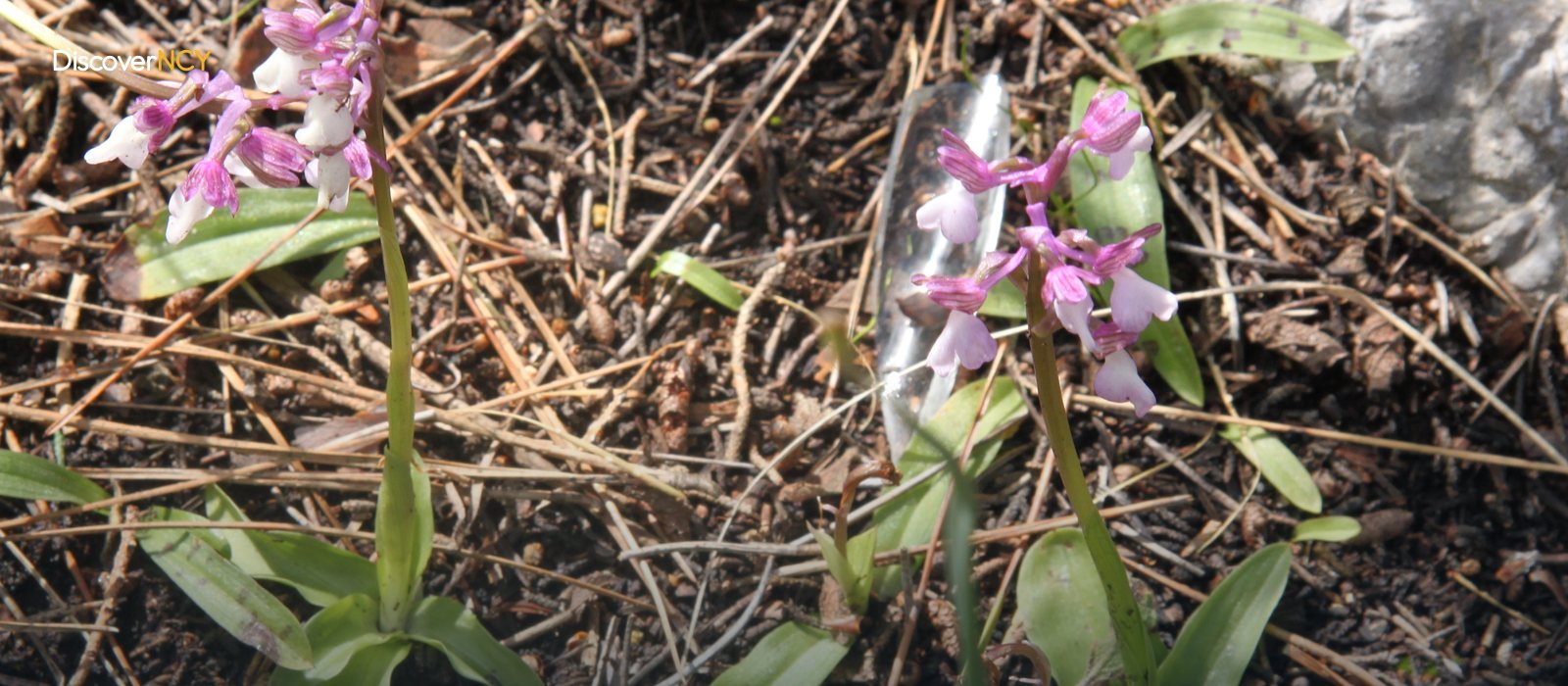
| Orchid species (Ophrys kotschyi) | Early March-early April | Rocky slopes at Alagadi | Protected according to the 2011 plan. Regulation list unknown | Alagadi management plan |
What Scale Does the Word Endemic Describe?
The plan in the north divides endemism into three separate tiers. The first tier gathers species unique to North Cyprus only, the second those unique to the whole island, and the third those unique to the Eastern Mediterranean… Of the 152 plant species the plan records for the area, eight are marked as island endemics, and all of them fall into the second tier. The numbers we have seen do not come down to a single figure either.
While the 2001 independent report by Adrian Phillips, former chair of the IUCN World Commission on Protected Areas, writes the plants unique to the north as “17, perhaps 16”, a scientific article dated 2006 counts 19 taxa for the same geography. The difference lies not in nature but in the record. On the other hand, the gap does not come from an increase in nature but from different units and dates being placed side by side. Let us note that comparing a number without asking which unit it counts is misleading...
The Known Scope of the Picking Ban
Do not touch the flowers. The Environmental Protection Department’s brochure entitled “Do Not Pick!” lists three plants under the Regulation and names them as narcissus, Cyprus cyclamen and three-leaved gladiolus. The institution repeats the same warning on its home page in an announcement dated 21 May 2026. Under article 44 of Environment Law No. 18/2012, it is prohibited to deliberately pick, collect, uproot, possess, process, sell, buy or transport plants protected under the Regulation from their natural habitats in the wild. A fine is imposed for violations.
The scope of the legislation is tied directly to the Regulation list. So where on this list do the tulip and the orchids of Cyprus stand? The record “protected, picking prohibited” for the tulip comes from Visit North Cyprus, while the 2011 Alagadi plan showed the species Ophrys kotschyi as protected. We could not see the full list of the Regulation; you can ask the Environmental Protection Department about both species.
Place and Month Instead of a Route
We could not find an official walking route for the orchids of Cyprus that is mapped or marked with signs. All that remains are two matched documents. Without a marked trail, how do these two records guide the walker? According to the Avtepe plan, as the protected area is cultivated farmland, observing from the edge of the field without entering the crop is the right step. The three-leaved gladiolus already grows together with the cereal, so it flowers among the farmer’s crops.
As only two individuals of Ophrys kotschyi were counted at Alagadi in the 2011 field survey, it is normal not to see this orchid on a short morning walk. As hunting days are announced anew in the Official Gazette every year, when you go out into the field in late February or early March, find out there on what date the small game season ends that year. The calendar is renewed every year.
Our advice is to leave every flower you see in its soil. Coming back with a camera is far more valuable than coming back with a sprig that will wilt in your hand. Walking along the edge of a barley field at the end of March, you may come across the pink gladiolus with sword-like leaves.
To see the mountain’s endemic species in one place, see our Alevkaya Herbarium Kyrenia Mountains article; for weather and sea conditions in the spring months, see our guide to the best time to visit Cyprus.