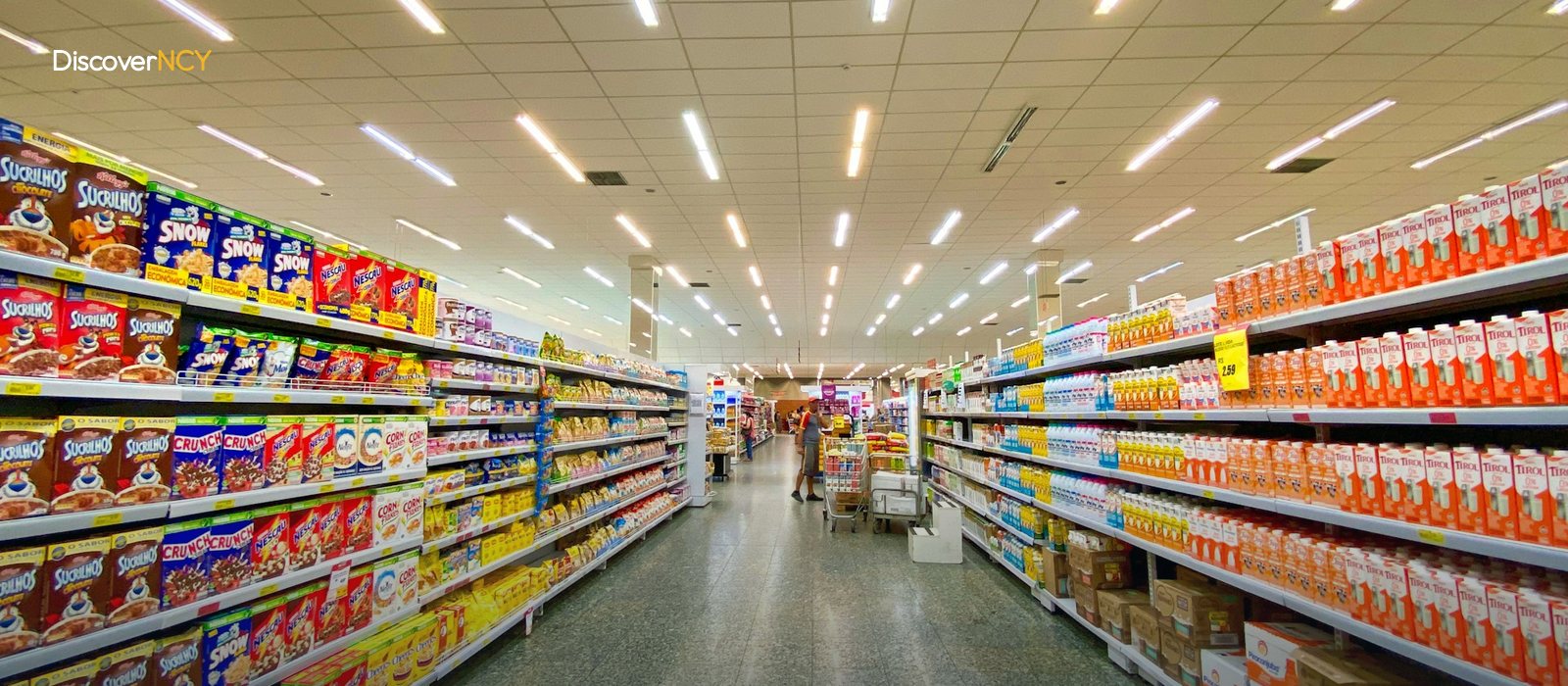
North Cyprus supermarket prices move fast enough to upend the expectations of even frequent visitors to the island. For most people arriving, the first shock comes at the shelf label; on most items, that label reads differently from two months ago — and from the previous month, too. But how much actually leaves your pocket? Let's build a sample basket, from bread to halloumi (hellim), milk to red meat, and find out.
You wouldn't expect it given its size, but the island is quite crowded with supermarket chains; knowing which brand is strong in which region shortens your shopping route from the start. The figures below describe what you saw on the shelf in August 2026, with a lower and upper limit. With annual inflation past 38 percent, the upper limit may count as an ordinary price a few weeks later.
The Chains: Who Sells Where
Lemar, founded by the Levent Group of Companies in 1997, split in two in the summer of 2022. The signs changed to Macro and Molto. Four summers have passed since the change, but plenty of people still tell their neighbors "I'm off to Lemar" — and they'll still point you to the right door, because the stores are where they've always been; only the names differ. Molto has 8 branches and a 5,000-square-meter warehouse. Macro promotes itself as the chain with the most branches on the island, but there's no independent count, so that claim should be taken with caution.
Which brand stands out in which region? On the Kyrenia (Girne) side, Starling is known for its four branches (Bellapais, Zeytinlik, Alsancak, Lapta) and its same-day-delivery online store, while on the Nicosia-Famagusta main road there's Erülkü: a single but enormous store, often called the island's biggest supermarket. Smaller names like Önder, Tempo, Supreme, Elephant and Amica pop up region by region. Since they don't publish current branch counts, you only find out where and how many stores they have on the ground. And a centralized price-comparison site like Turkey's doesn't operate here. Price tracking happens largely through the chains' Instagram pages and the online stores of Starling and Erülkü.
What a Daily Basket Costs
When you pop down for breakfast supplies in the morning, the first two items you meet are bread and water. A 400-gram white loaf is 15-22 TL, half a liter of water 8-12 TL. Milk is a slightly complicated item. Local loose milk sits in the 45-65 TL band, while imported branded carton milk can approach 100 TL — the two shouldn't be lumped together. With eggs, carton sizes get muddled between sources too. The safest approach is to look per egg: one egg works out to around 9-11 TL on average. Pinning a fixed figure on tomatoes or cucumbers is risky. In July, cucumbers went up 159 percent in a month while tomatoes got 28 percent cheaper; vegetable prices swing day by day with the season. A small breakfast basket, with these items, lands roughly between 150 and 200 TL.
The Weekly Basket: Meat, Chicken, Staples
In the weekly shop, the real difference shows up in red meat. According to May 2026 data, a kilo of ground beef runs 900-1,400 TL, steak 1,200-1,700 TL, and lamb sits in the 1,100-1,500 TL band; in households on a tight budget, chicken is still the main protein source, with a whole chicken staying at 110-145 TL per kilo. A kilo of rice hovers between 65 and 95 TL. Buy sunflower oil in a 5-liter jug and you pay 280-350 TL, while a 500-gram Turkish-brand pasta is about 40 TL. Put these items into a week's menu and, for a household of two or three, the total lands at roughly 2,500-3,500 TL. If red meat features more than once a week the band climbs quickly, while households leaning on chicken stay near the lower end.
Halloumi and Dairy
On halloumi (hellim) there's a relatively clear figure: local hellim costs about 470 TL per kilo. Imported white cheese at the same weight can reach 985 TL, and kashar was 525 TL even at the start of last year; hellim thus stands out as both the cheaper and the more local choice. For anyone wanting to take some home, one question remains: will it pass the border without trouble? There's no specific ban covering hellim, but as the quantity grows, the assessment at the border can vary from officer to officer. Vacuum-pack it and buy no more than personal consumption, and no one at the gate will press the matter. Customs tariffs are updated during the year; if you're taking a large amount, check the current list before your return.
How It Compares with Turkey
Compared with Turkey, North Cyprus supermarket prices generally come out 20-50 percent higher; this band, often cited in the local press, is most pronounced in dairy, meat and chicken. The reason lies in the structure of the island economy: it's import-dependent, and logistics costs and the exchange rate feed straight into prices. Even bread comes out roughly 3-8 TL more expensive than in Turkey. There is one exception — alcohol prices in North Cyprus and some imported cheeses can stay cheaper than in Turkey. The TRNC (North Cyprus) Statistics Institute's July data points the same way: annual inflation reached 38.10 percent, with a single month's rise of 2.90 percent. That's why a shop at the start of the month and one at the end not producing the same receipt is considered normal. There's also a survey comparing with the other side of the border: in a comparison done last year, the southern side was found 44-57 percent cheaper on items like lamb skewers, kashar and potatoes. Exchange rates and the passage of time age that data quickly — comparing it one-to-one with today's shelves wouldn't be right.
Open Markets and Store Hours
Beyond the chain supermarkets there's also an open-market calendar, and the road to buying cheap usually runs through it. The week opens on Monday with Mehmetçik and Yeni Erenköy, and on Wednesday Kyrenia's farmers' market sets up. Thursday is Famagusta, Friday Iskele, and Saturday it's the turn of Morphou (Güzelyurt) and Alsancak. On Sunday, an open market selling vegetables, fruit, hellim, olives and olive oil opens in Nicosia. The big chains don't close on Sundays either — typical hours run 09.00-22.00; government offices and banks take the day off, but the supermarket shelves don't. Small family grocers can be the exception to this rule, so don't be surprised to find one closed.
Within the same week, cucumbers can double in price, and the store two neighborhoods over prints a different label on the same loaf. That's why North Cyprus supermarket prices don't settle into a single average. Anyone spending a few days on the island works out their own band after two or three shops anyway — and writes their list and Cyprus holiday budget accordingly.