The same Karpaz safari programme lasts six hours on one website and eleven on another. The stops are almost identical. If you are asking where the difference comes from, the simple answer is "scope": the short programme rushes between the main stops only, while the full-day version squeezes a fishing harbour, an olive oil mill and a sit-down lunch into the same route. On the programme pages we examined, we found that the duration, departure time and pricing model generally vary from one product to the next. And since they are all sold under the same name, you cannot tell two listings apart from the title; how many hours you give the day and who takes the wheel determine everything, price included.
A Tour or Your Own Car?
Our advice is to split the calculation by format, because the tour is sold in two forms and their arithmetic does not match. On a shared group tour, the vehicle sets off once it is full and the fee is per person. On a private tour the sums are different: a minibus for up to six people is hired at a single price and the fee is per vehicle, so the more of you there are, the lower the share per person. Which works out cheaper? It depends on the size of your party, because the two formats share only a name, not a product, and per-person and per-vehicle pricing can only be compared once you put the number of people in your group on the table. The figures themselves do not stay fixed on any website. As of September 2026, amounts vary by format, season and vehicle type, so you may see the same programme at two different prices on two sites. In addition, the archaeological site entrance fee and the guide fee are included on some pages and excluded on others, so it pays to ask about both separately before booking.
The third way is not to buy a tour at all. You drive yourself in a rental car, pay nobody a tour fee and build the whole day yourself. In return, it is a drive of close to two and a half hours one way from Kyrenia to Dipkarpaz (Rizokarpaso), meaning you have converted the payment from money into time.
The Unchanging Backbone of the Route
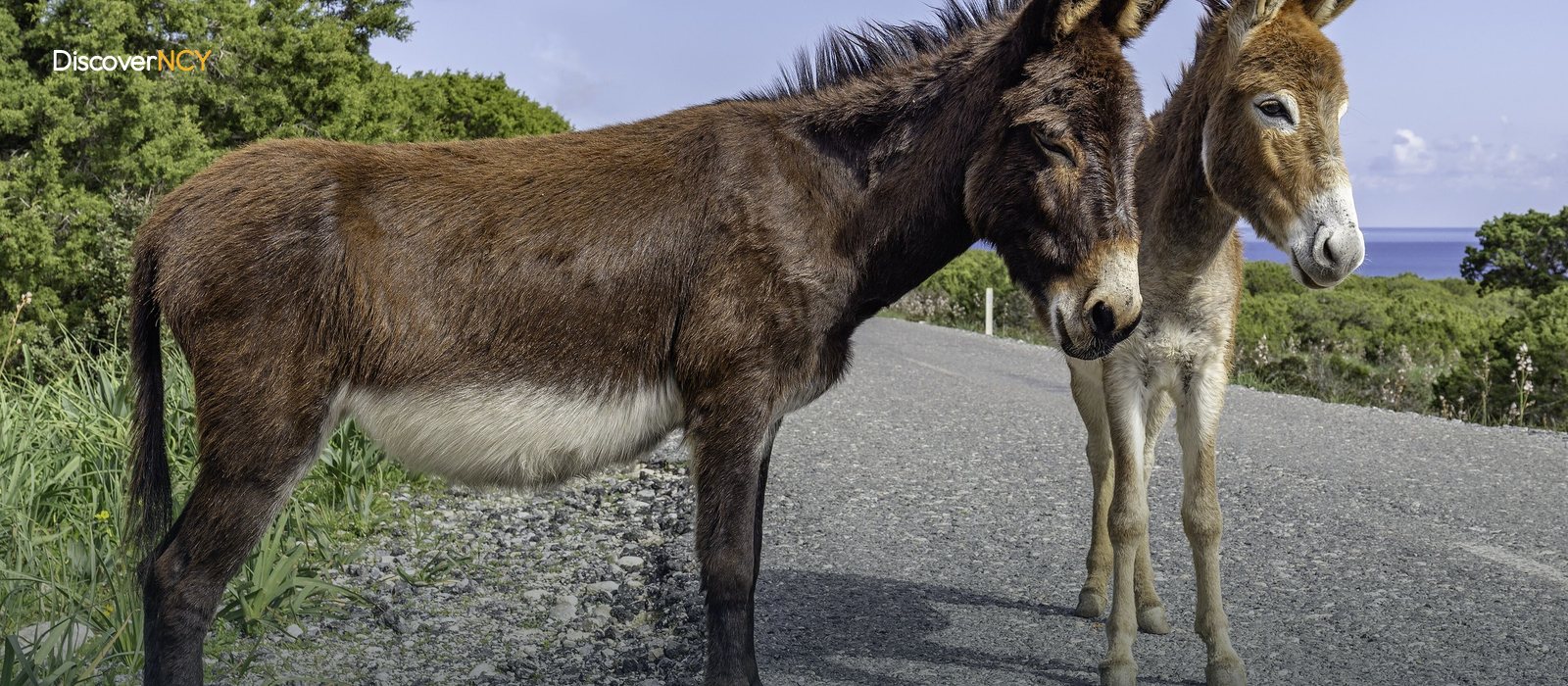
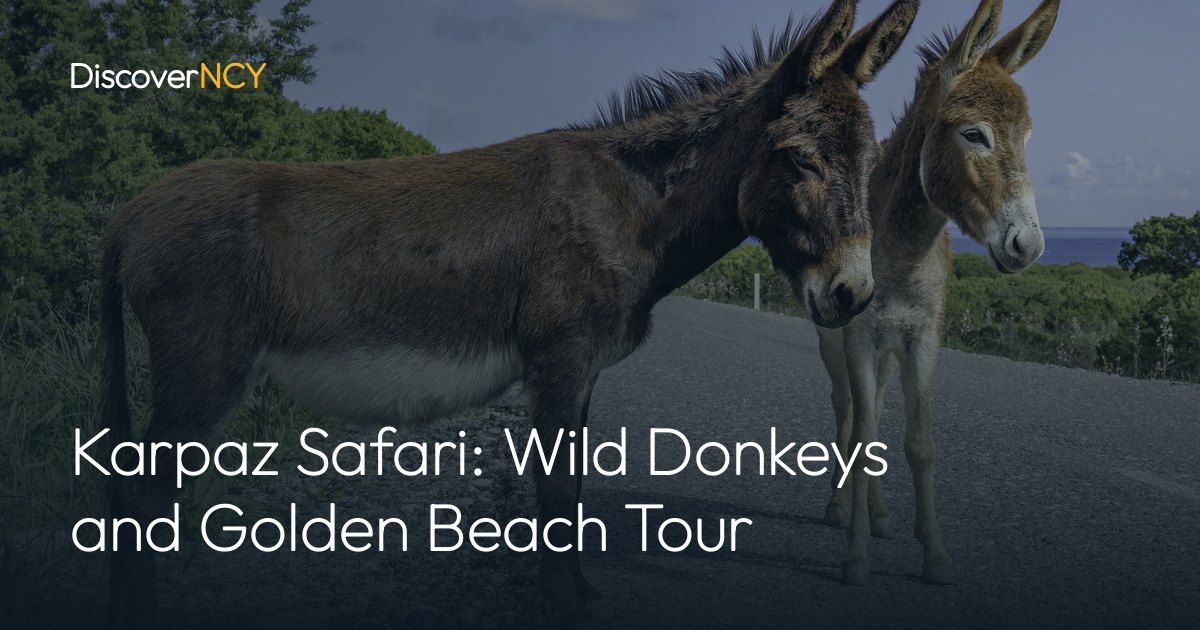
The agency changes, the backbone does not. The vehicle first reaches the village of Dipkarpaz (Rizokarpaso), moves on from there to Apostolos Andreas Monastery and the area around Karpaz National Park, and the day ends at Golden Beach (Altınkum) at the tip of the peninsula. The wild donkeys appear in this middle section, at the edge of the tarmac. You cannot know without looking at the listing whether the donkeys or the monastery come first, and programmes order them differently, but since both lie on the same route, which comes first does not change the content of the day.
The intermediate stops, on the other hand, depend entirely on the listing. A coffee break at the fishing harbour in Boğaz (Bogazi) and a tasting at an olive oil mill are the two that appear most often. Karpaz Gate Marina, Kantara Castle and the Ayias Trias Basilica feature in some programmes and are not even mentioned in others, so if these three stops matter to you, you need to read the listing's itinerary before booking. Lunch is included in most full-day programmes and is served at a restaurant with a sea view. And let us say this up front: the word "safari" in the name does not mean a wildlife tour; it is the name for a day trip by off-road vehicle or minibus. Anyone expecting herds comes back in the evening with landscape photos.
Early Departure, Return Close to Dark
A Karpaz safari day begins outside the Kyrenia hotels between 08:00 and 09:30 in the morning. The hour may look early, but since the tip of the peninsula is two hours and twenty minutes from Kyrenia, the programme is built entirely backwards from that distance, and being outside your hotel first thing in the morning follows from that. Nor is there a single departure city. You will come across private programmes starting from Famagusta; Sidetour, which has its own product page on Tripadvisor, is one of them.
On the duration side, the picture we gathered is even more scattered. One programme says six hours, three separate programmes show nine to eleven hours, and the five hours in between land on your evening; on the long programme the return comes close to dark. If there is someone elderly or quick to tire in your group, plan the day around eleven hours.
Before You Hold Out an Apple to the Donkeys
The donkeys of Karpaz were not born wild. Today's herd is a semi-wild colony accustomed to people, descended from domestic animals left ownerless on farms after 1974. You will notice this familiarity straight away on the road. Tour operators talk about donkeys sidling up to vehicles; nobody knows how many there are, and estimates range from hundreds to thousands. What really concerns the visitor is how far this closeness goes.
There is a contradiction to watch out for here. Almost all tour operators recommend bringing apples or carrots, and they say so openly on their pages, while the official side looks the other way. A "Donkey Management Project" started with a protocol signed in 2023, run jointly by the Cyprus Wildlife Research Institute, the Erenköy Karpaz municipality and the Environmental Protection Department. The ten-year plan covers health checks, microchipping, population management and improvements to barriers. Field implementation began only recently. Looking at the project text, we see that well-meaning individual interventions do not produce lasting solutions without a plan.
Is holding out an apple banned? There is no written ban, but the tension between the two approaches is plain. To avoid getting caught between them, we prefer to watch without holding out our hand; a photo taken without approaching the herd gives you the same shot.
The Road to Golden Beach Does Not Need a 4x4
The first question from those driving themselves is usually whether an off-road vehicle is needed. It is not. A standard rental car is enough; only the final approach is rougher than city roads, because the tarmac ends and gives way to gravel. There is no ticket booth at the car park, and parking is free. The same simplicity continues on the beach: there is no lifeguard of any kind, no toilet either, and shade is whatever you bring with you.
The beach also runs on its own calendar: because the shore is a nesting area for sea turtles between May and October, night access is restricted. The ban on camping, fires and driving onto the beach was actively enforced in 2024, with thirty-six violations reported that year, four of which led to legal proceedings. Passengers arriving by tour notice few of these restrictions, since the programme is in daytime and the vehicle stays in the car park.
Season and What to Pack
With the scope clear, the next question is which month the day falls in. The most comfortable months for a Karpaz safari are May and June, and according to the sources, September-October as well. In July and August it is the lack of shade rather than the heat itself that wears you down, because there is almost no shelter in the open stretches of the peninsula, and the programme leaves you exposed during the hottest hours of the day. Can you go in winter? You can, but the Golden Beach (Altınkum) stop may drop off the programme; the phrase "weather and time permitting" in the listings refers to this.
The packing list stays the same regardless of season. You take water, sunscreen, a hat, snacks and comfortable shoes, and you carry your own shade. A folding umbrella, for instance, is smarter than looking for facilities at a stop, and a camera goes on the list too, because you will find a phone is not enough for the donkeys by the roadside. Factor in putting some cash in your wallet as well. Some of the peninsula's small shops do not take cards, and paper money is more useful than your card.
| Field | Value |
|---|---|
| Tour type | Day trip by jeep or minibus, not a wildlife safari in the strict sense |
| Departure point | Mostly hotels in the Kyrenia area, some products depart from Famagusta |
| Departure time | Between 08.00 and 09.30 in the morning |
| Duration | 6 to 11 hours, mostly full day |
| Core route | Dipkarpaz (Rizokarpaso), Apostolos Andreas Monastery and the national park area, Golden Beach (Altınkum) |
| Variable stops | Boğaz (Bogazi), olive oil mill, Karpaz Gate Marina, Kantara Castle, Ayias Trias Basilica |
| Lunch | Included in most full-day programmes, restaurant with sea view |
| Pricing | Per person in shared groups, per vehicle on private tours |
| Price | Varies by format and season as of September 2026, confirm before booking |
| Possible extras | Archaeological site entry fees, guide fee |
| Origin of the donkeys | Semi-wild colony descended from domestic donkeys left ownerless after 1974 |
| Conservation project | Donkey Management Project under a 2023 protocol, only recently moved to field implementation |
| Feeding | No written ban, operators encourage it, the conservation framework discourages uncontrolled interference |
| Road and vehicle | A standard rental car is enough, final stretch is gravel, parking is free |
| Golden Beach restrictions | Night-time restriction May-October, camping, fires and driving onto the beach prohibited |
| Best season | May-June and September-October, July-August has no shade |
We cover the first stop on the route in our Dipkarpaz village article and the monastery at the tip of the peninsula separately on the Apostolos Andreas Monastery page; if you want to build the tour with your own car, the Karpaz Peninsula guide is a good starting point.