İncirli Cave: The Biggest Cave in Cyprus
📍 Çınarlı, Geçitkale, Famagusta
The recorded length of this cave you have been wondering about is 311 metres, but the distance you will actually walk inside it is limited to just seventy metres. The part of İncirli Cave open to visitors is the section that Geçitkale Municipality reinforced and lit, and everything beyond the point where the lighting ends is closed to visitors. Be aware that exploring without permission is not allowed. The visit follows the line the guide shows you. According to the municipality's 2013 text, there are guides permanently on duty at the cave, and do not be surprised if you are handed a printed brochure when you go in. Here are the details on İncirli Cave.
İncirli Cave and Seventy Metres Out of Three Hundred and Eleven
As we said, the length is 311 metres, and that figure appears in the same form in Geçitkale Municipality's own text, in the article published by the TRNC Information Office and in an academic study on gypsum karst. The measurement is multi-sourced. The Cave Enthusiasts Association, which has been recording the caves of the TRNC since 2014, announced the length as 317 metres in 2021. The difference is six metres. Let us note that we set the two side by side and take 311 as our basis. The size of the gallery is as variable as its length: the width ranges between 1 and 7 metres, while the ceiling height can drop to 0.5 metres in places and rise to 6 metres at the most spacious point.
But why does the walk stop at just seventy metres? Simply because the reinforcement and lighting were done only in this section; the rest is closed to visitors. The tour is conducted along a set line. The lowest point of the cave is 14 metres below the entrance, and how much of that depth lies on the visitor route is not stated in the sources.
What It Means to Be a Gypsum Cave
The rock in this cave is called gypsum. The municipality's text describes the cave as "the only known gypsum cave within the territory of the TRNC". The 2023 article republished by the TRNC Information Office makes what looks like a bolder claim, calling it the only gypsum cave in the world opened to tourism. In our research, that article is the only source making that statement. The gypsum layer is around 5 million years old, while the cave itself is estimated to have formed between 150 and 200 thousand years ago. The rock is millions of years old; the cavity inside it opened up in only a tiny fraction of that age.
Cauliflower Formations on the Walls
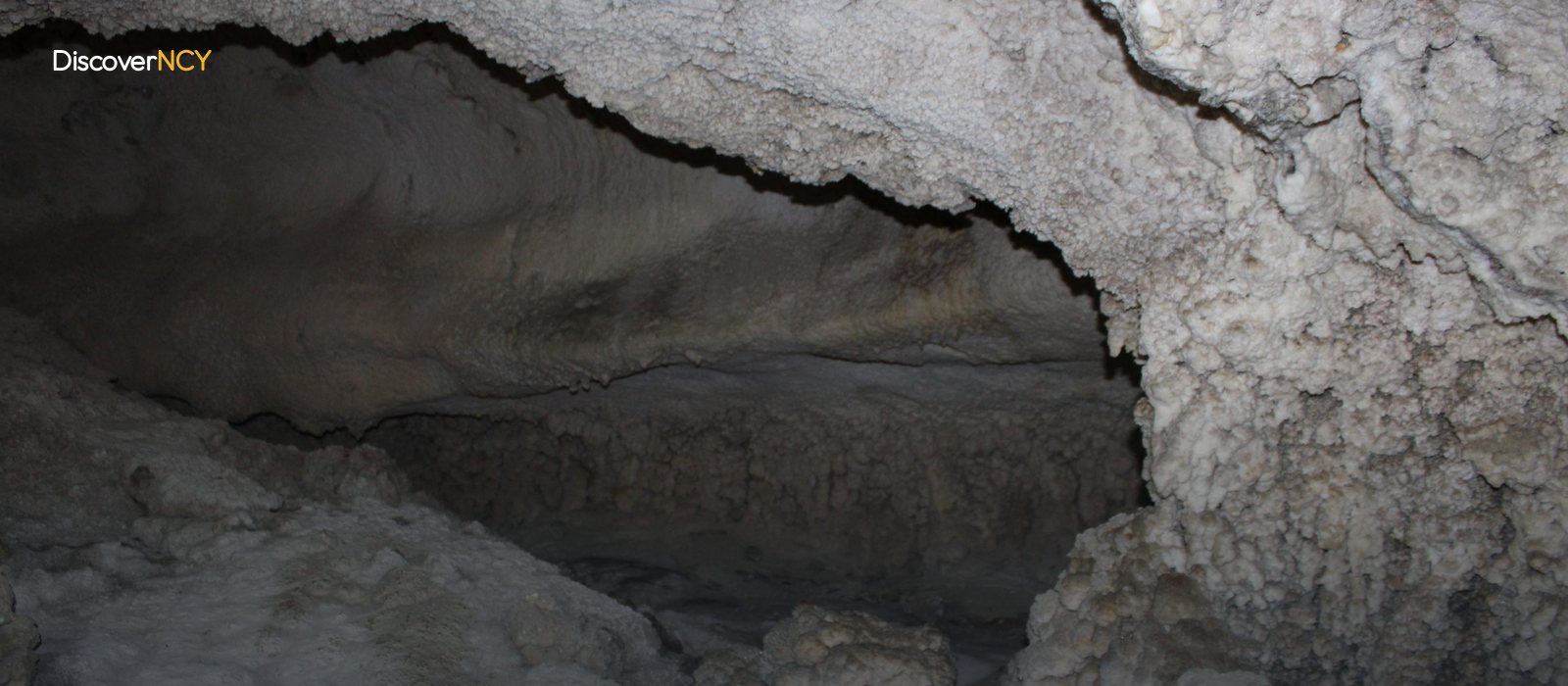
The first comparison the sources make for the walls of İncirli Cave is "cauliflower"; three separate texts describe the white mineral deposits with the same word. The municipality's text lists stalactites, stalagmites, columns, curtain-shaped draperies, flowstone and vein stones among the formations in the cave. The air stays constant along the seventy metres: according to the Information Office article, the interior is 18 to 19 degrees all year round. Since the academic summary gives the elevation of the entrance as about 240 metres and says the corridor runs from west-northwest to east-southeast, you can picture the cave not as a coastal cave but as a cavity opened on fairly high ground at the foot of the Kyrenia Mountains (Beşparmak). Its name comes not from inside but from outside, from the fig tree at the entrance (incir means fig).
Whose Label Is "the Biggest"?
The description in the title comes from the language of tourism. None of the institutional texts we scanned uses the phrase "the biggest": the municipality speaks of a gypsum cave, the Information Office article highlights its being open to tourism, and the claim circulates among travel sites and encyclopaedia entries. The Cave Enthusiasts Association, on the other hand, changes the criterion and calls the cave "the longest", naming the Beşparmak Fissure as the deepest. You can keep the two criteria separate, because length is a measured value while size depends on which dimension you look at.
How many caves are known in the TRNC? According to the association's 2021 statement, the known number had risen to 370. By contrast, there were 80 records in the British period, and the 2003 mining survey counted 89 caves. Since no source offers a comparison of volume or floor area, the word "biggest" remains the responsibility of the tourism sources that coined it.
The Çınarlı Road and the Closed-Day Contradiction
The cave is on İpsaro Hill at the foot of the Kyrenia Mountains, about 2 kilometres southeast of the village of Çınarlı. The road connects to the village via Geçitkale. The operating body is named as Geçitkale-Serdarlı Municipality. A tale about the cave's discovery also circulates: two thieves are said to have entered it because of the pomegranates they had stolen. That is a tale, not a recorded date.
One of the things you need to know before going is that the closed day is Wednesday. This day is written in the same way both in the municipality's 2013 text and in the 2023 Information Office article, but because some travel pages give other days, the day information needs to be confirmed. So which source do you trust in a contradiction like this? Since the municipality's own text and the Information Office article give the same day, the weight stays with those two. There is no official page publishing a timetable for October 2026, so our suggestion is to ask the municipality about your visiting day and the entry conditions before you set out. We could not find any fee information either. Whether a guided visit is compulsory is not stated in the sources.
The Two-Day Programme in July
In July 2025 a programme called the "İncirli Cave Culture and Arts Festival" was held in the village, the second edition took place in July 2026, and the organisers include the municipality, the Çınarlı village headman's office and the Friends of Çınarlı Association. The programme features folk dances and a concert, and shooting and backgammon tournaments were also held. We should point out that the festival news gives information about the programme in the village, not about the visiting arrangements inside the cave. The festival lasted two days in July. The part of İncirli Cave open to visitors remains seventy metres.
| Field | Value |
|---|---|
| Place | About 2 km southeast of Çınarlı village, İpsaro Hill, Famagusta area |
| Type | Gypsum cave; according to the municipality, the only known example in the TRNC |
| Total length | 311 m (municipality, Information Office, academic study); 317 m (Cave Enthusiasts Association, 2021) |
| Accessible section | 70 m, reinforced and lit section |
| Width / ceiling height | 1-7 m / 0.5-6 m |
| Temperature | 18-19 degrees year-round |
| Closed day | Wednesday (2013 municipal text, 2023 Information Office article) |
See our Gecitkale village article, which the road to the cave passes through, the Kyrenia mountains hiking guide for other routes in the same range, and the things to do in North Cyprus article for the island's other nature stops.