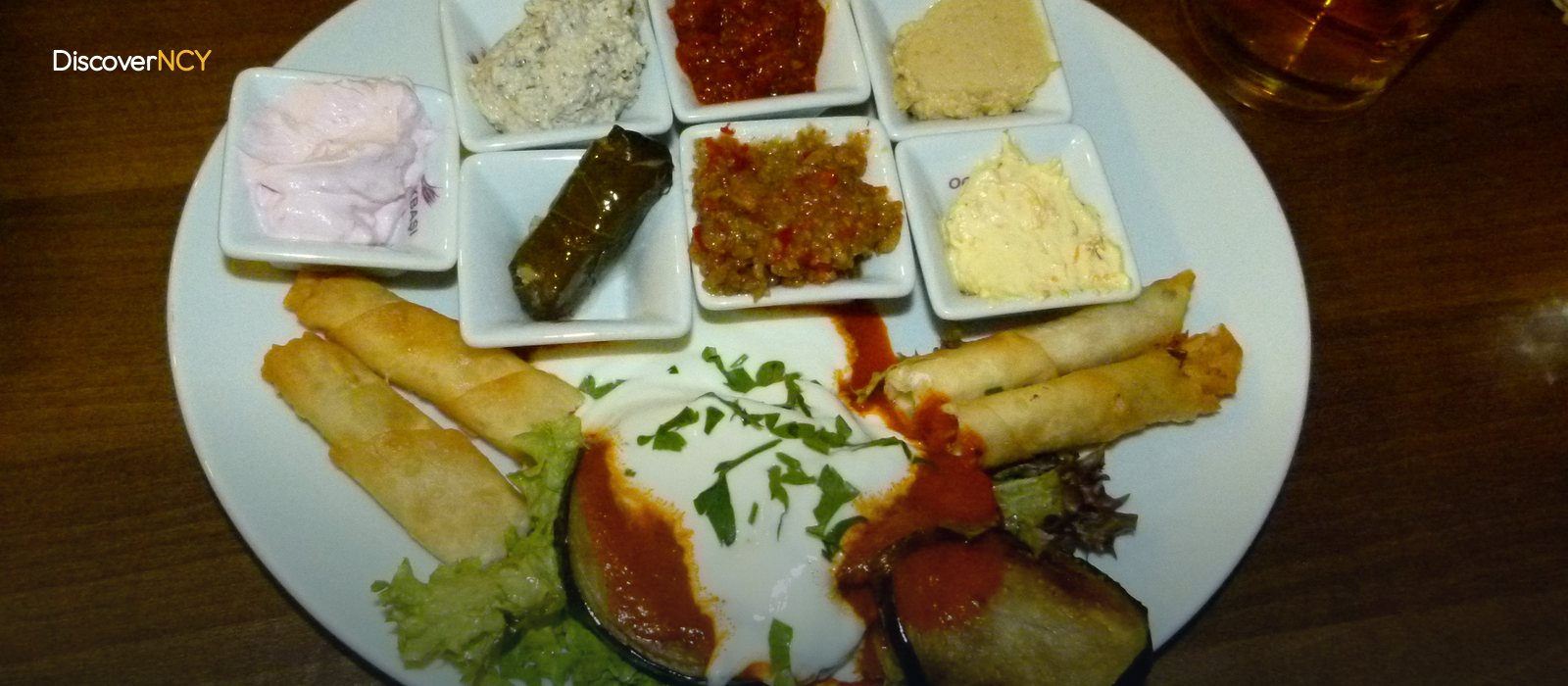
You are curious about meze in Cyprus, but you have a clue. The first clue for a customer stepping into a meyhane in North Cyprus is on the table. While the Cypriot meze are still in the kitchen, the tabletop has already announced what kind of place it is... According to Mevlüt Dalyan's 2021 study, which examined thirty venues, the first thing that catches the eye in a traditional meyhane is the rustic tables and chairs and the small drinking glasses set out on the table in advance. In places that have evolved from meyhane into restaurant, when you sit down you may see water glasses, plates and cutlery in place of those glasses. Looking at the table is enough… Let's take a look.
Is There a Menu on the Table?
How is this spread ordered? According to the Visit North Cyprus tourism portal, there is no menu in a meyhane; plates keep coming to the table until you say “stop”, and you may not be able to finish them all. The same portal counts the cold meze as at least fifteen plates and likens its description almost to a banquet. In contrast, Cemal Bilmem's business administration thesis, completed at Eastern Mediterranean University in 2022, paints a different picture: of the fifteen businesses interviewed, five were observed to serve from an “à la carte” menu, while in the rest the meze reflected Cypriot culture.
The same thesis writes that hummus, cacık, çakıstes, tahini and halloumi are listed as meze on these menus. The two descriptions stand side by side in the records we have. So our suggestion is simple: look at the table, and ask which arrangement you have sat down to and how many plates will come.
From the Cold Plate to the Meat Plate
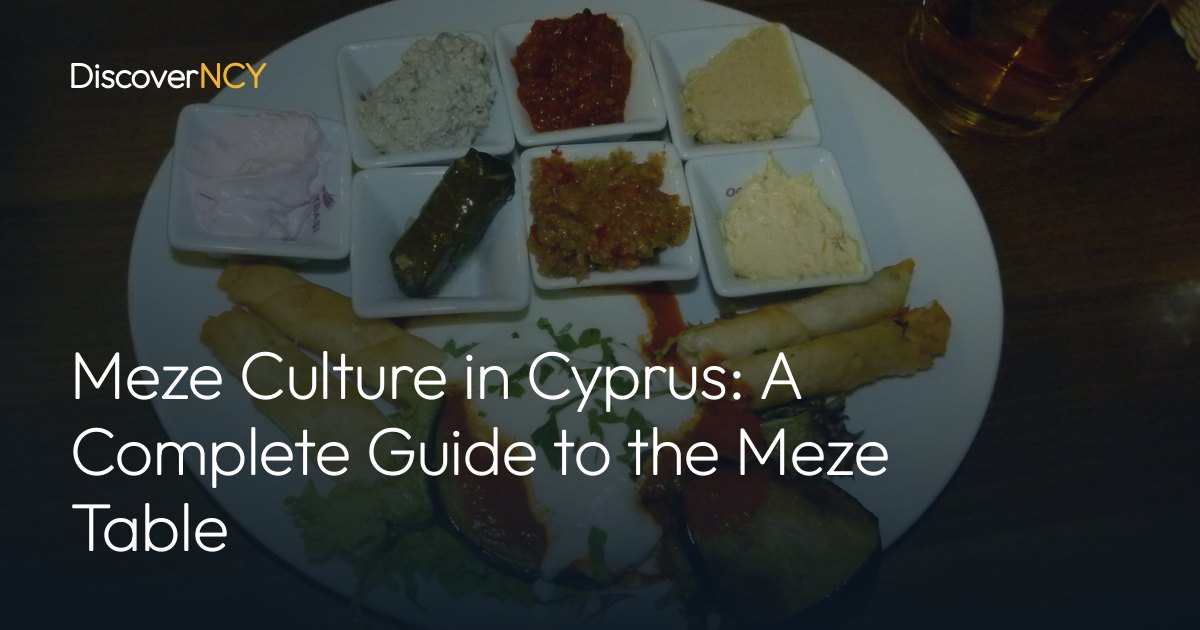
What both sources confirm is the form of the core plates: Cypriot meze come to the table in separate small plates, one after another. Only the portal writes that the cold ones come first and the hot ones after them. The meze stage is a section that runs before the meat plate or alongside the main course.
How solid is the whole sequence? Because the five-step flow rests on a single source, the order in the chart we have prepared for you is the portal's own ordering.
| Order at the table | What the Visit North Cyprus portal lists | Also mentioned in the second source |
|---|---|---|
| Cold meze | At least fifteen plates, çakıstes, samarella, tahini, white cheese, pickled quail eggs | Çakıstes, samarella, tahini |
| Hot meze | After the cold ones, grilled halloumi in pitta, liver | Grilled halloumi, liver |
| Meat plate | Right after, köfte, chicken and lamb shish, lamb chops, şeftali kebab | Şeftali kebab |
| Fruit or macun | For those who want it, seasonal fruit, macun, kırbaç in most meyhanes | Only in the portal |
| Turkish coffee | At the very end of the meal | Only in the portal |
On the hot step, the portal lists grilled halloumi in pitta and liver that is chopped and cooked on the grill or in a pan, while the 2022 thesis also places these two items on the hot side of the meyhane spread, so the two sources overlap on this step. On the fourth step, seasonal fruit or macun comes instead of dessert; the same portal also writes that a plate called kırbaç is served in most meyhanes. The last step of the meal is Turkish coffee.
But in the Old Meyhane, Meze Came in Three Tiers
Although today's plate count rests on the portal, the record of the old arrangement for Cypriot meze is more detailed. Zekai Altan's 1989 study of meyhane culture, as relayed by the same thesis, leaves behind a three-tier arrangement. The first tier was “dry” meze. Items such as dried figs, dried broad beans, roasted chickpeas, almonds, pumpkin seeds, roasted peanuts and raisins stood, never running out, on the long back table called the “Bango”, all served in teacups.
The second tier was “normal” meze, and twenty to twenty-two varieties arriving fresh in season were counted. The items in the record are yoghurt, lettuce, radish, nor, halloumi, boiled beetroot and seasonal pickles. The third tier was “extra” meze. Plates such as oven kebab, shish, boiled chicken, grilled octopus or rabbit came to the table only when ordered by special request. This record is old. None of the three tiers is a promise for today's table. In addition, the same study reports that the oldest document found relating to the meyhane trade dates from 1885, while the records are concentrated between 1920 and 1960...
A Table You Go to with the Family?!
Dalyan's study defines meyhanes as businesses you go to as a family, and we can say that Bilmem's thesis, drawing on a 2014 study, states that women and families also sit and chat in today's meyhanes, and that the meyhane is a dining table. While the meze come accompanied by drinks, Dalyan names rakı as the main drink.
Keep your own measure. On the other hand, you can find meze and kebab on the same page of the menu; operators say in their own words that they list mixed meze, hot dishes such as liver and kebab varieties on the same list. Dalyan's study also mentions that meyhanes are found in almost every district and town. We could not find an official figure for how many meyhanes there are across the country.
Reservations Are Not Mandatory but Recommended
When setting off at the weekend, book your table in advance; the sources do not make reservations mandatory but definitely recommend them. How many hours does the meal last, how many plates come for how many people? We could not find a record covering these questions or whether there is a separate arrangement for children. Let us note this: you will need to ask about these details before you sit down. The two things to clarify at the door are the menu arrangement and the number of plates.
There is no single arrangement. In some meyhanes Cypriot meze are an open-ended series of plates, elsewhere a short sequence written on a menu. Don't look for a single ordering rule...
If you want to see the bill for a meze spread in advance, see our North Cyprus restaurant prices article, and to take the halloumi from the table home, see our what to buy in Cyprus guide.