When coffee is served to guests who have come to ask for a girl’s hand in marriage, nobody asks whether the cup should be sweet or plain. In a 2020 study focusing on Cyprus coffee culture, informants describe this tradition: sweetened coffee placed on the tray means “yes”, plain coffee means “no”. The answer is carried in the cup. Yet when 200 coffee-drinking university students on the same island were asked in 2023, Americano came out at the top of the list, with Turkish coffee left in second place. Beneath this contrast lie two samples that are nothing alike.
What Does Sugar Say on the Day of the Marriage Proposal?
The researchers interviewed 11 informants, most of them aged 40-70, in different regions of North Cyprus and carried out on-site observation in village coffeehouses. Let us say it from the outset: this is not a survey but a qualitative interview study, and we recommend reading the details here as scenes the informants relayed from their own homes and village coffeehouses. If the family looks favourably on the match, the coffee on the day of the proposal is made sweet straight away; if a refusal is to be given, the cup goes out plain. Whoever takes the cup understands. In some regions, meanwhile, the girl puts salt in the prospective groom’s cup, and he drinks it without a word, sending the message that he will stand by her through every hardship...
The Cup Turned Upside Down in the Neighbour’s Room
In everyday gatherings, the venues are separate. While men socialise in the village coffeehouse, drinking lemonade, orange juice and soumada alongside their coffee, women drink coffee on neighbourly visits almost every day. When the coffee is finished, the cups are turned upside down on their saucers, and once they have cooled, the women read each other’s fortunes. According to the researchers, the pleasant conversations struck up during fortune-telling strengthen neighbourly bonds and also increase coffee consumption among women. Is the cup turned over in every home? The informants do not stand in the same place on this: some consider fortune-telling a sin and never have their cups read, while others believe what is said and always hold out their cup. The men’s village coffeehouses still serve their purpose today, and the Lefka Municipality uses the phrase “century-old coffeehouses” in its promotional material.
What 200 Students in Famagusta Were Asked
The picture for the younger generation was drawn in 2023 with an entirely different method. A master’s thesis prepared at Eastern Mediterranean University surveyed students who drink coffee; 94 percent of the participants were aged 18-25, and 61.5 percent were male students. Let us note that this sample was not randomly selected but gathered by convenience sampling. In preparation, the cezve dominates. Those choosing the cezve came to 53 percent, while those choosing filter stayed at 18 percent. The venue differs too. 49.5 percent of the students drink their coffee at home, while the share drinking it at a café remains at 26.5 percent. The thesis attributed this weight of the home to the fact that the equipment needed to make Americano is not common in home culture.
The answers on product and brand contradict each other. On the product question, 42 percent wanted roasted beans, while on the brand question 64.5 percent of participants wrote down a single instant coffee brand, and the thesis itself notes this gap between desire and habit. Would it be right to weigh these results on the same scale as the 2020 interviews? Since one is a qualitative interview study with eleven people and the other a survey of two hundred students, the two measurements cannot substitute for each other. Our advice is to read the ranking below as that student group’s preference in 2023 rather than as a nationwide picture of Cyprus coffee culture; otherwise you may run into a false generalisation...
| Drink | Share chosen in the 2023 survey |
|---|---|
| Americano | 32 percent |
| Turkish coffee | 23 percent |
| Latte or macchiato | 16.5 percent |
| Espresso | 7.5 percent |
| Iced coffee | 7.5 percent |
| Mocha | 7 percent |
| Cappuccino | 5.5 percent |
The Single Sentence Describing the Third Wave
The third wave is still new. The 2023 thesis we examined describes this movement as a business model “of which there are not many active examples in the TRNC”. We could not find a separate source on when the model appeared on the island or in which neighbourhoods it is concentrated; the information we have is limited to this observation within that thesis. On the other hand, the thesis’s literature section describes the first wave in terms of speed and practicality and the third wave in terms of the bean’s traceability “from soil to cup”, and it also writes that Trish Rothgeb introduced this term to the literature in 2002. The thesis listed the products commonly offered by businesses on the island as Turkish coffee, espresso, Americano and latte.
The Name Itself and the Coffeehouse in the Han
There is no surprise in the local name. Two academic studies and the municipal promotion meet on the same word. On the island, too, the drink is called Turkish coffee. We could not find a separate Cypriot coffee recipe; we came across this name only on souvenir packages. On the other hand, the file UNESCO added to the representative list in 2013 is titled “Turkish coffee culture and tradition”, and that inscription was opened on Türkiye’s application, through the Ministry of Culture and Tourism.
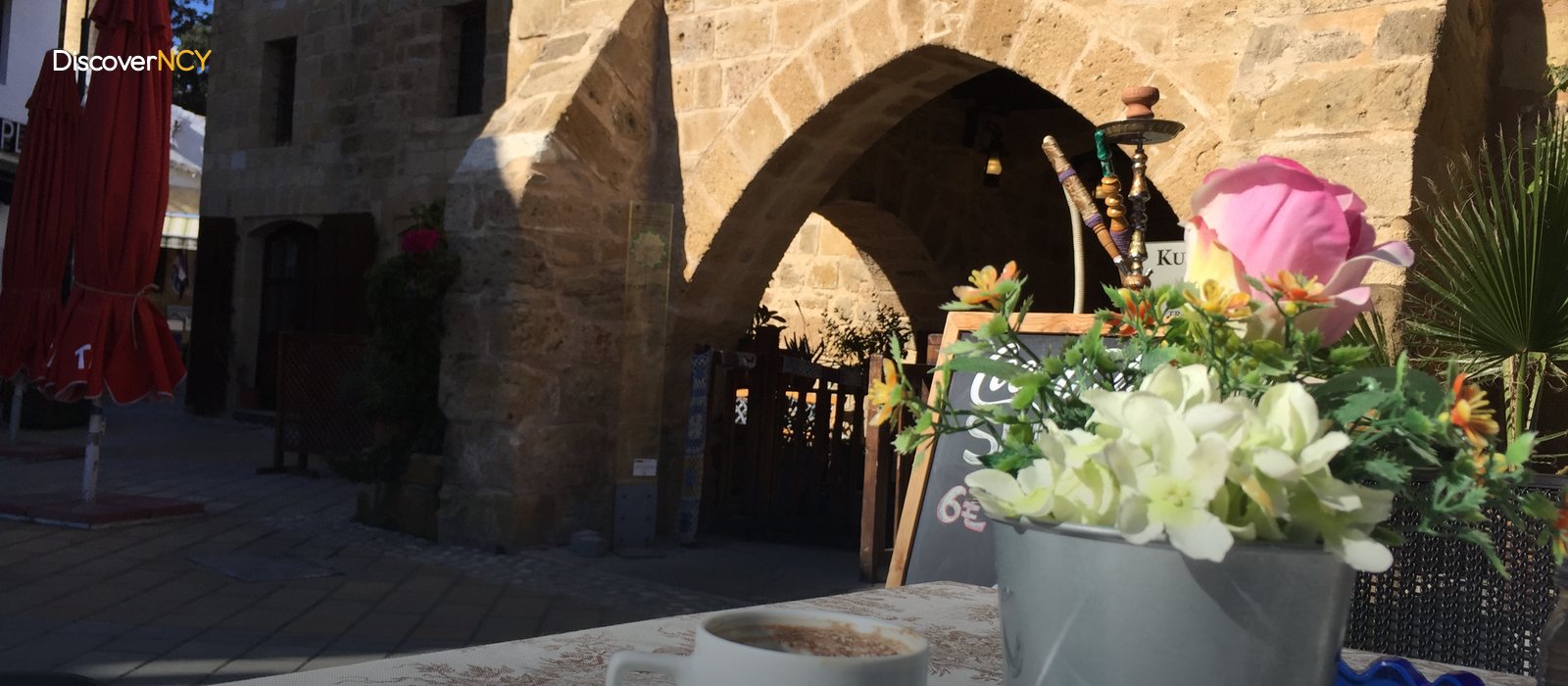
The municipality’s page mentions a Turkish coffeehouse in the courtyard of the Büyük Han in Nicosia and gives 08.00-18.00 for the han, while the hours of the shops and cafés inside are separate. That said, you may also see instant coffee on the same table; the 2020 study regards this consumption almost as a culture, while writing that among its own informants Turkish coffee is drunk more. The thesis, for its part, records that even the same brand in the same venue changes taste depending on who brews it. That is why looking for a single extreme in Cyprus coffee culture is pointless. On the same day you can drink from both the cezve and the filter...
We covered the han whose courtyard is home to a Turkish coffeehouse in our Büyük Han Nicosia article; for coffee packs and other souvenirs see our what to buy in Cyprus guide, and for the rest of the city our Nicosia travel guide.